


Entertainment_Culture
Latest Stories
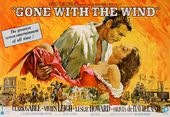
GoneWithTheWind
#7 Gone with the Wind (1939) Directors: Victor Fleming Stars: Clark Gable, Vivien Leigh, Thomas Mitchell. Gone with the Wind is a 1939 American epic-historical-romance film adapted from Margaret Mitchell's Pulitzer-winning 1936 novel. It was produced by David O. Selznick of Selznick International Pictures and directed by Victor Fleming. Set in the 19th-century American South, the film tells the story of Scarlett O'Hara, the strong-willed daughter of a Georgia plantation owner, from her romantic pursuit of Ashley Wilkes, who is married to his cousin, Melanie Hamilton, to her marriage to Rhett Butler. Set against the backdrop of the American Civil War and Reconstruction era, the story is told from the perspective of rich white Southerners. The leading roles are portrayed by Vivien Leigh (Scarlett), Clark Gable (Rhett), Leslie Howard (Ashley), and Olivia de Havilland (Melanie). The film received positive reviews upon its release in December 1939, although some reviewers found it dramatically lacking and bloated. The casting was widely praised and many reviewers found Vivien Leigh especially suited to her role as Scarlett. At the 12th Academy Awards held in 1940, it received ten Academy Awards (eight competitive, two honorary) from thirteen nominations, including wins for Best Picture, Best Director (Victor Fleming), Best Adapted Screenplay (posthumously awarded to Sidney Howard), Best Actress (Vivien Leigh) and Best Supporting Actress (Hattie McDaniel, becoming the first African-American to win an Academy Award). It set records for the total number of wins and nominations at the time. The film was immensely popular, becoming the highest-earning film made up to that point, and retained the record for over a quarter of a century. When adjusted for monetary inflation, it is still the most successful film in box-office history. The film has been criticized as historical revisionism glorifying slavery, but nevertheless it has been credited for triggering changes to the way Af
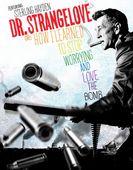
dr.-strangelove-or_-how-i-learned-to-stop-worrying-and-love-the-bomb
Number 11: Dr. Strangelove or: How I Learned to Stop Worrying and Love the Bomb | The 1964 film directed by Stanley Kubrik and starring Peter Sellers satirizes the Cold War fears of a nuclear conflict between the USSR and the US.

citizen-kane
#2 Citizen Kane (1941) Director: Orson Welles Stars: Orson Welles, Joseph Cotten, Dorothy Comingore Citizen Kane is a 1941 American drama film by Orson Welles, its producer, co-author, director and star. The picture was Welles's first feature film. Nominated for Academy Awards in nine categories, it won an Academy Award for Best Writing (Original Screenplay) by Herman J. Mankiewicz and Welles. Considered by many critics, filmmakers, and fans to be the greatest film ever made, Citizen Kane was voted the greatest film of all time in five consecutive Sight & Sound polls of critics, until it was displaced by Vertigo in the 2012 poll. It topped the American Film Institute's 100 Years ... 100 Movies list in 1998, as well as AFI's 2007 update. Citizen Kane is particularly praised for its cinematography, music, and narrative structure, which were innovative for its time. The story is a film à clef that examines the life and legacy of Charles Foster Kane, played by Welles, a character based in part upon the American newspaper magnate William Randolph Hearst, Chicago tycoons Samuel Insull and Harold McCormick, and aspects of Welles's own life. Upon its release, Hearst prohibited mention of the film in any of his newspapers. Kane's career in the publishing world is born of idealistic social service, but gradually evolves into a ruthless pursuit of power. Narrated principally through flashbacks, the story is told through the research of a newsreel reporter seeking to solve the mystery of the newspaper magnate's dying word: "Rosebud". After the Broadway successes of Welles's Mercury Theatre and the controversial 1938 radio broadcast "The War of the Worlds" on The Mercury Theatre on the Air, Welles was courted by Hollywood. He signed a contract with RKO Pictures in 1939. Unusual for an untried director, he was given the freedom to develop his own story, to use his own cast and crew, and to have final cut privilege. Following two abortive attempts to get a project off the grou
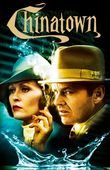
chinatown
#16 Chinatown (1974) Director: Roman Polanski Stars: Jack Nicholson, Faye Dunaway, John Huston. Chinatown is a 1974 American neo-noir mystery film, directed by Roman Polanski from a screenplay by Robert Towne, starring Jack Nicholson and Faye Dunaway. The film was inspired by the California Water Wars, a series of disputes over southern California water at the beginning of the 20th century, by which Los Angeles interests secured water rights in the Owens Valley. The Robert Evans production, a Paramount Pictures release, was the director's last film in the United States and features many elements of film noir, particularly a multi-layered story that is part mystery and part psychological drama. In 1991, the film was selected by the Library of Congress for preservation in the United States National Film Registry for films that are "culturally, historically or aesthetically significant" and it is frequently listed as among the best in world cinema. The 1975 Academy Awards saw it nominated eleven times, with an Oscar going to Robert Towne for Best Original Screenplay. The Golden Globe Awards honored it for Best Drama, Best Director, Best Actor and Best Screenplay. The American Film Institute placed it second among mystery films in 2008.

Casablanca
#5 Casablanca (1942) Director: Michael Curtiz Stars: Humphrey Bogart, Ingrid Bergman, Paul Henreid. Casablanca is a 1942 American romantic drama film directed by Michael Curtiz and based on Murray Burnett and Joan Alison's unproduced stage play Everybody Comes to Rick's. The film stars Humphrey Bogart, Ingrid Bergman, and Paul Henreid; it also features Claude Rains, Conrad Veidt, Sydney Greenstreet, Peter Lorre, and Dooley Wilson. Set during World War II, it focuses on an American expatriate who must choose between his love for a woman and helping her Czech Resistance leader husband escape the Vichy-controlled Moroccan city of Casablanca to continue his fight against the Nazis. Story editor Irene Diamond convinced producer Hal B. Wallis to purchase the film rights to the play in January 1942. Brothers Julius and Philip G. Epstein were initially assigned to write the script. However, despite studio resistance, they left to work on Frank Capra's Why We Fight series early in 1942. Howard E. Koch was assigned to the screenplay until the Epsteins returned a month later. Casey Robinson assisted with three weeks of rewrites, but his work would later go uncredited. Wallis chose Curtiz to direct the film after his first choice, William Wyler, became unavailable. Principal photography began on May 25, 1942, ending on August 3; the film was shot entirely at Warner Bros. Studios in Burbank, with the exception of one sequence at Van Nuys Airport in Van Nuys, Los Angeles. Although Casablanca was an A-list film with established stars and first-rate writers, no one involved with its production expected it to be anything out of the ordinary. It was just one of hundreds of pictures produced by Hollywood every year. Casablanca had its world premiere on November 26, 1942, in New York City and was released nationally on January 23, 1943, in the United States. The film was a solid if unspectacular success in its initial run, rushed into release to take advantage of the publicity from the

annie-hall
#17 Annie Hall (1977) Director: Woody Allen Stars: Woody Allen, Diane Keaton, Tony Roberts. Annie Hall is a 1977 American romantic comedy film directed by Woody Allen from a screenplay he co-wrote with Marshall Brickman. Produced by Allen's manager, Charles H. Joffe, the film stars the director as Alvy "Max" Singer, who tries to figure out the reasons for the failure of his relationship with the film's eponymous female lead, played by Diane Keaton in a role written specifically for her. Principal photography for the film began on May 19, 1976 on the South Fork of Long Island, and filming continued periodically for the next ten months. Allen has described the result, which marked his first collaboration with cinematographer Gordon Willis, as "a major turning point", in that unlike the farces and comedies that were his work to that point, it introduced a new level of seriousness. Academics have noted the contrast in the settings of New York City and Los Angeles, the stereotype of gender differences in sexuality, the presentation of Jewish identity, and the elements of psychoanalysis and modernism. Annie Hall was screened at the Los Angeles Film Festival in March 1977, before its official release on April 20, 1977. The film received widespread critical acclaim, and along with winning the Academy Award for Best Picture, it received Oscars in three other categories: two for Allen (Best Director and, with Brickman, Best Original Screenplay), and Keaton for Best Actress. The film additionally won four BAFTA awards and a Golden Globe, the latter being awarded to Keaton. Its North American box office receipts of $38,251,425 are fourth-best in the director's oeuvre when not adjusted for inflation. Often listed among the greatest film comedies, it ranks 31st on AFI's list of the top feature films in American cinema, fourth on their list of top comedy films and number 28 on Bravo's "100 Funniest Movies." Film critic Roger Ebert called it "just about everyone's favorite Woody Alle
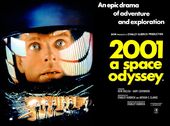
2001A_Space_Odyssey
#6 2001: A Space Odyssey (1968) Director: Stanley Kubrick Stars: Keir Dullea, Gary Lockwood, William Sylvester. 2001: A Space Odyssey is a science-fiction narrative, produced in 1968 as both a novel, written by Arthur C. Clarke, and a film, directed by Stanley Kubrick. It is a part of Clarke's Space Odyssey series. Both the novel and the film are partially based on Clarke's short story "The Sentinel", written in 1948 as an entry in a BBC short story competition, and "Encounter in the Dawn", published in 1953 in the magazine Amazing Stories. The film was written by Clarke and Kubrick and featured specialist artwork by Roy Carnon. The film is notable for its scientific realism, pioneering special effects, and provocatively ambiguous imagery and sound in place of traditional narrative techniques. Despite receiving mixed reviews upon release, 2001: A Space Odyssey is today thought by some critics to be one of the greatest films ever made and is widely regarded as the best science fiction film of all time. It was nominated for four Academy Awards, and received one for visual effects. It also won the Kansas City Film Critics Circle Best Director and Best Film awards of 1968. In 1991, 2001: A Space Odyssey was deemed culturally significant by the United States Library of Congress and selected for preservation in the National Film Registry.

970f5fbc54af7b2f850f6a706700c12d.jpg
This photo provided by Twilight Riders, LLC shows, Richard Jenkins, left, as Chicory and Kurt Russell as Sheriff Franklin Hunt in the western film “Bone Tomahawk,” an RLJ Entertainment release. The movie opens in U.S. theaters Friday, Oct. 23, 2015. (Scott Everett White/Twilight Riders, LLC via AP)

rather.jpg
In this image released by Sony Pictures Classics, Robert Redford portrays Dan Rather in a scene from, "Truth." CBS has refused to run advertising for "Truth," the film starring Cate Blanchett and Robert Redford that revisits a painful episode in the network's past involving a discredited 2004 news story on former President George W. Bush's military service record. CBS has denounced the movie, which opens Friday, as a disservice to the public and journalists. (Lisa Tomasetti /Sony Pictures Classics via AP)

Clintons.jpg
Newly released emails from the conservative group Citizens United show that the business of Hillary Clinton's State Department and the business of former President Bill Clinton were often intertwined. (Associated Press)

ms. anon.jpg
(YouTube)

7d9f4f3254b87c2f850f6a7067006e8c.jpg
In this file photo taken July 7, 2015, a member of the Montgomery County, Pa., board of commissioners and former district attorney of the county, Bruce L. Castor Jr., speaks during an interview with The Associated Press in Norristown, Pa. Castor is campaigning to become the county's district attorney again as the Republican nominee, but Democratic challenger Kevin Steele introduced a 30-second ad on Tuesday, Oct. 20, 2015, to remind voters that Castor declined to bring charges against entertainer Bill Cosby in 2005, after a former Temple University employee alleged Cosby drugged and sexually assaulted her. (AP Photo/Matt Rourke, File)

86cfa62927d9522f850f6a7067006f2e.jpg
This photo provided by Open Road Films shows Bill Murray as Richie Lanz in "Rock the Kasbah." The movie opens in U.S. theaters Oct. 23, 2015. (Kerry Brown/Open Road Films via AP)
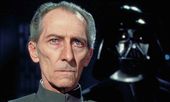
grand-moff-tarkin
Grand Moff Wilhuff Tarkin (Peter Cushing), also known as Governor Tarkin, is a fictional character in the Star Wars universe, primarily portrayed by Peter Cushing. The character has been called "one of the most formidable villains in Star Wars history.

kal penn.jpg
Actor Kal Penn says he "can't stop laughing" after the Russian ambassador to the U.K. tweeted a photo of a laughing "terrorist," which turned out to be a shot from a scene in the movie "Harold & Kumar Escape From Guantanamo Bay." (Twitter/@Alexander Yakovenko)

princess-leia
Princess Leia Organa (Carrie Fischer) was one of the Rebel Alliance’s greatest leaders, fearless on the battlefield and dedicated to ending the tyranny of the Empire

Han_Solo
Smuggler. Scoundrel. Hero. Han Solo (Harrison Ford), captain of the Millennium Falcon, was one of the great leaders of the Rebel Alliance.
