


Entertainment_Culture
Latest Stories

the-thing
#14. THE THING (also known as John Carpenter's The Thing) is a 1982 American science fiction horror film directed by John Carpenter, written by Bill Lancaster, and starring Kurt Russell. The film's title refers to its primary antagonist: a parasitic extraterrestrial lifeform that assimilates other organisms and in turn imitates them. The Thing infiltrates an Antarctic research station, taking the appearance of the researchers that it absorbs, and paranoia develops within the group. The film is based on John W. Campbell, Jr.'s novella Who Goes There?, which was more loosely adapted by Howard Hawks and Christian Nyby as the 1951 film The Thing from Another World. Carpenter considers The Thing to be the first part of his Apocalypse Trilogy, followed by Prince of Darkness and In the Mouth of Madness. Although the films are narratively unrelated, each features a potentially apocalyptic scenario; should "The Thing" ever reach civilization, it would be only a matter of time before it consumes humanity. The Thing received nominations from the Academy of Science Fiction, Fantasy and Horror Films for Best Horror Film and Best Special Effects, but lost to Poltergeist and E.T. the Extra-Terrestrial, respectively. The film was nominated in the Razzie Awards for Worst Musical Score.

the-shining
#4. THE SHINING is a 1980 British-American psychological horror film produced and directed by Stanley Kubrick, co-written with novelist Diane Johnson, and starring Jack Nicholson, Shelley Duvall, Danny Lloyd, and Scatman Crothers. The film is based on Stephen King's 1977 novel The Shining, although the film and novel differ in significant ways. In the film, Jack Torrance, a writer and recovering alcoholic, takes a job as an off-season caretaker at the isolated Overlook Hotel. His young son possesses psychic abilities and is able to see things from the past and future, such as the ghosts who inhabit the hotel. Some time after settling in, the family is trapped in the hotel by a snowstorm, and Jack gradually becomes influenced by a supernatural presence, descends into madness, and ultimately attempts to murder his wife and son. Although contemporary responses from critics were mixed, assessment became more favorable in following decades, and it is now widely regarded as one of the greatest horror films ever made. American director Martin Scorsese, writing in The Daily Beast, ranked it one of the 11 scariest horror movies of all time. Critics, scholars, and crew members (such as Kubrick's producer Jan Harlan) have discussed the film's enormous influence on popular culture.

the-blair-witch-project
#15. THE BLAIR WITCH PROJECT is a 1999 American found footage horror film written, directed and edited by Daniel Myrick and Eduardo Sánchez. The film was produced by the Haxan Films production company. The film relates the story of three student filmmakers (Heather Donahue, Michael C. Williams, and Joshua Leonard) who disappeared while hiking in the Black Hills near Burkittsville, Maryland in 1994 to film a documentary about a local legend known as the Blair Witch. The viewers are told the three were never seen or heard from again, although their video and sound equipment (along with most of the footage they shot) was discovered a year later and that this "recovered footage" is the film the viewer is watching. Film critic Michael Dodd has argued that the film is an embodiment of horror "modernizing its ability to be all-encompassing in expressing the fears of American society", acknowledging its status as the archetypal modern found footage feature, he noted that "In an age where anyone can film whatever they like, horror neednt be a cinematic expression of what terrifies the cinema-goer, it can simply be the medium through which terrors captured by the average American can be showcased. During 2008, Entertainment Weekly named The Blair Witch Project one of "the 100 best films from 1983 to 2008", ranking it at #99. In 2006, Chicago Film Critics Association listed it as one of the "Top 100 Scariest Movies", ranking it #12. Because the filming was done by the actors using hand-held cameras, much of the footage is shaky, especially the final sequence in which a character is running down a set of stairs with the camera. Some audience members experienced motion sickness and even vomiting as a result.

texas_chainsaw_massacre
#7. THE TEXAS CHAINSAW MASSACRE is a 1974 American slasher film, directed and produced by Tobe Hooper, who cowrote it with Kim Henkel. It stars Marilyn Burns, Paul A. Partain, Edwin Neal, Jim Siedow and Gunnar Hansen, who respectively portray Sally Hardesty, Franklin Hardesty, the hitchhiker, the proprietor, and Leatherface, the main antagonist. The film follows a group of friends who fall victim to a family of cannibals while on their way to visit an old homestead. Although it was marketed as a true story to attract a wider audience and as a subtle commentary on the era's political climate, its plot is entirely fictional; however, the character of Leatherface and minor plot details were inspired by the crimes of real-life murderer Ed Gein. Hooper produced the film for less than $300,000 and used a cast of relatively unknown actors drawn mainly from central Texas, where the film was shot. The limited budget forced Hooper to film for long hours seven days a week, so that he could finish as quickly as possible and reduce equipment rental costs. Due to the film's violent content, Hooper struggled to find a distributor. Louis Perano of Bryanston Pictures eventually purchased the distribution rights. Hooper limited the quantity of onscreen gore in hopes of securing a 'PG' rating, but the Motion Picture Association of America (MPAA) rated it 'R'. The film faced similar difficulties internationally. Upon its October 1974 release, The Texas Chain Saw Massacre was banned outright in several countries, and numerous theaters later stopped showing the film in response to complaints about its violence. While it initially drew a mixed reception from critics, it was enormously profitable, grossing over $30 million at the domestic box office. It has since received a positive reappraisal and gained a reputation as one of the best horror films in cinema history. It is credited with originating several elements common in the slasher genre, including the use of power tools as murder weapon

RosemarysBaby
#11. ROSEMARYS BABY is a 1968 American psychological horror film written and directed by Roman Polanski, based on the bestselling 1967 novel of the same name by Ira Levin. The cast includes Mia Farrow, John Cassavetes, Ruth Gordon, Ralph Bellamy, Maurice Evans, Sidney Blackmer, and Charles Grodin (in his first film appearance). It was produced by William Castle. Farrow plays a pregnant woman who fears that her husband may have made a pact with their eccentric neighbors, believing he may have promised them the child to be used as a human sacrifice in their occult rituals in exchange for success in his acting career. This was Polanski's first feature film that is entirely American. Rosemary's Baby was the second film in Polanski's "Apartment Trilogy", preceded by Repulsion (1966) and followed by The Tenant (1976). Each film concerns a protagonist who resides in an apartment and is beset by mysterious, horrific events. Rosemary's Baby was an enormous commercial success, earning over $33 million in the United States on a modest budget of $3.2 million. It was met with near universal acclaim from film critics and earned numerous nominations and awards. The American Film Institute ranked the film 9th in their 100 Years...100 Thrills list. The official tagline of the film is "Pray for Rosemary's Baby". In 2014, Rosemary's Baby was deemed "culturally, historically, or aesthetically significant" by the Library of Congress and selected for preservation in the National Film Registry.

psycho
#6. PSYCHO is a 1960 American psychological thriller-horror film directed by Alfred Hitchcock starring Anthony Perkins, Vera Miles, John Gavin, and Janet Leigh. The screenplay by Joseph Stefano was based on the 1959 novel of the same name by Robert Bloch. The film centers on the encounter between a secretary, Marion Crane (Leigh), who ends up at a secluded motel after embezzling money from her employer, and the motel's disturbed owner-manager, Norman Bates (Perkins), and its aftermath. When originally made, the film was seen as a departure from Hitchcock's previous film North by Northwest, having been filmed on a low budget, with a television crew and in black and white. Psycho initially received mixed reviews, but outstanding box office returns prompted reconsideration which led to overwhelming critical acclaim and four Academy Award nominations, including Best Supporting Actress for Leigh and Best Director for Hitchcock. It is now considered one of Hitchcock's best films and praised as a work of cinematic art by international film critics and film scholars. Ranked among the greatest films of all time, it set a new level of acceptability for violence, deviant behavior and sexuality in American films, and is widely considered to be the earliest example of the slasher film genre. After Hitchcock's death in 1980, Universal Studios began producing follow-ups: three sequels, a remake, a television film spin-off, and a TV series. In 1992, the US Library of Congress deemed the film "culturally, historically, or aesthetically significant" and selected it for preservation in the National Film Registry.

Poltergeist
#5. POLTERGEIST is a 1982 American supernatural horror thriller film directed by Tobe Hooper. Steven Spielberg wrote and produced, but had a clause in his contract to prevent him directing another movie while he made E.T. the Extra-Terrestrial. Therefore, Hooper was selected to direct based on his work on The Texas Chain Saw Massacre. It is the first and most successful entry in the Poltergeist film series. Set in a California suburb, the plot focuses on a family whose home is invaded by malevolent ghosts that abduct the family's younger daughter. The film was ranked as #80 on Bravo's 100 Scariest Movie Moments (The 'moment' being the clown attack scene) and the Chicago Film Critics Association named it the 20th scariest film ever made. The film also appeared at #84 on American Film Institute's 100 Years...100 Thrills, a list of America's most heart-pounding movies. Poltergeist was nominated for three Academy Awards. The Poltergeist franchise is believed by some to be cursed due to the premature deaths of several people associated with the film, a notion that was the focus of an E! True Hollywood Story.

omen
#2. THE OMEN is a 1976 American-British supernatural horror film directed by Richard Donner and written by David Seltzer. The film stars Gregory Peck, Lee Remick, David Warner, Harvey Spencer Stephens, Billie Whitelaw, Patrick Troughton, Martin Benson, and Leo McKern. The first installment in The Omen series, the film centres a young child adopted by American Ambassador Robert Thorn alongside with his wife. Surrounded by mysterious ominous deaths, they are unaware that the child is the Antichrist. Released theatrically by 20th Century Fox in June 1976, The Omen received acclaim from critics and was a commercial success, grossing over $60 million at the box office and becoming one of the highest grossing films of 1976. The film earned two Academy Award nominations, both won and nominated for Best Original Score in regards to Jerry Goldsmith's score; the only Oscar he has received for. The film appeared at #16 on Bravo's The 100 Scariest Movie Moments. Later the film spawned a franchise, starting with the first sequel, released two years after its predecessor.

night-of-the-living-dead
#13. NIGHT OF THE LIVING DEAD is a 1968 American independent zombie horror film, directed by George A. Romero, starring Duane Jones, Judith O'Dea and Karl Hardman. It premiered on October 1, 1968, and was completed on a $114,000 budget. The film became a financial success, grossing $12 million domestically and $18 million internationally. It has been a cult classic ever since. Night of the Living Dead was heavily criticized at its release for its explicit gore. It eventually garnered critical acclaim and has been selected by the Library of Congress for preservation in the National Film Registry, as a film deemed, "culturally, historically, or aesthetically significant." The story follows characters Ben (Duane Jones), Barbra (Judith O'Dea), and five others trapped in a rural farmhouse in Western Pennsylvania, which is attacked by a large and growing group of unnamed "living dead" monsters drawing on earlier depictions in popular culture of zombies, which has led this type of creature to be referred to most popularly as a zombie. This is the most easily-recognized version of the living dead, to the point where people gather in mass quantities for conventions dressed as zombies , complete with makeup and prosthetic limbs. Night of the Living Dead led to five subsequent films between 1978 and 2010. They were also directed by Romero and has inspired several remakes.
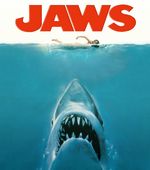
Jaws
#8. JAWS is a 1975 American thriller film directed by Steven Spielberg and based on Peter Benchley's 1974 novel Jaws. The prototypical summer blockbuster, its release is regarded as a watershed moment in motion picture history. In the story, a giant man-eating great white shark attacks beachgoers on Amity Island, a fictional New England summer resort town, prompting the local police chief to hunt it with the help of a marine biologist and a professional shark hunter. The film stars Roy Scheider as police chief Martin Brody, Richard Dreyfuss as oceanographer Matt Hooper, Robert Shaw as shark hunter Quint, Murray Hamilton as Larry Vaughn, the mayor of Amity Island, and Lorraine Gary as Brody's wife, Ellen. The screenplay is credited to both Benchley, who wrote the first drafts, and actor-writer Carl Gottlieb, who rewrote the script during principal photography. Shot mostly on location on Martha's Vineyard in Massachusetts, the film had a troubled production, going over budget and past schedule. As the art department's mechanical sharks suffered many malfunctions, Spielberg decided to mostly suggest the animal's presence, employing an ominous, minimalistic theme created by composer John Williams to indicate the shark's impending appearances. Spielberg and others have compared this suggestive approach to that of classic thriller director Alfred Hitchcock. Universal Pictures gave the film what was then an exceptionally wide release for a major studio picture, over 450 screens, accompanied by an extensive marketing campaign with a heavy emphasis on television spots and tie-in merchandise. Generally well received by critics, Jaws became the highest-grossing film of all time until Star Wars. It won several awards for its soundtrack and editing. Along with Star Wars, Jaws was pivotal in establishing the modern Hollywood business model, which revolves around high box-office returns from action and adventure pictures with simple "high-concept" premises that are released during the

Halloween
#9. HALLOWEEN is a 1978 American independent slasher film directed and scored by John Carpenter, co-written with producer Debra Hill, and starring Donald Pleasence and Jamie Lee Curtis in her film debut. The film was the first installment in what has become the Halloween franchise. The plot is set in the fictional Midwestern town of Haddonfield, Illinois. On Halloween night in 1963, a six-year-old Michael Myers dressed in a clown costume murders his older sister by stabbing her with a kitchen knife. Fifteen years later, Michael Myers, age 21, escapes from a psychiatric hospital, returns home, and stalks Laurie Strode and her friends. Michael's psychiatrist Dr. Sam Loomis suspects Michael's intentions, and follows him to Haddonfield to try to prevent him from killing. Halloween was produced on a budget of $300,000 and grossed $47 million at the box office in the United States, and $70 million worldwide, equivalent to $250 million as of 2014, becoming one of the most profitable independent films. Many critics credit the film as the first in a long line of slasher films inspired by Alfred Hitchcock's Psycho (1960). Halloween had many imitators and originated several clichés found in low-budget horror films of the 1980s and 1990s. Unlike many of its imitators, Halloween contains little graphic violence and gore. In 2006, it was selected for preservation in the United States National Film Registry by the Library of Congress as being "culturally, historically, or aesthetically significant. Some critics have suggested that Halloween may encourage sadism and misogyny by audiences identifying with its villain. Other critics have suggested the film is a social critique of the immorality of youth and teenagers in 1970s America, with many of Myers' victims being sexually promiscuous substance abusers, while the lone heroine is depicted as innocent and pure, hence her survival. Nevertheless, Carpenter dismisses such analyses. Several of Halloween' s techniques and plot el

carrie
#3. CARRIE is a 1976 American supernatural horror film based on Stephen King's 1974 novel of the same name. The film was directed by Brian De Palma with a screenplay by Lawrence D. Cohen. The film received two Academy Award nominations, one for Sissy Spacek in the title role and one for Piper Laurie as her abusive mother. The film featured numerous young actors including Nancy Allen, William Katt, Amy Irving, and John Travolta whose careers were launched, or escalated, by the film. It also relaunched the screen and television career of Laurie, who had not been active in show business since 1961. Carrie was the first of more than 100 film and television productions adapted from, or based on, the published works of Stephen King. Carrie received largely positive reviews and is widely regarded as one of the best films of 1976. The film currently holds a 92% "Certified Fresh" rating on the review aggregation website Rotten Tomatoes; the consensus states: "Carrie is a horrifying look at supernatural powers, high school cruelty, and teen angst -- and it brings us one of the most memorable and disturbing prom scenes in history." Roger Ebert of the Chicago Sun-Times stated the film was an "absolutely spellbinding horror movie", as well as an "observant human portrait", giving three and a half stars out of four. Pauline Kael of The New Yorker stated that Carrie was "the best scary-funny movie since Jaws a teasing, terrifying, lyrical shocker". Take One Magazine critic Susan Schenker said she was "angry at the way Carrie manipulated me to the point where my heart was thudding, and embarrassed because the film really works." A 1998 edition of The Movie Guide stated Carrie was a "landmark horror film", while Stephen Farber prophetically stated in a 1978 issue of New West Magazine, "it's a horror classic, and years from now it will still be written and argued about, and it will still be scaring the daylights out of new generations of moviegoers." Quentin Tarantino place

alien
#12. ALIEN is a 1979 science-fiction horror film directed by Ridley Scott, and starring Tom Skerritt, Sigourney Weaver, Veronica Cartwright, Harry Dean Stanton, John Hurt, Ian Holm and Yaphet Kotto. The film's title refers to a highly aggressive extraterrestrial creature that stalks and kills the crew of a spaceship. Dan O'Bannon wrote the screenplay from a story he wrote with Ronald Shusett, drawing influence from previous works of science fiction and horror. The film was produced by Gordon Carroll, David Giler and Walter Hill through their Brandywine Productions and distributed by 20th Century Fox. Giler and Hill made revisions and additions to the script. Shusett was executive producer. The eponymous Alien and its accompanying elements were designed by Swiss surrealist artist H. R. Giger, while concept artists Ron Cobb and Chris Foss designed the human aspects of the film. Alien was the first film produced in the Alien franchise and is the second chronologically, with the 2012 film Prometheus set in an earlier time frame. Alien received both critical acclaim and box office success, receiving an Academy Award for Best Visual Effects, Saturn Awards for Best Science Fiction Film, Best Direction for Scott, and Best Supporting Actress for Cartwright, and a Hugo Award for Best Dramatic Presentation, along with numerous other award nominations. It has remained highly praised in subsequent decades, being considered one of the greatest films of all time. In 2002 the film was deemed "culturally, historically or aesthetically significant" by the Library of Congress and was selected for preservation in the United States National Film Registry. In 2008, it was ranked as the seventh-best film in the science fiction genre by the American Film Institute, and as the 33rd greatest film of all time by Empire magazine.

duchov.jpg
Actor and singer David Duchovny performs at The Cutting Room, to promote his debut album "Hell or Highwater" on Tuesday, May 12, 2015, in New York. (Photo by Evan Agostini/Invision/AP)

5d76e32ef83ad62f850f6a7067006f59.jpg
This image made from video taken on Thursday, Oct. 22, 2015, from a helmet camera, shows U.S. and Iraqi special forces freeing hostages from a prison controlled by Islamic State militants in the town of Huwija, 15 kilometers (9 miles) west of the Iraqi city of Kirkuk. The Kurdish regional government in northern Iraq released a video Sunday, Oct. 25, 2015, purportedly showing the joint raid of a prison by U.S. and Kurdish peshmerga forces in which they released 70 hostages from the Islamic State group’s captivity. (Kurdistan Regional Security Council via AP)
e81a97becfa5c02f850f6a7067004c1b.jpg
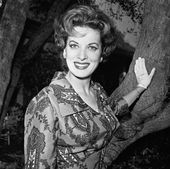
This Jan. 19, 1960, file photo shows movie actress Maureen O'Hara photographed in her front yard in Los Angeles. (AP Photo/Harold Filan, File)

26edbb72cf90c02f850f6a706700fc61.jpg
FILE - In this March 9, 2004 file photo, actress Maureen O'Hara poses for a photo in the Bel Air Estates area of Los Angeles. O'Hara,who appeared in such classic films as "The Quiet Man” and How Green Was My Valley," has died. Her manager says O’Hara died in her sleep Saturday, Oct. 24, 2015 at her home in Boise, Idaho. (AP Photo/Damian Dovarganes)

7e6949a9a6c2aa2f850f6a7067005fa9.jpg
In this June 12, 2015, file photo, Duane Allen, from left, Joe Bonsall, William Lee Golden, and Richard Sterban of the Oak Ridge Boys perform at LP Field at the CMA Music Festival in Nashville, Tenn. On Sunday, Oct. 25, the Oak Ridge Boys will be inducted into the Country Music Hall of Fame. (Photo by Al Wagner/Invision/AP, File)

k2-_91d955d0-5e86-437c-84a1-3681fced9fd4.v1.jpg
Author John Dodson's book is now its way to the big screen, destined to become movie produced by Lionsgate.
