


Entertainment_Culture
Latest Stories

blanchett.jpg
In this image released by Sony Pictures Classics, Cate Blanchett portrays Mary Mapes in a scene from, "Truth." (Lisa Tomasetti /Sony Pictures Classics via AP)

tab.jpg
"Tab Hunter Confidential" tells the story of the 1950s matinee idol in his own words. (caiff.ticketmob.com)

10222015_outdoor8201.jpg
Mario Kim, Will Rupli and John Kirlin with a white marlin aboard Ono off Ocean City, Maryland. (Tim Rupli)

Celtic cross.png
A screen capture from a pro-abortion commercial on behalf of the repeal of Ireland's 8th Amendment, outlawing abortion.

GloriaDarden.jpg
Gloria Darden, left, mother of Freddie Gray, gathers with family attorney Billy Murphy and clergy for a news conference, Monday, April 27, 2015, in Baltimore. (Associated Press)

the_graduate3.jpg
Scene from the movie The Graduate.

Wizard-of-Oz-poster
#18 The Wizard of Oz (1939) Director: Victor Fleming Stars: Judy Garland, Frank Morgan, Ray Bolger , Bert Lahr, Jack Haley. The Wizard of Oz is a 1939 American musical comedy-drama fantasy film produced by Metro-Goldwyn-Mayer, and the most well-known and commercially successful adaptation based on the 1900 novel The Wonderful Wizard of Oz by L. Frank Baum. Notable for its use of Technicolor, fantasy storytelling, musical score and unusual characters, over the years it has become an icon of American popular culture. It was nominated for six Academy Awards, including Best Picture but lost to Gone with the Wind. It did win in two other categories including Best Original Song for "Over the Rainbow". However, the film was a box office disappointment on its initial release, earning only $3,017,000 on a $2,777,000 budget, despite receiving largely positive reviews. It was MGM's most expensive production at that time, and did not completely recoup the studio's investment and turn a profit until theatrical re-releases starting in 1949. The 1956 broadcast television premiere of the film on CBS re-introduced the film to the wider public and eventually made the presentation an annual tradition, making it one of the most known films in cinema history.The film was named the most-viewed motion picture on television syndication by the Library of Congress who also included the film in its National Film Registry in its inaugural year in 1989. Designation on the registry calls for efforts to preserve it for being "culturally, historically, and aesthetically significant". The Wizard of Oz is often ranked on best-movie lists in critics' and public polls. It is the source of many quotes referenced in modern popular culture.

Vertigomovie
#4 Vertigo (1958) Director: Alfred Hitchcock Stars: James Stewart, Kim Novak, Barbara Bel Geddes. Vertigo is a 1958 American psychological thriller film directed and produced by Alfred Hitchcock. The story was based on the 1954 novel D'entre les morts (From Among the Dead) by Boileau-Narcejac. The screenplay was written by Alec Coppel and Samuel A. Taylor. The film stars James Stewart as former police detective John "Scottie" Ferguson. Scottie is forced into early retirement because an incident in the line of duty has caused him to develop acrophobia (an extreme fear of heights) and vertigo (a sensation of false, rotational movement). Scottie is hired by an acquaintance, Gavin Elster, as a private investigator to follow Gavin's wife Madeleine (Kim Novak), who is behaving strangely. The film was shot on location in San Francisco, California, and at Paramount Studios in Hollywood. It is the first film to utilize the dolly zoom, an in-camera effect that distorts perspective to create disorientation, to convey Scottie's acrophobia. As a result of its use in this film, the effect is often referred to as "the Vertigo effect". Vertigo received mixed reviews upon initial release, but is now often cited as a classic Hitchcock film and one of the defining works of his career. Attracting significant scholarly criticism, it replaced Citizen Kane as the best film of all time in the 2012 British Film Institute's Sight & Sound critics' poll. In 1996, the film underwent a major restoration to create a new 70mm print and DTS soundtrack. It has appeared repeatedly in polls of the best films by the American Film Institute.

TheSearchers
#20 The Searchers (1956) Director: John Ford Stars: John Wayne, Jeffrey Hunter, Vera Miles , Natalie Wood. The Searchers is a 1956 American Technicolor VistaVision Western film directed by John Ford, based on the 1954 novel by Alan Le May, set during the TexasIndian Wars, and starring John Wayne as a middle-aged Civil War veteran who spends years looking for his abducted niece (Natalie Wood), accompanied by his adoptive nephew (Jeffrey Hunter). Critic Roger Ebert found Wayne's character, Ethan Edwards, "one of the most compelling characters Ford and Wayne ever created". The film was a commercial success, although it received no Academy Award nominations. Since its release, it has come to be considered a masterpiece, and one of the greatest and most influential films ever made. It was named the greatest American western by the American Film Institute in 2008, and it placed 12th on the same organization's 2007 list of the 100 greatest American movies of all time. Entertainment Weekly also named it the best western. The British Film Institute's Sight & Sound magazine ranked it as the seventh best film of all time based on a 2012 international survey of film critics and in 2008, the French magazine Cahiers du cinéma ranked The Searchers number 10 in their list of the top 100 best films ever made. In 1989, The Searchers was deemed "culturally, historically, or aesthetically significant" by the United States Library of Congress, and selected for preservation in its National Film Registry; it was in the first cohort of films selected for the registry.

the_graduate
#15 The Graduate (1967) Director: Mike Nichols Stars: Dustin Hoffman, Anne Bancroft, Katharine Ross. The Graduate is a 1967 American comedy-drama film directed by Mike Nichols. It is based on the 1963 novel The Graduate by Charles Webb, who wrote it shortly after graduating from Williams College. The screenplay is by Calder Willingham and Buck Henry, who appears in the film as a hotel clerk. The film tells the story of 21-year-old Benjamin Braddock (Dustin Hoffman), a recent college graduate with no well-defined aim in life, who is seduced by an older woman, Mrs. Robinson (Anne Bancroft), and then proceeds to fall in love with her daughter Elaine (Katharine Ross). In 1996, The Graduate was selected for preservation in the U.S. National Film Registry as being "culturally, historically, or aesthetically significant". With the figures adjusted for inflation, the film is number 21 on the list of highest-grossing films in the United States and Canada.

The_Godfather
#1 The Godfather (1972) Director: Francis Ford Coppola Stars: Marlon Brando, Al Pacino, James Caan The Godfather is a 1972 American crime film directed by Francis Ford Coppola and produced by Albert S. Ruddy from a screenplay by Mario Puzo and Coppola. Starring Marlon Brando and Al Pacino as the leaders of the fictional Corleone New York crime family, the story spans the years 1945-55, concentrating on the transformation of Michael Corleone from reluctant family outsider to ruthless Mafia boss while chronicling the family under the patriarch Vito. Based on Puzo's best-selling novel of the same name, The Godfather is widely regarded as one of the greatest films in world cinemaand as one of the most influential, especially in the gangster genre. Ranked second to Citizen Kane by the American Film Institute in 2007, it was selected for preservation in the United States National Film Registry of the Library of Congress in 1990 as being "culturally, historically, or aesthetically significant". The film was the box office leader for 1972 and was, for a time, the highest-grossing picture ever made. It won three Academy Awards for that year: Best Picture, Best Actor (Brando) and in the category Best Adapted Screenplay for Puzo and Coppola. Its nominations in seven other categories included Pacino, James Caan and Robert Duvall for Best Supporting Actor and Coppola for Best Director. The success spawned two sequels: The Godfather Part II in 1974, and The Godfather Part III in 1990.

the-shawshank-redemption
#10 The Shawshank Redemption (1994) Director: Frank Darabont Stars: Tim Robbins, Morgan Freeman, Bob Gunton. The Shawshank Redemption is a 1994 American drama film written and directed by Frank Darabont and starring Tim Robbins and Morgan Freeman. Adapted from the Stephen King novella Rita Hayworth and Shawshank Redemption, the film tells the story of Andy Dufresne, a banker who is sentenced to life in Shawshank State Prison for the murder of his wife and her lover despite his claims of innocence. During his time at the prison, he befriends a fellow inmate, Ellis Boyd "Red" Redding, and finds himself protected by the guards after the warden begins using him in his money laundering operation. Despite being a box office disappointment, the film received multiple award nominations (including seven Oscar nominations) and outstanding reviews from critics for its acting, story, and realism. It was included in the American Film Institute's 100 Years...100 Movies 10th Anniversary Edition. It is now widely considered one of the best films of all time.
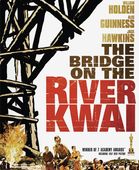
the-bridge-on-the-river-kwai
#8 The Bridge on the River Kwai (1957) Director: David Lean Stars: William Holden, Alec Guinness, Jack Hawkins. The Bridge on the River Kwai is a British 1957 World War II epic film directed by David Lean and starring William Holden, Jack Hawkins, Alec Guinness and Sessue Hayakawa. Based on the novel Le Pont de la Rivière Kwai (1952) by Pierre Boulle, the film is a work of fiction but borrows the construction of the Burma Railway in 194243 for its historical setting. The movie was filmed in Ceylon (now known as Sri Lanka). The bridge in the film was located near Kitulgala. Carl Foreman was the initial screenwriter, but Lean replaced him with Michael Wilson. Both writers had to work in secret, as they were on the Hollywood blacklist. As a result, Boule (who did not even speak English) was credited and "won" the Academy Award for Best Adapted Screenplay; many years later, Foreman and Wilson posthumously received the Academy Award. The film was widely praised, winning seven Academy Awards (including Best Picture) at the 30th Academy Awards; in 1997 this film was deemed "culturally, historically, or aesthetically significant" and selected for preservation in the National Film Registry by the United States Library of Congress. It is widely considered to be one of the greatest films in history.

sunset_boulevard
#9 Sunset Blvd. (1950) Director: Billy Wilder Stars: William Holden, Gloria Swanson, Erich von Stroheim. SUNSET BLVD is a 1950 American black comedy/drama film noir directed and co-written by Billy Wilder, and produced and co-written by Charles Brackett. It was named after the boulevard that runs through Los Angeles and Beverly Hills, California. The film stars William Holden as Joe Gillis, an unsuccessful screenwriter, and Gloria Swanson as Norma Desmond, a faded silent movie star who draws him into her fantasy world where she dreams of making a triumphant return to the screen, with Erich von Stroheim as Max Von Mayerling, her devoted servant. Nancy Olson, Fred Clark, Lloyd Gough and Jack Webb play supporting roles. Director Cecil B. DeMille and gossip columnist Hedda Hopper play themselves, and the film includes cameo appearances by leading silent film actors Buster Keaton, H. B. Warner and Anna Q. Nilsson. Praised by many critics when first released, Sunset Boulevard was nominated for eleven Academy Awards (including nominations in all four acting categories) and won three. It is widely accepted as a classic, often cited as one of the greatest films of American cinema. Deemed "culturally, historically, or aesthetically significant" by the U.S. Library of Congress in 1989, Sunset Boulevard was included in the first group of films selected for preservation in the National Film Registry. In 1998, it was ranked number twelve on the American Film Institute's list of the 100 best American films of the 20th century, and in 2007 it was 16th on their 10th Anniversary list.

schindlers-list-656694l
#3 Schindler's List (1993) Director: Steven Spielberg Stars: Liam Neeson, Ralph Fiennes, Ben Kingsley. Schindler's List is a 1993 American epic historical period drama film, directed and co-produced by Steven Spielberg and scripted by Steven Zaillian. It is based on the novel Schindler's Ark by Thomas Keneally, an Australian novelist. The film is based on the life of Oskar Schindler, an ethnic German businessman who saved the lives of more than a thousand mostly Polish-Jewish refugees during the Holocaust by employing them in his factories. It stars Liam Neeson as Schindler, Ralph Fiennes as Schutzstaffel (SS) officer Amon Goeth, and Ben Kingsley as Schindler's Jewish accountant Itzhak Stern. Ideas for a film about the Schindlerjuden (Schindler Jews) were proposed as early as 1963. Poldek Pfefferberg, one of the Schindlerjuden, made it his life's mission to tell the story of Schindler. Spielberg became interested in the story when executive Sid Sheinberg sent him a book review of Schindler's Ark. Universal Studios bought the rights to the novel, but Spielberg, unsure if he was ready to make a film about the Holocaust, tried to pass the project to several other directors before finally deciding to direct the film himself. Principal photography took place in Kraków, Poland, over the course of 72 days in 1993. Spielberg shot the film in black and white and approached it as a documentary. Cinematographer Janusz Kamiski wanted to give the film a sense of timelessness. John Williams composed the score, and violinist Itzhak Perlman performs the film's main theme. Schindler's List premiered on November 30, 1993, in Washington, D.C. and it was released on December 15, 1993, in the United States. Often listed among the greatest films ever made,[4][5][6] it was also a box office success, earning $321.2 million worldwide on a $22 million budget. It was the recipient of seven Academy Awards (out of twelve nominations), including Best Picture, Best Director, Best Adapted Screen

SavingPrivateRyan
#19 Saving Private Ryan (1998) Director: Steven Spielberg Stars: Tom Hanks, Matt Damon, Tom Sizemore. Saving Private Ryan is a 1998 American epic war drama film set during the Invasion of Normandy in World War II. Directed by Steven Spielberg and written by Robert Rodat, the film is notable for its graphic and realistic portrayal of war, and for the intensity of its opening 27 minutes, which includes a depiction of the Omaha Beach assault of June 6, 1944. It follows United States Army Rangers Captain John H. Miller (Tom Hanks) and a squad (Tom Sizemore, Edward Burns, Barry Pepper, Vin Diesel, Giovanni Ribisi, Adam Goldberg, and Jeremy Davies) as they search for a paratrooper, Private first class James Francis Ryan (Matt Damon), who is the last-surviving brother of four servicemen. Saving Private Ryan received universal critical acclaim, winning several awards for film, cast, and crew, as well as earning significant returns at the box office. The film grossed US$481.8 million worldwide, making it the second highest-grossing film of the year. The Academy of Motion Picture Arts and Sciences nominated the film for 11 Academy Awards; Spielberg's direction won him a second Academy Award for Best Director, with four more awards going to the film. In 2014, Saving Private Ryan was selected for preservation in the National Film Registry as it was deemed "culturally, historically, or aesthetically significant."

Raging_bull
#14 Raging Bull (1980) Director: Martin Scorsese Stars: Robert De Niro, Cathy Moriarty, Joe Pesci. Raging Bull is a 1980 American biographical black-and-white sports drama film directed by Martin Scorsese, produced by Robert Chartoff and Irwin Winkler and adapted by Paul Schrader and Mardik Martin from Jake LaMotta's memoir Raging Bull: My Story. It stars Robert De Niro as Jake LaMotta, an Italian American middleweight boxer whose self-destructive and obsessive rage, sexual jealousy, and animalistic appetite destroyed his relationship with his wife and family. Also featured in the film are Joe Pesci as Joey, La Motta's well-intentioned brother and manager who tries to help Jake battle his inner demons, and Cathy Moriarty as his wife. The film features supporting roles from Nicholas Colasanto, Theresa Saldana and Frank Vincent. Scorsese was initially reluctant to develop the project, though he eventually came to relate to La Motta's story. Schrader re-wrote Martin's first screenplay, and Scorsese and De Niro together made uncredited contributions thereafter. Pesci was an unknown actor prior to the film, as was Moriarty, who was suggested for her role by Pesci. During principal photography, each of the boxing scenes was choreographed for a specific visual style and De Niro gained approximately 60 pounds to portray La Motta in his later post-boxing years. After receiving mixed initial reviews (and criticism due to its violent content), it went on to garner a high critical reputation and is now regarded among the greatest American films ever made, including by Roger Ebert of the Chicago Sun-Times, Gene Siskel of the Chicago Tribune, British film historian Leslie Halliwell, the American Film Institute, Time, The New York Times, Variety, Entertainment Weekly, Empire, Total Film, Film 4, and BFI's Sight and Sound. It was listed in the National Film Registry in 1990, its first year of eligibility. Raging Bull is voted by many critics including Roger Ebert and Gene Siskel as
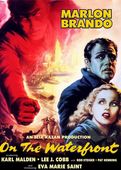
On-The-Waterfront-Poster
#11 On the Waterfront (1954) Director: Elia Kazan Stars: Marlon Brando, Karl Malden, Lee J. Cobb. On the Waterfront is a 1954 American crime drama film with elements of film noir. The film was directed by Elia Kazan and written by Budd Schulberg. It stars Marlon Brando and features Karl Malden, Lee J. Cobb, Rod Steiger, and, in her film debut, Eva Marie Saint. The soundtrack score was composed by Leonard Bernstein. It is based on Crime on the Waterfront, a series of articles published in the New York Sun by Malcolm Johnson that won the 1949 Pulitzer Prize for Local Reporting. The film focuses on union violence and corruption amongst longshoremen while detailing widespread corruption, extortion, and racketeering on the waterfronts of Hoboken, New Jersey. On the Waterfront was a critical and commercial success and received 12 Academy Award nominations, winning eight, including Best Picture, Best Actor for Brando, Best Supporting Actress for Saint, and Best Director for Kazan. In 1997 it was ranked by the American Film Institute as the eighth-greatest American movie of all time and in AFI's 2007 list it was ranked 19th. It is Bernstein's only original film score not adapted from a stage production with songs. In 1989, On the Waterfront was deemed "culturally, historically or aesthetically significant" by the Library of Congress and selected for preservation in the United States National Film Registry.

Lawrence_of_Arabia
#12 Lawrence of Arabia (1962) Director: David Lean Stars: Peter O'Toole, Alec Guinness, Anthony Quinn. Lawrence of Arabia is a 1962 epic historical drama film based on the life of T. E. Lawrence. It was directed by David Lean and produced by Sam Spiegel through his British company, Horizon Pictures, with the screenplay by Robert Bolt and Michael Wilson. The film stars Peter O'Toole in the title role. It is widely considered one of the greatest and most influential films in the history of cinema. The dramatic score by Maurice Jarre and the Super Panavision 70 cinematography by Freddie Young are also highly acclaimed. The film was nominated for ten Academy Awards and won seven in total including Best Director, Best Sound Editing, Best Film Editing, and Best Picture. The film depicts Lawrence's experiences in the Arabian Peninsula during World War I, in particular his attacks on Aqaba and Damascus and his involvement in the Arab National Council. Its themes include Lawrence's emotional struggles with the personal violence inherent in war, his own identity, and his divided allegiance between his native Britain and its army and his newfound comrades within the Arabian desert tribes. In 1991, Lawrence of Arabia was deemed "culturally, historically, or aesthetically significant" and selected for preservation in the United States Library of Congress National Film Registry.
