


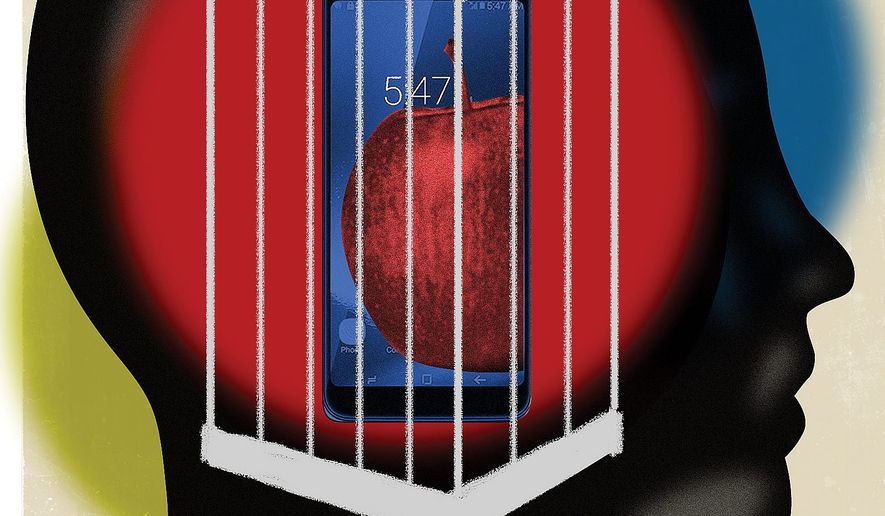

OPINION:
Let’s get one thing straight right out of the gate: I am a modern human being, which means my smartphone is less an accessory and more an external, glowing lobe of my brain.
So when I recently secured tickets to the Masters (the holy grail of golf, the pristine emerald paradise of Augusta National), my excitement was immediately kneecapped by a terrifying realization: They don’t allow cellphones.
At first, I objected. Violently. Well, internally violent, because one does not make a scene at Augusta. But in my head, I was throwing a tantrum of epic proportions. How was I supposed to survive 10 hours without access to my email, my text messages or the endless, mind-numbing scroll of social media?
What if there was a national emergency? What if my family needed me? What if someone on the internet was wrong and urgently required my unsolicited opinion? How will the dozen people I communicate with daily on numerous threads survive without my witty quips?
The Masters’ policy seemed draconian, a relic of a bygone era stubbornly clinging to relevance. Leaving my phone in my car felt like forgetting my child in the back seat. As I walked up the shady pathway to the course, I felt phantom vibrations in my pocket, a jittery mess of withdrawal.
But then, something amazing happened. I took a breath. I looked around. And I realized that the sky hadn’t fallen. In fact, the world without cellphones was … spectacular.
For the first few hours, I existed in my own little bubble. I was entirely out of touch, completely unreachable, floating in a glorious vacuum of immediate, physical reality. There were no pings, no buzzes, no digital demands on my attention. I wasn’t constantly calculating the optimal angle to document my presence for an audience of acquaintances who didn’t care. I was simply there.
And so was everyone else. This was perhaps the most jarring and beautiful revelation. I looked across the sea of patrons lining the fairways and realized what was missing. Not a single person was taking a duck-lipped selfie in front of the azaleas. There were no teenagers attempting poorly synchronized TikTok dances near the concession stands. There was no chorus of obnoxious, marimba-style ringtones shattering the tense silence right before a critical putt.
Instead, people were talking. To each other. Eye contact was being made. Conversations were happening in real time, uninterrupted by the sudden urge to check a notification. It was like stepping into a time machine set to 1995, only with better moisture-wicking fabrics.
The true epiphany hit me on the fifth hole. Rory McIlroy was stepping up to the tee box. I was 3 feet away. Instinctively, my hand twitched toward my empty pocket. I needed to film this. I needed to capture the fluid, violent poetry of his swing on video. Why? Because that’s what we do now. We outsource our memories to silicon chips.
But as I stood there empty-handed, a liberating thought washed over me: I am never, ever going to watch a blurry, poorly framed video of a golf swing on my phone. Never. It would sit in my camera roll, gathering digital dust until I ran out of storage space.
Because I didn’t have a screen to hide behind, I actually watched the shot. I heard the crisp, explosive crack of the driver. I tracked the white speck as it launched into the Georgia sky, hanging there against the clouds before dropping precisely into the fairway. I felt the collective gasp and polite applause of the crowd.
I experienced the moment with my own two eyes, rather than through a 6-inch digital viewfinder.
As the day wore on, I found myself relishing the disconnection. There was no need to text anyone about where to meet for lunch; we simply made a plan and stuck to it. Or didn’t. If we got separated, we found each other the old-fashioned way: by looking.
I wasn’t worried about the news, the stock market or the endless barrage of emails piling up in my inbox. I was fully, unapologetically present in a world of green grass, white sand and pimento cheese sandwiches.
By the time the shadows grew long and it was time to leave, my initial panic had been replaced by a profound sense of peace. Walking back toward my car, I felt a genuine sense of dread. I didn’t really want my phone back.
When I got it and turned it on, it immediately began to convulse with notifications — dozens of texts, hundreds of emails, a cacophony of digital noise demanding my immediate attention. As I scrolled, I realized none of it was important. None of it mattered as much as the quiet perfection of the day I had just experienced.
I survived the Masters without my cellphone. And honestly? By the end of it, I completely fell in love with a world where everyone is forced to just look up and talk to one another.
• Joseph Curl covered the White House and politics for a decade for The Washington Times. He can be reached at josephcurl@gmail.com and on Twitter @josephcurl.

Please read our comment policy before commenting.