


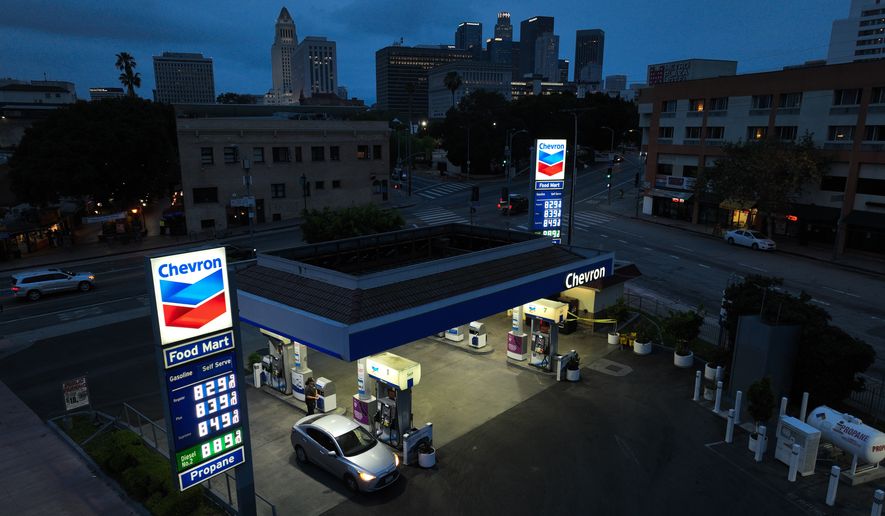

An executive at Chevron has advice for Americans grappling with the rise in gas prices amid the Iran war: Don’t drive so much.
“People should try to drive less. They should try to conserve energy. We should be doing that all the time. Energy’s essential for people’s lives, but we should conserve it,” Andy Walz, Chevron’s president of lubricants, chemicals and shipping, told CBS News on Tuesday.
The national price of a gallon of regular gasoline has jumped from $2.937 on Feb. 23 prior to the start of the war to $4.123 as of Monday, according to the Energy Information Administration.
For diesel used on American highways, the price has gone up over the same period from $3.809 per gallon to $5.608.
The war has affected traffic through the Strait of Hormuz, which sits between Oman and Iran and which, prior to the war, saw oil accounting for 20% of the world’s liquid petroleum consumption pass through it, according to the EIA.
Iran cut off maritime traffic through the strait, and the U.S. is now blockading Iran’s ports.
“Warning: If any of these ships come anywhere close to our BLOCKADE, they will be immediately ELIMINATED, using the same system of kill that we use against the drug dealers on boats at Sea. It is quick and brutal,” President Trump posted Monday on Truth Social.
Mr. Walz also said other countries have it worse. America produces and refines most of its oil supply, and other countries are cut off from Middle Eastern oil.
“America is more reliant on local production, but [there are] countries in Asia and other parts of the world that rely heavily on Middle East crude. They can’t get it. They can’t refine it. They can’t make the products people need, and they’re starting to run out,” Mr. Walz told CBS News.
• Brad Matthews can be reached at bmatthews@washingtontimes.com.

Please read our comment policy before commenting.