


War_Conflict
Latest Stories
AP_070320019188
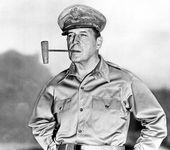
Douglas MacArthur (26 January 1880; 5 April 1964) was five-star general and field marshal of the Philippine Army. He was Chief of Staff of the United States Army during the 1930s and played a prominent role in the Pacific theater during World War II. He received the Medal of Honor for his service in the Philippines Campaign, which made him and his father Arthur MacArthur, Jr., the first father and son to be awarded the medal. He was one of only five men ever to rise to the rank of General of the Army in the US Army, and the only man ever to become a field marshal in the Philippine Army. From 1919 to 1922, MacArthur served as Superintendent of the U.S. Military Academy at West Point, where he attempted a series of reforms. His next assignment was in the Philippines, where in 1924 he was instrumental in quelling the Philippine Scout Mutiny. In 1925, he became the Army's youngest major general. He retired from the US Army in 1937 to become Military Advisor to the Commonwealth Government of the Philippines. MacArthur was recalled to active duty in 1941 as commander of United States Army Forces in the Far East. A series of disasters followed, starting with the destruction of his air forces on 8 December 1941, and the invasion of the Philippines by the Japanese. MacArthur's forces were soon compelled to withdraw to Bataan, where they held out until May 1942. In March 1942, MacArthur, his family and his staff left nearby Corregidor Island in PT boats and escaped to Australia, where MacArthur became Supreme Commander, Southwest Pacific Area. Upon his arrival in Australia, MacArthur gave a speech in which he famously promised "I shall return" to the Philippines. For his defense of the Philippines, MacArthur was awarded the Medal of Honor. After more than two years of fighting in the Pacific, he fulfilled a promise to return to the Philippines. He officially accepted Japan's surrender on 2 September 1945, aboard USS Missouri anchored in Tokyo Bay, and oversaw the occupa

AP_050522018295
Pat Tillman (November 6, 1976; April 22, 2004) was a player in the NFL who left his sports career and enlisted in the United States Army in June 2002 in the aftermath of the September 11 attacks. His service in Iraq and Afghanistan, and subsequent death, were the subject of much media attention. Tillman joined the Army Rangers and served several tours in combat before he died in the mountains of Afghanistan. At first, the Army reported that Tillman had been killed by enemy fire. Controversy ensued when a month later, on May 28, 2004, the Pentagon notified the Tillman family that he had died as a result of a friendly fire incident; the family and other critics allege that the Department of Defense delayed the disclosure for weeks after Tillman's memorial service out of a desire to protect the image of the U.S. military. Tillman was the first professional football player to be killed in combat since Bob Kalsu, who died in the Vietnam War in 1970. Tillman was posthumously promoted from specialist to corporal. He also received posthumous Silver Star and Purple Heart medals. (AP Photo)

AP_02102801254
Capt. Eddie Rickenbacker (October 8, 1890 – July 23, 1973) American ace fighter pilot, is shown with his fighter Spad plane during World War I. Rickenbacker served in the U.S. Air Service in France as commanding officer of the 94th Aero Pursuit Sqaudron. He shot down 22 enemy planes and four observation balloons. With 26 aerial victories, he was America's most successful fighter ace in the war. (AP Photo/U.S. Army Air Force)

pakistan_nuclear_arms_32281.jpg
FILE - In this Wednesday, March 23, 2016 file photo, a Pakistani-made Shaheen-III missile is on display during a military parade in Islamabad, Pakistan. Pakistan vowed Tuesday, March 14, to prevent non-nuclear states from gaining the technology that would enable them to start down the path to acquiring nuclear weapons, even though both Islamabad and neighbor New Delhi have defied non-proliferation treaties to become competing nuclear powers. (AP Photo/Anjum Naveed, File)

iraq_after_mosul_60759.jpg
FILE - In this March 2, 2017 file photo, Displaced Iraqis, who fled fighting between Iraqi security forces and Islamic State militants, gather for food at a camp for internally displaced people, in Hamam al-Alil, some 10 kilometers south of Mosul, Iraq. Some 40 square kilometers on the western bank of the Tigris River is the Islamic State group’s last major stand in Iraq. In addition to Mosul’s so-called right bank, IS still controls a handful of small pockets of Iraqi territory and a swath of Syria’s north including the group’s self-proclaimed capital, Raqqa.(AP Photo/ Khalid Mohammed)

iraq_after_mosul_18333.jpg
FILE - On this Feb. 21, 2017 file photo, a civilian who escaped Islamic State territory phones his family he left behind in Abu Saif, Iraq. Some 40 square kilometers on the western bank of the Tigris River is the Islamic State group’s last major stand in Iraq. In addition to Mosul’s so-called right bank, IS still controls a handful of small pockets of Iraqi territory and a swath of Syria’s north including the group’s self-proclaimed capital, Raqqa.(AP Photo/Bram Janssen, File)

iraq_after_mosul_15261.jpg
FILE - In this March 1, 2017 file photo, An Iraqi soldier inspects a recently-discovered train tunnel that belonged to the former Baghdad to Mosul line, that was turned it to a training camp for Islamic State fighters, in western Mosul, Iraq. Some 40 square kilometers on the western bank of the Tigris River is the Islamic State group’s last major stand in Iraq. In addition to Mosul’s so-called right bank, IS still controls a handful of small pockets of Iraqi territory and a swath of Syria’s north including the group’s self-proclaimed capital, Raqqa. (AP Photo/Khalid Mohammed, File)

iraq_after_mosul_15652.jpg
FILE - In this March 2, 2017 file photo, families flee clashes between Iraqi forces and Islamic State group militants in western Mosul. Some 40 square kilometers on the western bank of the Tigris River is the Islamic State group’s last major stand in Iraq. In addition to Mosul’s so-called right bank, IS still controls a handful of small pockets of Iraqi territory and a swath of Syria’s north including the group’s self-proclaimed capital, Raqqa. (AP Photo/Susannah George, File)

iraq_after_mosul_58641.jpg
FILE - In this Nov. 16, 2016 file photo, a car bomb explodes next to Iraqi special forces armored vehicles as they advance towards Islamic State held territory in Mosul, Iraq. Some 40 square kilometers on the western bank of the Tigris River is the Islamic State group’s last major stand in Iraq. In addition to Mosul’s so-called right bank, IS still controls a handful of small pockets of Iraqi territory and a swath of Syria’s north including the group’s self-proclaimed capital, Raqqa. (AP Photo/Felipe Dana, File)

iraq_after_mosul_21094.jpg
FILE - In this March 12, 2017 file photo, displaced Iraqis gather by the fence to buy food and supplies from vendors standing outside the newly opened Chamakor camp, east of Mosul, Iraq. Some 40 square kilometers on the western bank of the Tigris River is the Islamic State group’s last major stand in Iraq. In addition to Mosul’s so-called right bank, IS still controls a handful of small pockets of Iraqi territory and a swath of Syria’s north including the group’s self-proclaimed capital, Raqqa.(AP Photo/Felipe Dana, File)

iraq_after_mosul_60106.jpg
FILE - In this Feb. 25, 2017 file photo, Iraqi special forces arrest a suspected Islamic State fighter in Mosul, Iraq. Some 40 square kilometers on the western bank of the Tigris River is the Islamic State group’s last major stand in Iraq. In addition to Mosul’s so-called right bank, IS still controls a handful of small pockets of Iraqi territory and a swath of Syria’s north including the group’s self-proclaimed capital, Raqqa. (AP Photo/Khalid Mohammed, File)

iraq_after_mosul_16467.jpg
FILE - In this March 7, 2017 file photo, Iraqi federal policemen open the road towards the government complex as Iraqi security forces advance during fighting against Islamic State militants in Dawasa neighborhood in western Mosul, Iraq. Some 40 square kilometers on the western bank of the Tigris River is the Islamic State group’s last major stand in Iraq. In addition to Mosul’s so-called right bank, IS still controls a handful of small pockets of Iraqi territory and a swath of Syria’s north including the group’s self-proclaimed capital, Raqqa. (AP Photo/Khalid Mohammed, File)

iraq_after_mosul_62653.jpg
In this March 1, 2017, file photo, an Iraqi soldier inspects a recently discovered train tunnel, adorned with an Islamic State group flag, that belonged to the former Baghdad to Mosul line, that was turned into a training camp for IS fighters, in western Mosul, Iraq. (AP Photo/Khalid Mohammed, File)

iraq_after_mosul_09794.jpg
FILE - In this March 9, 2017 file photo, a large cloud of smoke rises during fighting between Iraqi security forces and Islamic State militants as civilians walk toward Iraqi security forces after fleeing their homes on the western side of Mosul, Iraq. Some 40 square kilometers on the western bank of the Tigris River is the Islamic State group’s last major stand in Iraq. In addition to Mosul’s so-called right bank, IS still controls a handful of small pockets of Iraqi territory and a swath of Syria’s north including the group’s self-proclaimed capital, Raqqa. (AP Photo/Khalid Mohammed, File)

aaron_hernandez_30851.jpg
Defense Attorney Linda Kenney Baden, right, questions Boston Police Detective, and member of the Firearms Analysis Unit, Tyrone Camper, during Aaron Hernandez's trial for the July 2012 killings of Daniel de Abreu and Safiro Furtado, Monday, March 13, 2017, in Boston. (Chris Christo/The Boston Herald via AP, Pool)

aaron_hernandez_98775.jpg
First Assistant District Attorney Patrick Haggan, right, hands a revolver to Tyrone Camper, a Boston Police detective and member of the Firearms Analysis Unit, during the double murder trial of former New England Patriots NFL football player Aaron Hernandez, Monday, March 13, 2017, in Boston. (Chris Christo/The Boston Herald via AP, Pool)

Army mortar systems.jpg
The U.S. Army is experimenting with ways to resupply troops via mortar delivery systems. (U.S. Army) ** FILE **

nick_ut_retires_30119.jpg
FILE - In this June 8, 1972 file photo, vombs with a mixture of napalm and white phosphorus jelly dropped by Vietnamese AF Skyraider bombers explode across Route-1, amidst homes and in front of the Cao Dai temple in the outskirts of Trang Bang, Vietnam. In the foreground are Vietnamese soldiers and journalists from various international news organizations. The towers of the Trang Bang Cao Dai temple are visible in the centre of the explosions. (AP Photo/Nick Ut)

syria_complex_grid_31577.jpg
In this February 22, 2015, file photo, the Turkish army's armored vehicles and tanks drive in Syrian town of Ayn al-Arab, also known as Kobani, as they return from the Ottoman tomb in Syria. (AP Photo/Mursel Coban, Depo Photos, File)

syria_complex_grid_10259.jpg
FILE - In this February 22, 2015, file photo, a Syrian Kurdish militia member of the YPG patrols near a Turkish army tank as Turks work to build a new Ottoman tomb in the background in Esme village in Aleppo province, Syria. Turkey’s military incursion in northern Syria succeeded in gaining it a foothold and driving Islamic State group militants away from its border _ but its determination to also push back the Kurds is causing it trouble. (AP Photo/Mursel Coban, Depo Photos, File)
