


Politics
Latest Stories

AP4112080124.jpg
In this file photo, U.S. President Franklin D. Roosevelt signs the declaration of war following the Japanese bombing of Pearl Harbor, Dec. 7, at the White House in Washington, D.C., Dec. 8, 1941 at 3:08 p.m. EST. Watching from left to right are, Rep. Sol Bloom, D-N.Y.; Rep. Luther Johnson, D-Texas; Rep. Charles A. Eaton, R-N.J.; Rep. Joseph Martin, R-Mass.; Vice President Henry A. Wallace; House Speaker Sam Rayburn, D-Texas; Rep. John McCormack, D-Mass.; Sen. Charles L. McNary, R-Ore.; Sen. Alben W. Barkley, D-Ky.; Sen. Carter Glass, D-Va.; and Sen. Tom Connally, D-Texas. (AP Photo, file)
AP450814049.jpg
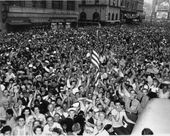
Thousands of people celebrate VJ Day as they fill New York's Times Square, Aug. 14, 1945 after Japanese radio reported acceptance of the Potsdam declaration, ending World War II. (AP Photo/Matty Zimmerman)

AP954796542741.jpg
FILE - This Dec. 7, 1941 image provided by the U.S. War Department made from a Japanese newsreel shows Japanese planes over Hawaii during the attack on Pearl Harbor. (AP Photo/U.S. War Department)

AP584956731725.jpg
This Japanese navy air view of smoking U.S. ships during Pearl Harbor attack appeared in a 1942 publication called "The New Order in Greater East Asia," a copy of which has just become available, Oct. 14, 1945 in New York. (AP Photo)

AP41120711855.jpg
FILE - This Dec. 1941 file photo shows heavy damage to ships stationed at Pearl Harbor after the Japanese attack on the Hawaiian island on Dec. 7, 1941. The most comparable attack against the United States was the surprise Japanese bombing of Pearl Harbor on Dec. 7, 1941, that plunged the U.S. into war. The nation marked the 10-year anniversary of Pearl Harbor much differently than now. Just like the 10-year anniversary of Sept. 11, how the nation experienced the anniversary of Pearl Harbor was shaped by what was happening in the world in 1951. (AP Photo/U.S. Navy)

AP41120701465.jpg
In this Dec. 7, 1941 file photo, a small boat rescues a USS West Virginia crew member from the water after the Japanese bombing of Pearl Harbor, Hawaii. With an eye on the immediate aftermath of the 1941 attack on Pearl Harbor, thousands of World War II veterans and other observers are expected on Sunday, Dec. 7, 2008 to commemorate the 67th anniversary of the devastating Japanese military raid. (AP Photo)

AP4112070315.jpg
The battleship USS Arizona belches smoke as it topples over into the sea during a Japanese surprise attack on Pearl Harbor, Hawaii, Dec. 7, 1941. The ship sank with more than 80 percent of its 1,500-man crew, including Rear Admiral Isaac C. Kidd . The attack, which left 2,343 Americans dead and 916 missing, broke the backbone of the U.S. Pacific Fleet and forced America out of a policy of isolationism. Congress declared war on Japan the morning after. According to AP-Kyodo polling 60 years after World War II ended, six in 10 Americans said they think another world war is likely, while only a third of the Japanese said another world war is likely. (AP Photo/File)

AP411208045.jpg
U.S. President Franklin D. Roosevelt signs the declaration of war following the Japanese bombing of Pearl Harbor, Dec. 7, at the White House in Washington, D.C., Dec. 8, 1941 at 3:08 p.m. EST. Watching from left to right are, Rep. Sol Bloom, D-N.Y.; Rep. Luther Johnson, D-Texas; Rep. Charles A. Eaton, R-N.J.; Rep. Joseph Martin, R-Mass.; Vice President Henry A. Wallace; House Speaker Sam Rayburn, D-Texas; Rep. John McCormack, D-Mass.; Sen. Charles L. McNary, R-Ore.; Sen. Alben W. Barkley, D-Ky.; Sen. Carter Glass, D-Va.; and Sen. Tom Connally, D-Texas. (AP Photo)
