


Environment
Latest Stories

midwest_drought_crops_07713.jpg
In this Wednesday, July 26, 2017, photo, soybeans grow in a farm field near Indianola, Iowa. Drought conditions are getting worse in several states, and extreme heat and weeks with little rain have begun to stress corn, soybeans, wheat and livestock in some areas. The weekly U.S. Drought Monitor released Thursday, July 27, 2017, by the University of Nebraska-Lincoln says nearly 11 percent of the continental United States is in moderate drought or worse. (AP Photo/Charlie Neibergall)

midwest_drought_crops_60615.jpg
In this Wednesday, July 26, 2017, photo, soybeans grow in a farm field near Indianola, Iowa. Drought conditions are getting worse in several states, and extreme heat and weeks with little rain have begun to stress corn, soybeans, wheat and livestock in some areas. The weekly U.S. Drought Monitor released Thursday, July 27 by the University of Nebraska-Lincoln says nearly 11 percent of the continental United States is in moderate drought or worse. (AP Photo/Charlie Neibergall)

midwest_drought_crops_36164.jpg
In this Wednesday, July 26, 2017, photo, soybeans grow in a farm field near Indianola, Iowa. Drought conditions are getting worse in several states, and extreme heat and weeks with little rain have begun to stress corn, soybeans, wheat and livestock in some areas. The weekly U.S. Drought Monitor released Thursday, July 27, by the University of Nebraska-Lincoln says nearly 11 percent of the continental United States is in moderate drought or worse. (AP Photo/Charlie Neibergall)
climate_choked_water_91037.jpg
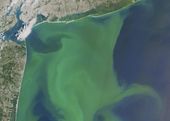
In this image provided by NASA, taken Aug. 3, 2015, phytoplankton is seen off the coast of New York, top and New Jersey, left. A new study projects that global warming’s increased rains will mean more nitrogen flowing into U.S. waterways, which can then trigger more massive blooms of algae, floating green mats, and dead zones with almost no oxygen. This handout NASA satellite photo shows a large bloom of phytoplankton off the New York and New Jersey coast in August 2015. (NASA via AP)

exchange_union_power_struggle_16626.jpg
Herman Marshman stands outside the First Energy Bruce Mansfield coal fired power plant Friday, July 7, 2017, in Shippingport, Pa. Marshman ran for president of the International Brothers of Electrical Workers Local 272, with no union leadership experience. (Rebecca Droke/Pittsburgh Post-Gazette via AP)

Screen Shot 2017-07-27 at 12.27.16 PM.png
Will Ford, a pop singer whose popularity peaked in 2001 is shown here in a still shot off of a music video for "I Wanna Be Bad." Miss Ford told Billboard in a July 2017 that 9/11 played a role in the "perfect storm" that blew away her once promising pop career. (YouTube)

extinct_flower_comeback_30246.jpg
In this Friday, July 14, 2017 photo released by the Vermont Fish & Wildlife Department, state botanist Everett Marshall documents the extent of winged loosestrife at Raven Ridge Natural Area in Monkton, Vt., for the state's Natural Heritage Inventory. Winged loosestrife is making a comeback in Vermont where it had not been seen for decades and was thought to be locally extinct. (Tom Rogers/Vermont Fish & Wildlife Department via AP)

wake_forest_hinton_football_56168.jpg
FILE - In this Sept. 10, 2016, file photo, Wake Forest quarterback Kendall Hinton (2) passes against Duke during the second half of an NCAA college football game in Durham, N.C. Now that he’s healthy again, Kendall Hinton might not take as many unnecessary chances in his latest stint as Wake Forest’s starting quarterback. He’s back to 100 percent after a knee injury kept him out of the final 10 games of last season. (AP Photo/Gerry Broome, File)

new_arctic_the_journey_melting_ice_39049.jpg
The sun sets over melting sea ice on Peel Sound along the Northwest Passage in the Canadian Arctic Archipelago, Sunday, July 23, 2017. Because of global warming, more sea ice is being lost each summer than is being replenished in winters. Although sea ice is likely to continue forming each winter it may be restricted to even higher latitudes. Less sea ice coverage also means that less sunlight will be reflected off the surface of the ocean in a process known as the albedo effect. The oceans will absorb more heat, further fueling global warming. (AP Photo/David Goldman)

new_arctic_the_journey_melting_ice_49050.jpg
Second officer Juha Tuomi looks out from Finnish icebreaker MSV Nordica as it sails into floating sea ice on the Victoria Strait while traversing the Northwest Passage in the Canadian Arctic Archipelago, Friday, July 21, 2017. Sea ice plays an important role in the global climate system by cooling the surrounding water and air. (AP Photo/David Goldman)

new_arctic_the_journey_melting_ice_59430.jpg
A bird flies above sea ice on the Victoria Strait along the Northwest Passage in the Canadian Arctic Archipelago, Friday, July 21, 2017. Sea ice forms when the top layer of water reaches freezing point, usually around the start of October. As temperatures continue to fall this first-year ice grows downward until it is several feet thick. If the ice survives the following summer melt it becomes second-year ice. Another cycle and it becomes multi-year ice _ which is the toughest kind. (AP Photo/David Goldman)

new_arctic_the_journey_melting_ice_59035.jpg
Sea ice cracks as the Finnish icebreaker MSV Nordica passes through the Victoria Strait along the Northwest Passage in the Canadian Arctic Archipelago, Friday, July 21, 2017. Sea ice helps maintain ocean and atmospheric currents that affect weather which is characteristic for certain parts of the world, such as the comparatively mild temperatures found in western Europe. (AP Photo/David Goldman)

new_arctic_the_journey_melting_ice_00737.jpg
Researchers look out from the Finnish icebreaker MSV Nordica as the sun sets over sea ice floating on the Victoria Strait along the Northwest Passage in the Canadian Arctic Archipelago, Friday, July 21, 2017. Sea ice plays an important role in the global climate system by cooling the surrounding water and air. It helps maintain ocean and atmospheric currents that affect weather which is characteristic for certain parts of the world, such as the comparatively mild temperatures found in western Europe. (AP Photo/David Goldman) **FILE**

new_arctic_the_journey_melting_ice_42549.jpg
The sun sets over sea ice floating on the Victoria Strait along the Northwest Passage in the Canadian Arctic Archipelago, Friday, July 21, 2017. Sea ice forms when the top layer of water reaches freezing point, usually around the start of October. As temperatures continue to fall this first-year ice grows downward until it is several feet thick. If the ice survives the following summer melt it becomes second-year ice. Another cycle and it becomes multi-year ice _ which is the toughest kind. (AP Photo/David Goldman)

new_arctic_the_journey_melting_ice_12272.jpg
The Finnish icebreaker MSV Nordica sails through sea ice floating on the Beaufort Sea off the coast of Alaska while traversing the Arctic's Northwest Passage, Sunday, July 16, 2017. Because of global warming, more sea ice is being lost each summer than is being replenished in winters. Less sea ice coverage also means that less sunlight will be reflected off the surface of the ocean in a process known as the albedo effect. The oceans will absorb more heat, further fueling global warming. (AP Photo/David Goldman)

new_arctic_the_journey_melting_ice_03893.jpg
Chief engineer Jukka-Pekka Silander watches from the bow of the the Finnish icebreaker MSV Nordica as it sails into floating sea ice on the Beaufort Sea off the coast of Alaska while traversing the Arctic's Northwest Passage, Sunday, July 16, 2017. Sea ice plays an important role in the global climate system by cooling the surrounding water and air. It helps maintain ocean and atmospheric currents that affect weather which is characteristic for certain parts of the world, such as the comparatively mild temperatures found in western Europe. (AP Photo/David Goldman)

new_arctic_the_journey_melting_ice_63045.jpg
Sea ice melts on the Franklin Strait along the Northwest Passage in the Canadian Arctic Archipelago, Saturday, July 22, 2017. Because of climate change, more sea ice is being lost each summer than is being replenished in winters. Less sea ice coverage also means that less sunlight will be reflected off the surface of the ocean in a process known as the albedo effect. The oceans will absorb more heat, further fueling global warming. (AP Photo/David Goldman)
italy_water_shortages_52527.jpg
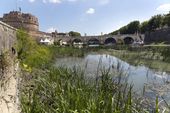
A view of the Tiber River, whose level is low due to the drought, during a warm and sunny day in Rome, Wednesday, July 26, 2017. Scarce rain and chronically leaky aqueducts have combined this summer to hurt farmers in much of Italy and put Romans at risk for drastic water rationing as soon as this week. (AP Photo/Domenico Stinellis)

italy_water_shortages_81981.jpg
A view of the Tiber River, whose level is low due to the drought, during a warm and sunny day in Rome, Wednesday, July 26, 2017. Scarce rain and chronically leaky aqueducts have combined this summer to hurt farmers in much of Italy and put Romans at risk for drastic water rationing as soon as this week. (AP Photo/Domenico Stinellis)

germany_britain_royals_18027.jpg
Great Britain's Prince William looks at the interior of a Airbus helicopter with his son Prince George in Hamburg, Germany, Friday, July 21, 2017. Hamburg is the last leg of the royal couple's Germany visit. (Christophe Gateau/dpa via AP)
