


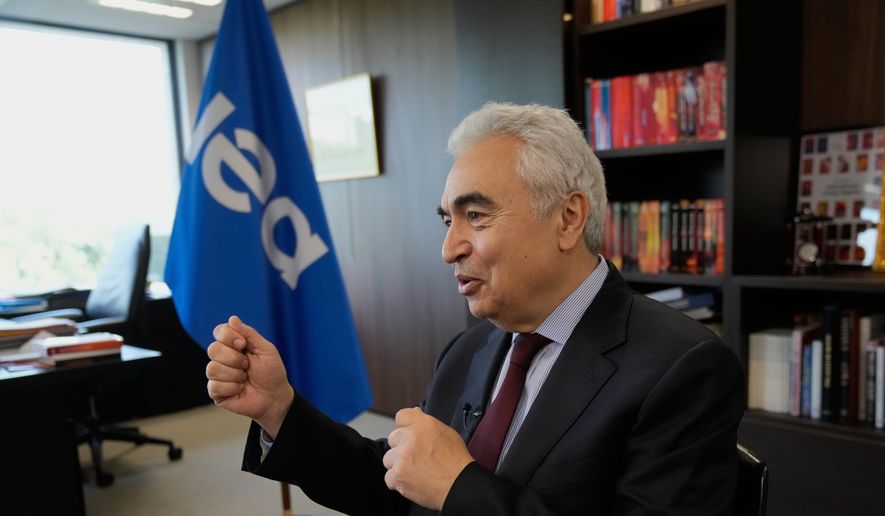

The head of the International Energy Agency is warning that Europe could run out of jet fuel within six weeks due to the Middle East conflict and energy crunch.
IEA Executive Director Fatih Birol, speaking to The Associated Press, said the U.S. war on Iran and associated clampdown on oil traffic in the Strait of Hormuz produced “the largest energy crisis we have ever faced.”
“In the past, there was a group called ‘Dire Straits.’ It’s a dire strait now, and it is going to have major implications for the global economy,” Mr. Birol said. “The longer it goes, the worse it will be for the economic growth and inflation around the world.”
He said developing countries will likely suffer the most from fuel shortages, but no part of the world is immune.

Mr. Birol said people can expect higher gasoline prices and high electricity prices.
He also said that in Europe, “I can tell you soon we will hear the news that some of the flights from city A to city B might be canceled as a result of lack of jet fuel.”
President Trump has characterized the economic fallout from his war on Iran as short-term pain for the long-term gain of preventing Iran from getting a nuclear weapon.
Both sides are considering an extension of the two-week ceasefire that began April 7 and expires Tuesday.
Pakistani mediators are working to set up a second round of talks in Islamabad after Vice President J.D. Vance was unable to secure a lasting peace with Iranian negotiators last weekend.
Israel’s bombardment of Iran-backed Hezbollah fighters in Lebanon remains a sticking point. Iran wants the strikes to stop, and Israel and Lebanon sat down this week to seek a solution.
U.S. Ambassador to Lebanon Michel Issa met with Mr. Trump on Wednesday.
Mr. Trump is trying to force the Iranian side to the negotiation table by blocking Iranian ports.
Military chiefs say the complex operation is airtight and preventing ships from reaching Iranian ports, while allowing other ships to pass through the Strait of Hormuz.
European and Asian leaders are eager to see improvement in the strait because they rely heavily on oil from the region.
Prices for Brent crude oil have eased to below $100 per barrel in recent days, as buyers hope for a lasting peace.
The national average price of a gallon of gas in the U.S. dropped to $4.09 on Thursday, down from $4.16 a week ago but up from closer to $3 at the start of the war on Feb. 28, according to the AAA motor club.
• Tom Howell Jr. can be reached at thowell@washingtontimes.com.

Please read our comment policy before commenting.