



President Trump announced Wednesday evening that Israeli and Lebanese officials would meet for another round of talks on Thursday, in a bid to end Israel’s war against the Iran-backed militant group Hezbollah in Lebanon and secure a ceasefire.
The U.S. so far has not released any details about the negotiations, such as participants and location.
The Washington Times has reached out to the White House for further details.
“Trying to get a little breathing room between Israel and Lebanon. It has been a long time since the two leaders have spoken, like 34 years,” Mr. Trump posted Wednesday on Truth Social. “It will happen tomorrow. Nice!”
Lebanonese President Joseph Aoun spoke with Secretary of State Marco Rubio by phone on Thursday and reiterated his country’s desire for further peace talks, according to a statement from the president’s office. But his office did not confirm if Lebanese diplomats would meet with Israeli officials.
No high-ranking Israeli or Lebanese officials have confirmed that the talks will take place, and reporting early Thursday indicated the two governments may not have been aware of the talks.
Gila Gamliel, Israel’s minister of innovation, science and technology, was the only official to publicly confirm the talks, informing Israel’s Army Radio that Prime Minister Benjamin Netanyahu would speak to Lebanonese President Joseph Aoun.
Mr. Trump’s announcement follows historic talks between Israeli and Lebanese diplomats in Washington on Tuesday. While the two sides did not secure a comprehensive agreement or a ceasefire, they did agree to participate in further U.S.-brokered negotiations.
Lebanon, represented by Ambassador to the U.S. Nada Hamadeh Moawad, hoped to get Israel to agree to a ceasefire during Tuesday’s talks. But Mr. Netanyahu has publicly rejected ceasefire proposals, insisting that Israel’s war against Hezbollah would continue.
Israel has called for the total disarmament of Hezbollah and for Lebanon to dismantle “all terror infrastructure” within its borders.
Hezbollah leadership rejected negotiating with Israel and has insisted that its fighters will not abide by any agreements made between Israel and Lebanon during talks.
U.S. Ambassador to Lebanon Michael Issa met with Mr. Trump and Mr. Rubio in the Oval Office on Wednesday and discussed efforts to “support the restoration of Lebanon’s monopoly of force and sovereignty.”
Israel and Lebanon do not maintain diplomatic relations and have not held direct talks since the Oslo Accords negotiations in 1993. The two countries have also technically been at war since 1948.
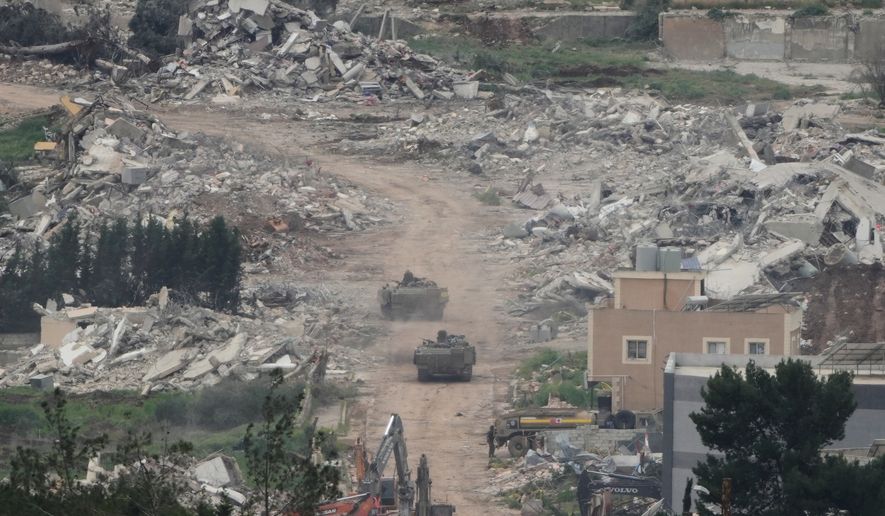
Israel has been in a new conflict with Hezbollah, the Iran-backed political party and paramilitary organization based in Lebanon, since March, when the militant group launched rockets into Israeli territory in solidarity with Iran.
The conflict has threatened to upend the fragile ceasefire between the U.S. and Iran, which Mr. Trump announced last week.
Iran has insisted that Lebanon is included in the ceasefire and that Israel is violating the agreement with its continued attacks on Hezbollah. Both the U.S. and Israel reject those claims, and Israel has shown no signs of halting its campaign against Hezbollah in southern Lebanon.
At least 2,000 people have been killed and more than 6,700 injured as of this week, according to the Lebanese Ministry of Public Health. Israeli strikes have displaced nearly 1 million people, according to the United Nations Children’s Fund.
• Vaughn Cockayne can be reached at vcockayne@washingtontimes.com.

Please read our comment policy before commenting.