



LONDON — Ukraine is ramping up its assaults on oil-rich Russia’s energy infrastructure in a bid to dampen the windfall Vladimir Putin stands to gain as prices and demand skyrocket in the wake of the U.S. blockade of the Persian Gulf.
Russia has benefited economically from the U.S.-led conflict in the Middle East, replenishing coffers drained by the war with Ukraine, which began in 2022. Russia’s oil income reached its highest level since 2022 as the American closure of the Strait of Hormuz squeezed global supplies.
According to calculations from news agency Reuters, Russia’s oil trade revenue doubled to $9 billion in April after President Trump waived sanctions on Russian oil to ease the global energy crunch.
“Now a ceasefire is beginning in the Middle East and the Gulf. And I am waiting for sanctions on Russian oil to be fully reimposed, as they were before,” Ukrainian President Volodymyr Zelenskyy said last week.
Mr. Trump’s sanctions waivers allow some countries to purchase Russian oil.
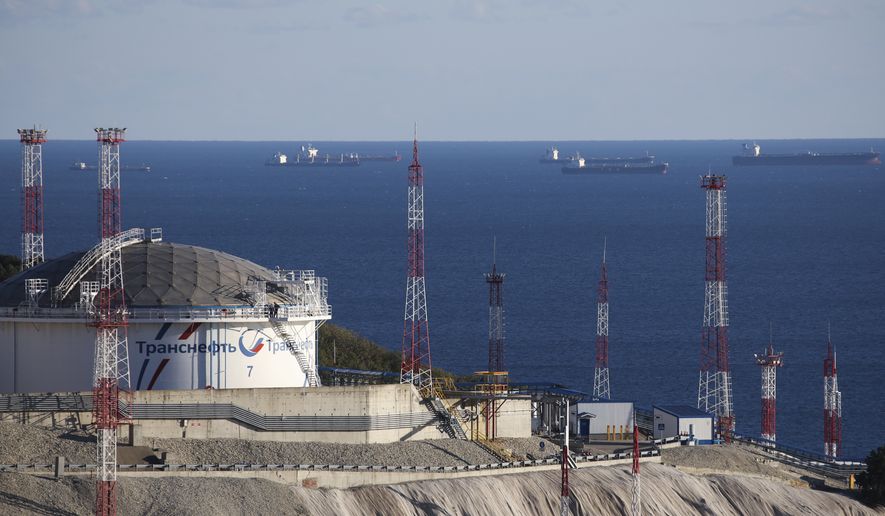
Ukrainian drones in recent days have specifically attacked Russian energy sites vital to its exports.
The Caspian Pipeline Consortium was attacked on Monday in one of the largest attacks of its kind. The terminal, which exports oil from Kazakhstan, has U.S. shareholders, including Chevron and ExxonMobil. The terminal normally loads about 700,000 barrels of Russian oil exports from the Black Sea.
NORSI, Russia’s fourth-largest oil refinery, halted operations on April 5 after a Ukrainian drone attack that targeted storage tanks.
The site produces some 320,000 barrels of refined product per day and is Russia’s second-largest gasoline producer for the domestic market. Other attacks targeted major Baltic ports of Ust-Luga and Primorsk, where export infrastructure is located.
“The goal here is to cripple Moscow’s war financing, forcing them to choose between supplying the domestic market or lucrative exports,” said N.J. Ayuk, an oil expert and the executive chairman of the advocacy group African Energy Chamber.
“Let’s face it, the stability of the global energy market is threatened without significant Russian oil volumes. This delicate state has been further complicated by the recent Iran war,” he said.
Ukraine’s resumption of attacks on Russia’s oil comes after the U.S. has pressured Ukraine to end such attacks due to their global economic impact.
Ukrainian Presidential Office Head Kyrylo Budanov told Bloomberg in an interview that Kyiv had been asked to stop attacks on Russian infrastructure.
He did not indicate which allies had been in touch with Ukraine on the matter, nor whether the Ukrainian government would comply with the request.
“I doubt [foreign requests] will lead to a change in strategy or slower change in strikes on oil facilities,” said Maryan Zablotskyy, a Ukrainian member of parliament, in an interview with The Washington Times.
Russia has responded with its own attacks on critical Ukrainian energy infrastructure and has focused in particular on the Odesa region, which borders Moldova. Russian drone attacks, including the Iranian-designed Shahed drone, have struck a number of targets in Odesa, leaving at least 20,000 people without electricity.
“U.S. pressure on Ukraine to limit attacks on Russia has been a repeated feature of this war. The level of trust and Kyiv’s compliance underscores the difficulty the Trump administration has had managing multiple conflicts,” said Maximilian Hess, a Russia expert and the founder of Ementena Advisory, an international firm that assesses global financial risks for its clients.
On Friday, Mr. Zelenskyy said that Ukraine had reached deals with three Gulf Arab states that Kyiv would receive missile interceptors and supplies of oil and diesel to ease its own energy woes. The deal comes after Mr. Zelenskyy deployed 200 Ukrainian anti-drone experts to help Gulf countries fend off Iranian drone attacks.

Please read our comment policy before commenting.