


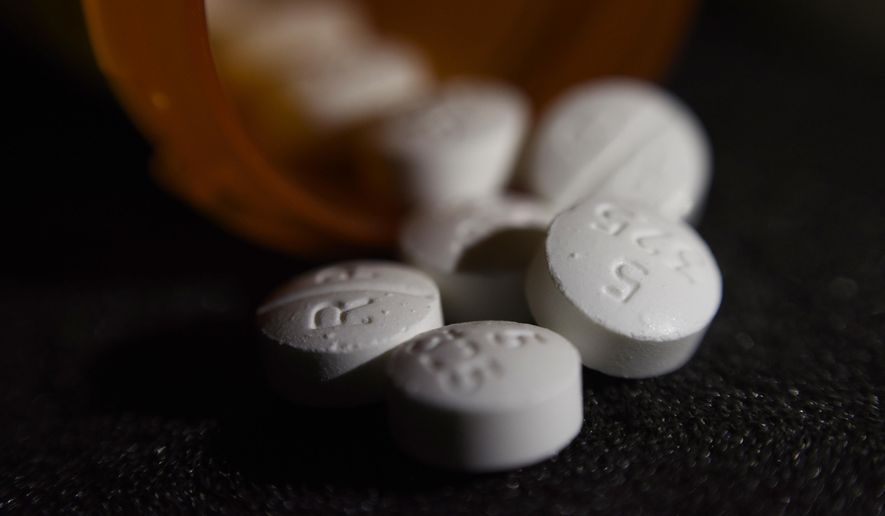

Researchers say they have developed a morphine-like pain reliever without the dangerous side effect of opioid addiction, and early animal trials have shown promising results, according to a study released Wednesday.
The drug, known as AT-121, was developed by scientists at Wake Forest Baptist Medical Center in North Carolina and targets two important brain receptors in pain relief and addiction. The scientists want the drug to be used to treat opioid dependence and chronic pain.
“In our study, we found AT-121 to be safe and non-addictive, as well as an effective pain medication,” Mei-Chuan Ko, Ph.D., professor of physiology and pharmacology at the School of Medicine, part of Wake Forest Baptist Medical Center, said in a press release.
“In addition, this compound also was effective at blocking abuse potential of prescription opioids, much like buprenorphine does for heroin, so we hope it could be used to treat pain and opioid abuse.”
More than 72,000 people died of a drug overdose in 2017, according to early data from the Centers for Disease Control and Prevention, with at least 30,000 deaths linked to illicit and powerful fentanyl, a synthetic opioid about 100 times more powerful than morphine.
Over 2.1 million people in the U.S. have a substance-use disorder and the country is grappling with how to stem the tide of overdose deaths and treat addiction in the population.
At the same time, patients with chronic pain say they feel helpless and abandoned by doctors and health officials who are restricting opioid prescriptions in an effort to stem the tide of addiction and death.
The Food and Drug Administration has identified developing nonaddictive pain medications as a key pillar in battling the opioid epidemic.
The latest development by the Wake Forest researchers takes a novel approach. Their chemical compound works by targeting two important receptors in the brain related to pain and addiction, and the scientists evaluated the drug in monkey trials. The results were published in the journal Science Translational Medicine.
The first is the mu opioid receptor, which opioids target to produce pain relief, but when activated by medications like oxycodone or morphine, also has dangerous side effects like respiratory depression, abuse potential, increased sensitivity to pain and physical dependence.
AT-121, while activating the mu opioid receptor, also activates the nociceptin receptor to counteract the negative side effects, blocking itch, respiratory depression, tolerance and dependence, the authors wrote.
“Our data shows that targeting the nociceptin opioid receptor not only dialed down the addictive and other side-effects, it provided effective pain relief,” Mr. Ko said in the statement. “The fact that this data was in nonhuman primates, a closely related species to humans, was also significant because it showed that compounds, such as AT-121, have the translational potential to be a viable opioid alternative or replacement for prescription opioids.”
The researchers are planning to conduct additional preclinical studies in animals to confirm their findings before applying to the FDA for human trials.
• Laura Kelly can be reached at lkelly@washingtontimes.com.

Please read our comment policy before commenting.