


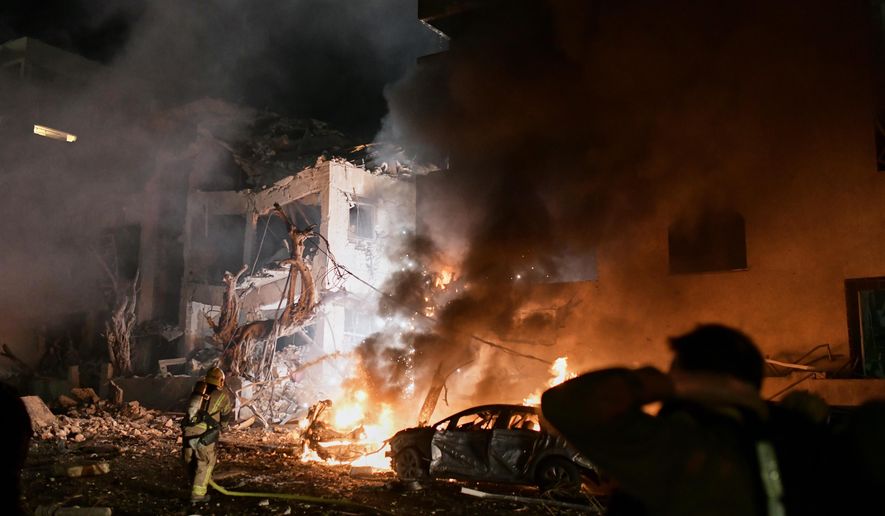

The conflict in the Middle East is shaping up as an ultramodern war of attrition, with Tehran betting its scattershot regional attacks will force the U.S. to overextend air-defense capabilities, leaving Gulf state allies vulnerable to Iran’s drone swarms.
Unlike the manpower attrition of World War I, or the armor attrition of World War II, Iran’s attrition strategy centers on missiles, drones and allied interception capabilities.
Beyond pure hardware, weaponized economics and religious-political fault lines are in play in the always-complicated Middle East.
The Gulf states, Israel and the U.S. are all prosperous nations armed with high-tech, stand-off weaponry. But Iran’s low-cost suicide drone swarms create enormous asymmetric challenges for such systems — as events of the last four days have shown again.
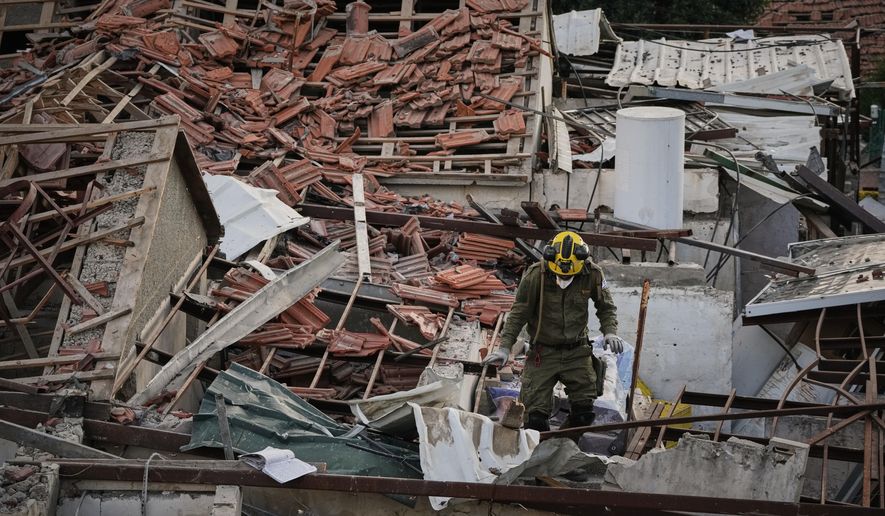
It’s a lesson already learned over the last four years in Kyiv, Ukraine, the world’s most experienced operator of high-tech/low-tech air defenses.
Ukrainian President Volodymyr Zelenskyy offered the Americans and their Gulf allies advice and assistance this week, but the highly complex, multi-layered system Ukraine has emplaced may not be practicable in the Middle East.
Fault lines
Iran’s widening of the war is intended to tap into deep regional political and religious tensions. The Islamic world, broadly, is divided between Iranian/Persian Shias and predominantly Arab Sunnis.
That presents a risk for Arab leaders: Siding all-out with Christian and Jewish allies against a Muslim state could dangerously inflame local populations.
“We were surprised,” President Trump told CNN on Monday after Iran, responding to joint Israeli-U.S. strikes, attacked the Gulf states. “We told them, ‘We’ve got this,’ and now they want to fight.”
One expert was scathing.
“It was predictable that … the last chance (and maybe last stand) of the regime would be spreading chaos around the region,” said Gastone Breccia, a military historian and conflict analyst at Italy’s University of Pavia. “Escalate to de-escalate is a well-known course of action in dire straits.”
He said the political risks are huge for the Gulf states that consider joining the U.S.-Isreal offensive against Iran — an outcome confidently predicted Wednesday by Sen. Lindsey Graham, the North Carolina Republican and staunch Trump backer who is one of the most hawkish members of the U.S. Senate.
Though under attack, allies such as Saudi Arabia will likely remain on the sidelines, Mr. Breccia said.
Gulf states utilize U.S., as well as French and South Korean weapons. That places additional burdens on America, which also supplies Israel and its capacity to churn out missile interceptors.
Neither Tehran nor Washington has released the size of its projectile stockpiles, though Mr. Trump boasted Wednesday that the American arsenal is bottomless: “virtually unlimited,” he told reporters at the White House.
The Shahed factor
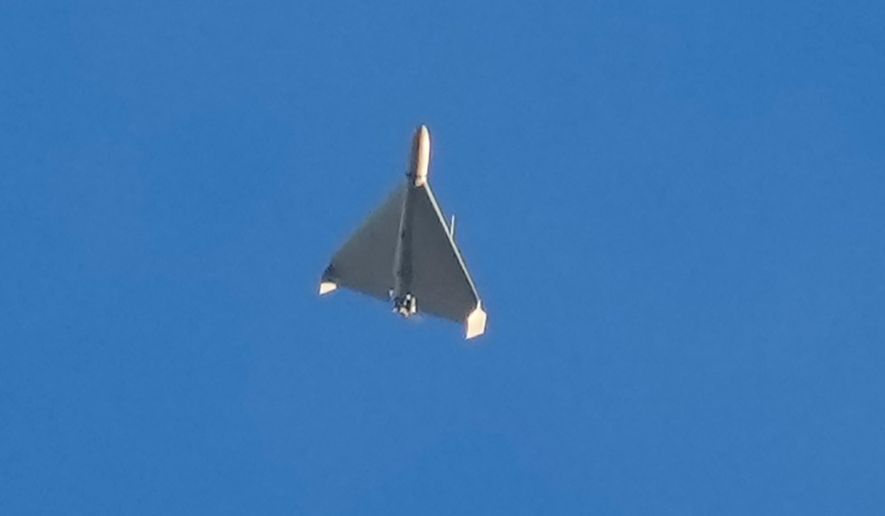
The low-cost, long-range Shahed has proven its worth for Russia and in Ukraine. For economic and tactical reasons, it is a banger.

Easy to manufacture, a single Shahed costs approximately $20,000 and can carry a 110-pound payload. Iran has released images of entire squadrons lined up in bunkers.
Its cost-effect calculus is such that the U.S. has cloned it, dubbing the American version the Low-cost Unmanned Combat Attack System. U.S. forces have already deployed the LUCAS drones in the war on Iran.
Patriot air defense systems can kill drones, but each PAC-3 interceptor costs $3.7 million to fire, according to Missile Defense Advocacy.
A cheaper solution is the Advanced Precision Kill Weapons System, which manufacturer BAE has shown off as a drone-kill solution at recent arms shows.
APKWS are disposable laser-guidance kits bolted onto rockets, such as the 2.75-inch Hydra. The kit costs $22,000; a Hydra costs $3,000.
The package can be fired from F16 and F18 fighters and attack helicopters such as the Apache.
Even more cost-efficient is a fighter pilot’s use of onboard cannons and miniguns. However, jets are expensive assets to fly and maintain, and Israeli and U.S. fighters are currently being used for offense.
While Israel is long-practiced at air defense, Gulf States are not. An outside player has offered help.
The world’s top anti-Shahed experts are Ukrainian: They have been on the receiving end of approximately 57,000 such attacks.
Mr. Zelenskyy has offered expertise — conditionally.
“We are ready to share [defensive] information,” he said in a Monday interview. “Leaders of the Middle East have great relations with Russians. They can ask Russians to implement a month-long ceasefire.”
Fighting the world’s biggest drone conflict, Kyiv has layered its air defenses, preserving Patriots for anti-missile duties.
Jets and helicopters provide long-range drone countermeasures by shooting rockets, and ground-based midrange defense is provided by 20mm, 30mm and 33mm radar-guided cannons mounted on mobile or armored chassis. Ground-launched, ramming drones offer a close-range solution.
The last-ditch solution in Ukraine is highly innovative: quad-mounted World War I-era machine guns, positioned on trucks or on rooftops, firing “walls of lead” into Shahed flight paths.
Replicating the Ukrainian systems will not be easy for Gulf States.
Arms and munitions need to be deployed to cover multiple targets, from military bases to civilian airports. Weaponry must be integrated into highly complex sensor, de-confliction and communications networks.
Those nets already look strained, if reports that Kuwait shot down three U.S. F15s prove correct.
“In the short term, I fear it will be almost impossible to shore up Gulf States’ anti-air defenses against swarms of UAVs,” said Mr. Breccia.
Ballistic missiles can be destroyed on the ground by hitting the projectiles, or their launchers, or by caving-in the casements they are protected by. Once launched, they require higher-tech, higher-expense solutions, including Patriot and THAAD, or Terminal High Altitude Area Defense missiles.
Will U.S. draw down Indo-Pacific stocks?
South Korean media have raised the oft-questioned U.S. ability to fight a “two-front” war.
Korea’s best-selling daily, the conservative Chosun Ilbo, reported Tuesday on the possibility of rotating Patriot and THAAD batteries, and Reaper drones, from Korea to the Middle East.
The report quoted local analysts stating, “If the [Iranian] airstrikes prolong, the U.S. will likely utilize the combat power and assets of [U.S. Forces Korea].”
The removal of THAAD, especially, would raise eyebrows, given that China deployed economic retaliation against Seoul after the system was emplaced on Korean soil in 2016.
The Chosun report, based on locals’ speculation, not U.S. policy, was widely misquoted. The U.S., “is planning to relocate all THAADs and Patriots out of Korea,” noted X account U.S. Homeland Security News.
U.S. Forces Korea referred questions to the Pentagon, but precedents exist.
Last June, ahead of U.S. “Midnight Hammer” strikes on Iran, three of eight Patriot batteries in Korea were sent to the Middle East, returning to the peninsula in October.
Under the Biden administration, the U.S. shifted 155mm artillery ammunition stockpiles from Korea to Ukraine.
During the Iraq conflict, one of two U.S. mechanized infantry brigades in Korea moved to Iraq, leaving just one in situ. Brigades now rotate through Korea, but the in-place brigade was never replaced.
Some say Seoul should support its allies.
“There is no indication of a North Korean attack, so why can’t the U.S. shift assets to where they need them?” asked retired General Chun In-bum. “And let me go further: I think we should be sending our own missiles in support of allies, U.A.E. and the U.S. We have missiles to spare.”
However, Mr. Chun admitted he only speaks for conservatives. He feared that if Iran sustains, and America’s armory runs down, Washington could revive a brutal tactic. “If I were Iran, I’d be worried that, if the Americans are short of precision munitions, they’d start using unguided weaponry,” Mr. Chun said. “Remember Operation Linebacker in Vietnam and how terrifying that was? The Trump administration might consider using that kind of capability.”
Linebacker flew B-52s in carpet-bombing roles — the last use of massed, non-precision, air-dropped weapons.
• Andrew Salmon can be reached at asalmon@washingtontimes.com.

Please read our comment policy before commenting.