



Minnesota officials knew early in the pandemic that there were fraud issues in a major food assistance program but kept money flowing because they feared the political fallout of a racially tinged lawsuit, according to a new House report Wednesday.
That reluctance to police the program ended up with one of the most extensive frauds in U.S. history, with dozens of people — largely from the Minneapolis-area Somali community — charged in a federal criminal case with stealing $300 million in funds meant to go to hungry kids.
The House Oversight and Accountability Committee said the cost might be even higher in Minnesota’s Medicaid and child care programs, with up to $9 billion in fraud.
State officials had the ability to cut off payments but were reluctant to do so. At one point in March 2021, the state did find “serious deficiency” and suspend money to Feeding our Future, the children’s meals program. But it restored the money a month later.
“They feared lawsuits, bad press and political backlash,” Chairman James Comer said at a hearing as he released the report.
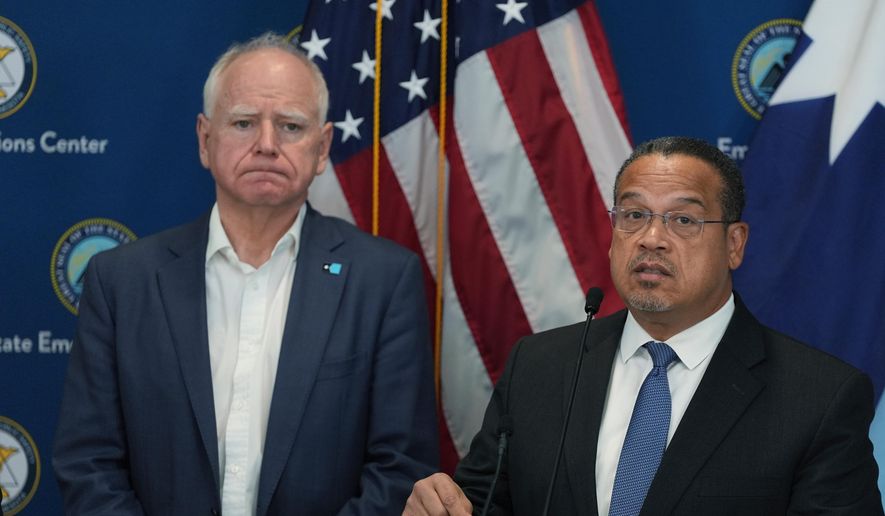
He blamed Minnesota Gov. Tim Walz and state Attorney General Keith Ellison, both Democrats, for failing to see the signs of fraud and caving to that political pressure.
Mr. Walz, testifying to the committee, said he had taken “decisive action” on fraud.
But he also asserted that the focus on his state was unfair. And he tied that focus to the federal government’s immigration enforcement surge in his state, which made headlines as officers scoured Minnesota for illegal immigrants, protesters pushed back, clashes grew violent and two American citizens were shot and killed.
“The people of Minnesota have been singled out and targeted for unprecedented retribution,” Mr. Walz said.
Feeding our Future was a nonprofit that provided meals to people during the pandemic.
Congressional investigators said Minnesota officials were first told of problems in the program in April 2020, or just weeks into the pandemic.
Money would continue to flow, largely uninterrupted, through early 2022.
Daron Korte, who was assistant commissioner at the Minnesota Department of Education — the agency that oversaw the food program — told the committee that state officials had the power to block new food distribution sites but were too afraid of being sued.
“We could unilaterally make that decision, but we just knew, with Feeding our Future, it was going to end up in court and had the potential to be overturned,” he said, according to the committee’s transcript of his interview with investigators.
He said the state had asked the federal Agriculture Department, which oversees the food programs at the national level, for backup — some sort of written statement that the state had authority under federal regulations to suspend payments when fraud was suspected.
The feds — at that point under the first Trump administration — were “supportive generally” but wouldn’t put anything in writing.
“We felt like without having that backup from USDA that we just didn’t have firm enough ground to stand on to continue to deny those sites in the face of the threatened lawsuit,” he told investigators.
Mr. Walz has said that a court ordered the payments to continue.
The judge, however, has rebutted that, saying he never ordered resumption of payments.
Rep. Jim Jordan, Ohio Republican, read the judge’s rebuttal to Mr. Walz.
“Either you’re lying or the court’s lying,” the congressman said.
“That was not the interpretation of the attorneys,” Mr. Walz countered.
• Stephen Dinan can be reached at sdinan@washingtontimes.com.

Please read our comment policy before commenting.