



OPINION:
The war with Iran will last longer than President Trump anticipated. If politics compel him to withdraw early, then he will do grave damage to our liberty and economy.
The attack was justified, necessary and legal.
From 2015, when President Obama negotiated the Joint Comprehensive Plan of Action, until 2018, when Mr. Trump withdrew U.S. participation, Iran apparently enriched uranium to obtain nuclear weapons.
That violated the Joint Comprehensive Plan of Action and Iran’s obligations under the Nuclear Non-Proliferation Treaty. The country has enough near weapons-grade material to quickly make 10 atomic bombs.
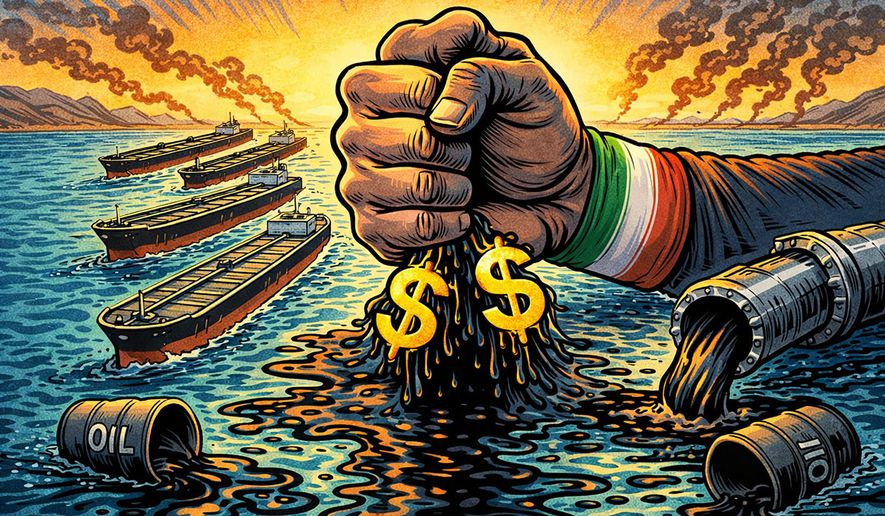
Since Feb. 28, we have learned that Tehran has hidden a vast stockpile of missiles and drones near the Strait of Hormuz. It uses those to control which vessels may pass safely and have access to two-fifths of global crude oil and liquefied natural gas supplies.
With nuclear weapons in hand, Iran could threaten the global order with impunity.
By severely damaging LNG facilities in Qatar, Iran will impose painful shortages this winter on Europe and Asia. It has disrupted the supply chain for materials used to make memory chips and high-end processors, mostly sourced from Korea and Taiwan.
Iran supports terrorist groups that pirate the Red Sea, attack Israel and threaten the Persian Gulf. By these acts, Iran is no longer entitled to the protections of sovereignty.
Economists’ estimates of the war’s consequences indicate minimal risks because they don’t adequately capture the above-mentioned supply chain breaks.
The average forecaster surveyed by Wall Street estimates that the price of West Texas Intermediate oil would have to rise to $138 a barrel to raise the risk of a recession to 50% or significantly boost inflation and unemployment.
Oil represents about half the cost of gas at the pump when it sells for $3 a gallon.
Consequently, gasoline prices should increase by about 25% if oil jumps 50%.
If sustained, that’s enough to reduce real consumer spending by 1 percentage point of gross domestic product.
Oil industry profits and spending would increase, and more buying power would be distributed through dividends and rising oil company stock values. These would partially mitigate the negative effects on growth and employment from consumers and other industries cutting back on non-energy spending.
In February, the price of a barrel of West Texas Intermediate oil averaged $64.51. After three weeks of the bombing and closure of the Strait of Hormuz, it was about $89, or 37% higher.
In the above-mentioned survey, forecasters shaved their 2026 growth estimate to 2.1% from 2.2% in January and increased their expected inflation to 2.9% from 2.6%.
Wow! That’s hardly the margin of error for most one-year forecasts.
The average retail price for gasoline in February was $2.98. Three weeks later, it was almost $3.96. Up 38%, not 19%, as the formula would predict.
Bloomberg’s economists estimate that wholesale prices for all refined products — gasoline, diesel, jet fuel and fuel oil — are outstripping West Texas Intermediate price increases by 50% to 100%.
Crude oil is not universally fungible. It varies in weight and sweetness (sulfur content), and specific refineries are tuned to accept oil from specific producers.
Shut down Persian Gulf oil and Western U.S. shale, Canadian tar sands and Venezuelan heavy, sour crude can’t meet all their needs even if they could adequately ramp up production.
The threshold for causing real economic damage has likely already been crossed.
Overall, the economy should still do decently. My expectations for economic growth and inflation were greater than the pack prior to the war.
The Trump administration structured its tax cuts to inject an extra $200 billion into the economy this year. The Pentagon is seeking another $200 billion to finance the war, and the Fed is freeing up an equal amount of bank capital for lending by softening big banks’ capital requirements.
Alphabet, Amazon, Meta and Microsoft will still plow $650 billion into artificial intelligence data centers, Nvidia’s chips and so forth.
Adding in Nvidia and smaller players, artificial intelligence investments should jump to $1 trillion this year.
Businesses that sell AI agents, such as Anthropic and Salesforce, and others scarred by the war will still earn big profits while continuing to downsize their workforces.
Yet forecasters surveyed by The Wall Street Journal show the unemployment rate hardly budging.
Over the past year, the health care sector added jobs, but the rest of the economy subtracted employees. Workers are receiving unattractive raises this year despite rising prices for gas, heating fuels and other products that require significant purchases of energy to deliver, such as groceries.
The president will be under terrible political pressure, and the danger is that he could recommit President Johnson’s Vietnam War mistake of pulling out early after achieving some initial victories.
Then Tehran would recover, build atomic weapons, decide who may pass safely through the Strait of Hormuz, and slowly strangle the global economy by demanding tribute for access to precious Gulf oil and LNG.
• Peter Morici is an economist and emeritus business professor at the University of Maryland, and a national columnist.

Please read our comment policy before commenting.