


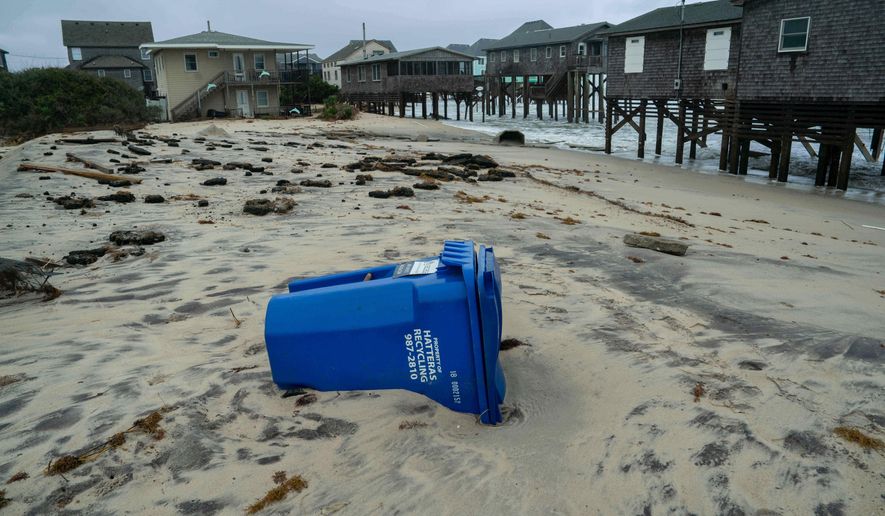

Democrat-led states grappling with declining recycling rates are shifting the blame — and the cost — to producers and distributors.
Recycling advocacy groups seeking to reverse the drop in recycling have pushed states to pass Extended Producer Responsibility laws, which hold companies financially responsible for ensuring their products get recycled.
Businesses warn that these laws will result in higher prices and force some companies to stop doing business in states with EPR laws.
Seven states have enacted EPR packaging laws targeting companies that produce plastic, paper, glass, metal and cardboard, as well as packaging materials used for consumer products.
States authorize nonprofit groups to implement the EPR laws. In some cases, the nonprofits collect millions of dollars in fees from companies based on the weight and type of material manufactured or distributed.
The money is used to implement recycling regulations and fund programs to boost recycling.
Washington is the latest state to pass an EPR law, which was signed by Gov. Bob Ferguson in May. Advocates say the law will increase recycling in the state by 26% and make the recycling system “more affordable, convenient and equitable for all.”
California, Colorado, Maine, Maryland, Minnesota and Oregon have passed similar EPR statutes.
The string of new EPR laws follows a nationwide decline in recycling rates, particularly for plastics. The rate of recycling plastics has dropped from a peak of about 9.5% in 2014 to around 5%.
Recycling rates for all materials, as well as composting, have fallen slightly in recent years to around 32%, according to the Environmental Protection Agency.
Plastic materials, including plastic drink bottles, are nearly impossible to recycle, say waste management experts, because plastics come in so many varieties and must be collected and sorted separately. They also become more difficult to recycle over time.
Only a fraction of the plastics collected for recycling today can be turned into a new product, and for companies, it’s much cheaper to manufacture a new plastic product than to make something out of recycled material.
China at one point purchased discarded U.S. plastic, but the country banned waste imports in 2018, ending that practice. Most U.S. plastic waste now ends up in a landfill.
ERP laws in some states aim to reverse the decline by requiring companies to increase the use of materials in their products that are easier to recycle and by expanding curbside recycling programs.
The Recycling Partnership, a nonprofit that seeks to boost curbside recycling, said the EPR laws “put the responsibility on these brand owners to pay for and manage the recycling system in a given country, state, or province that has passed the EPR policy.”
The organization said disposal of the material “becomes a shared burden for all brands and does not increase consumer costs.”
Businesses disagree, saying increased costs are eventually passed on to consumers.
Under a new EPR law in Oregon, companies that manufacture or distribute products in the state must register with the nonprofit Circular Action Alliance and pay fees based on product weight and material.
The law covers companies that manufacture or distribute paper, glass, metal, plastics and food service materials. Those who do not comply with the new regulations face fines of up to $25,000 per day.
Oregon Business & Industry, the Northwest Grocery Retail Association and Food Northwest earlier this month joined the National Association of Wholesalers-Distributors (NAW) in a lawsuit challenging the law. A judge issued a preliminary injunction in February, blocking enforcement of the EPR regulations for now.
“The economic consequences are very serious for the entire supply chain where distributors like us already operate on razor-thin margins. The unpredictable, retroactive fees cannot be absorbed and must be passed down the supply chain, where they ultimately reach the consumer,” Ed Allen, president of the wholesale distributor WCP Solutions, wrote in the Portland Tribune. “The result is a hidden tax that has been outsourced to a private non-government entity operating outside the state of Oregon.”
A group of businesses filed a lawsuit in Oregon to block a new EPR law that went into effect in January.
Karen Harned, a lawyer representing NAW, said Oregon’s decision to allow a nonprofit to implement the law makes it difficult for consumers to understand why costs may rise because of it. The lawsuit also challenges the nonprofit’s authority to unilaterally impose fees on businesses.
“We think this is a tax, and I think the state wanted to do the program but didn’t have the infrastructure, and so they created this mechanism that, really, shields the consumer from where the costs are coming from,” Ms. Harned said.
In California, Gov. Gavin Newsom hit the brakes on the state’s new EPR law out of concern it would cost businesses too much money.
The law would have required producers of single-use packaging and food service utensils to produce 100% recyclable products by 2032. It also required a 25% reduction in single-use plastic packaging and included a huge new fee for plastic resin manufacturers who would have to fork over $5 billion over 10 years to help mitigate “the environmental impacts of plastics.”
Mr. Newsom signed the law in 2022, but last year ordered a revision of the implementation plan, citing compliance costs and complaints from manufacturers and businesses. The law remains on hold for now.
Kara Pochiro, a spokesperson for the Association of Plastic Recyclers, said EPR laws are the only proven way to fund and improve plastics recycling and can address the U.S. problem of not collecting enough recyclable plastics from households and businesses.
“EPR programs can make recycling more convenient and accessible, increase participation rates, improve material quality, and drive investments in new collection programs and sorting infrastructure,” Ms. Pochiro said.
• Susan Ferrechio can be reached at sferrechio@washingtontimes.com.

Please read our comment policy before commenting.