



OPINION:
Water is life. It’s a simple saying that holds profound meaning, especially in California’s Central Valley. Unfortunately, the Golden State has pursued policies that limit the construction of new reservoirs and prioritize wasteful water flows that are exacerbated by our boom-and-bust cycle of water availability.
The consequences of this crisis are severe. Entire communities in the Central Valley are sinking due to subsidence — some by nearly 12 feet. Farmers are forced to ration the limited water resources they receive, threatening agricultural productivity in a region that grows nearly three-quarters of the nation’s fresh fruits and nuts and half of the nation’s vegetables. Families in more urban areas face rising costs and increasing regulations to conserve water. To make matters worse, the barrage of severe wildfires over the past decade has damaged tributaries, contaminating water sources and harming critical infrastructure.
But this isn’t just a California problem. The lack of reliable water resources for America’s food production capital is a matter of economic security and affects every American.
Solving this crisis won’t be easy, but there are three essential steps we must take to move in the right direction. First, we must build more water storage and conveyance infrastructure. Second, we must adopt modern management tools and scientific practices to better manage water supplies. Finally, we must reform our environmental management strategy to balance ecosystem protection with ensuring water availability for our communities.
Stable water supplies are vital for our economic well-being and our national food supply. California’s boom-and-bust water cycles make storage even more imperative. The state’s 2022 water year was characterized by extreme drought following the driest three-year period on record. In contrast, 2023 was considered a “miracle” year, with 31 atmospheric rivers driving record-breaking precipitation, snowpack reaching 237% of average, and reservoirs filling to 128% of their historical average. The result was extreme flooding and the reemergence of Tulare Lake, which had been largely drained since 1900.
This is why my California colleagues and I fought so hard to secure $1 billion for water infrastructure in the western U.S. This funding will help ensure water can be delivered efficiently to communities and farms in the Central Valley and Southern California. Within three conveyance canals alone — the Friant-Kern Canal, Delta-Mendota Canal, and the San Luis Unit of the California Aqueduct — there are more than $1 billion in projects that could break ground within the year.
We must equip our communities with the tools they need to safeguard their water supply for decades to come. One way to do this is by updating the Clean Water State Revolving Fund (CWSRF) to allow eligibility for cutting-edge technologies such as advanced monitoring software, leak detection tools, and real-time data dashboards. I have introduced legislation to do just that — bringing municipal water infrastructure into the 21st century with innovative technologies that help communities track and manage water systems more effectively, conserve water, improve efficiency and reduce costs.
Other technologies can also help us better manage and protect this precious resource, including Airborne Snow Observatory flights (ASO) and Forecast-Informed Reservoir Operations (FIRO). Both tools allow for more precise water management at surface storage reservoirs, ensuring more water can be safely stored for longer periods rather than preemptively released into the ocean. These technologies will also help water managers make more informed allocation decisions. For agricultural producers who rely on allocation announcements to determine when to plant crops in the spring, this information is essential for lowering risk.
Above all, we must reform rigid regulations and reduce excessive litigation that have forced water managers to abandon practices that once balanced municipal, agricultural, and fishery needs. Just last month, because salinity levels in the Delta were deemed too high by outdated regulations, water managers were forced to flush 600,000 acre-feet of water into the ocean. For perspective, that volume could have supplied the water needs of 1.2 million households for an entire year.
This is an issue that has united members of California’s congressional delegation from both parties: federal and state water managers must be able to manage water collaboratively and innovatively without being constrained by decades-old regulations. Lawmakers need to make the conscious decision to promote responsible stewardship of our natural resources without sacrificing the industries that power our regional economy.
To put it plainly, we lack the infrastructure needed to store and the ability to move this precious resource effectively, constrained by outdated regulations that do not deliver meaningful benefits for neither people nor ecosystems.
The result couldn’t be clearer: Californians are struggling to pay their water bills and farmers are struggling to grow our nation’s food. The Golden State must set aside partisan divides and work with those in Congress toward real solutions to our water crisis.
It is time for California’s water management practices to enter the 21st century and focus on delivering water to the people who need it most.
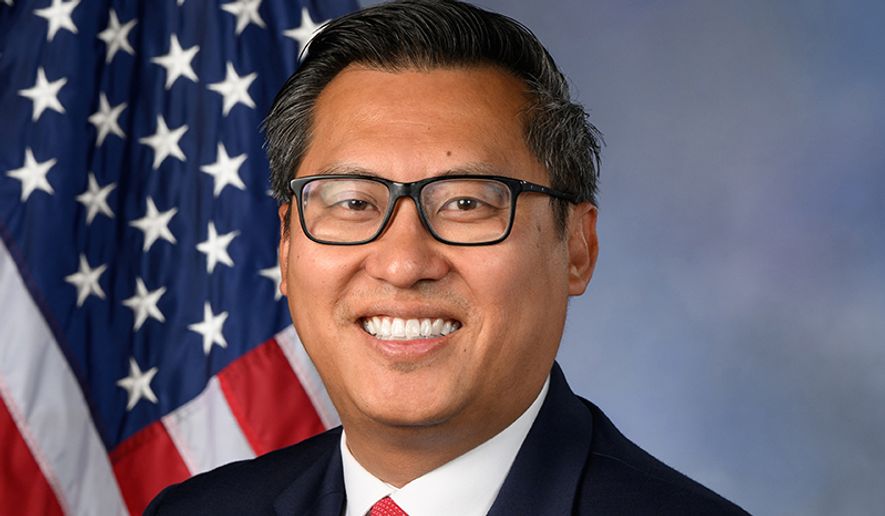
• Rep. Vince Fong represents California’s 20th Congressional District. He is a member of the House Committees on Transportation and Infrastructure; Science, Space and Technology; and Homeland Security.

Please read our comment policy before commenting.