


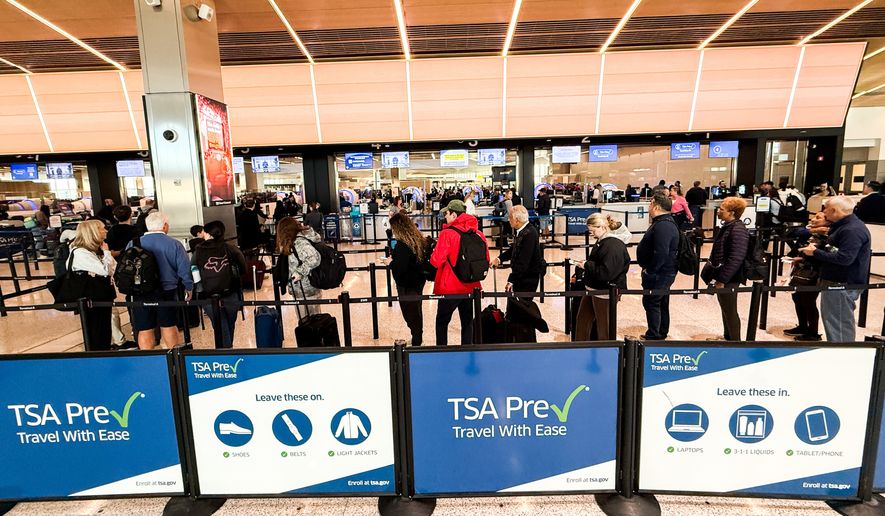

The longest airport security wait times in U.S. history, paused work on mitigating cybersecurity risks and a rapidly depleting Disaster Relief Fund — those are just a few impacts of the 40-day-and-counting Department of Homeland Security shutdown.
Heads of four DHS agencies — the Transportation Security Administration, Cybersecurity and Infrastructure Security Agency, Federal Emergency Management Agency and U.S. Coast Guard — testified Wednesday to the House Homeland Security Committee on the strain the shutdown is putting on their employees and operations.
All four put particular emphasis on the toll on DHS workers who continue to show up to work for weeks on end without pay.
With the current partial shutdown and the record 43-day governmentwide shutdown last fall, most DHS employees have gone without pay for half the fiscal year that began Oct. 1.
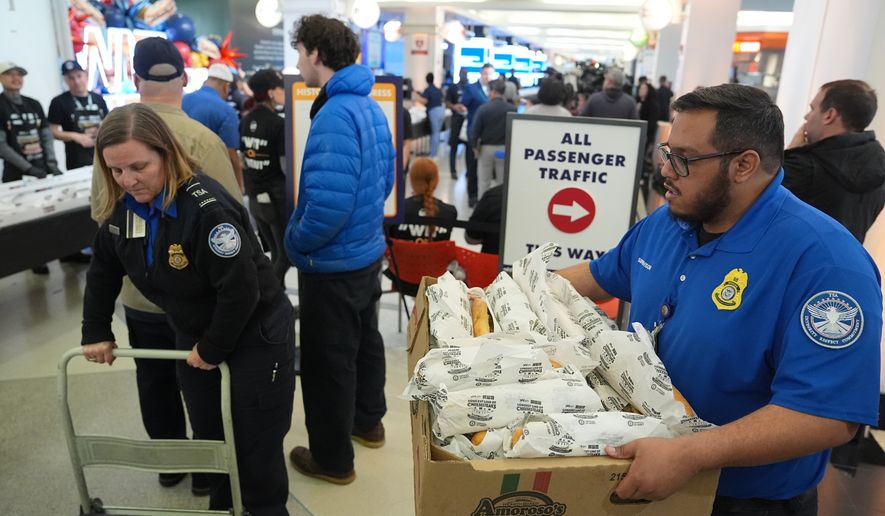
Only U.S. Immigration and Customs Enforcement and Customs and Border Protection agents are getting paid through a separate stream of funding Republicans approved in their One Big Beautiful Bill Act last summer.
Ha Nguyen McNeill, acting TSA administrator, said more than 480 transportation security officers have quit since the shutdown began on Feb. 14 and multiple major airports are experiencing days where 40%-50% of officers call out of work.
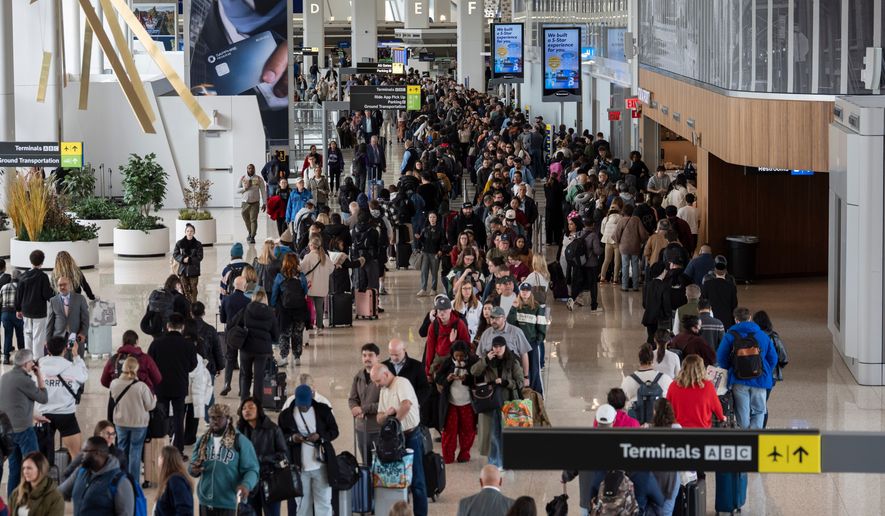
As a result of the staffing shortage, portions of the flying public are waiting in security lines for more than 4.5 hours, the highest wait times in TSA history.
“We are being forced to consolidate lanes and may have to close smaller airports if we do not have enough officers,” she said. “It is a fluid, challenging and unpredictable situation.”
Ms. Nguyen McNeill asked the public for patience while the TSA staffing shortages continue, lamenting a 500% increase in assaults on officers since the shutdown began.
“This is unacceptable and will not be tolerated,” she said, noting violators will be prosecuted.
Because airport security is an essential function of government needed to protect the public, 95% of TSA’s workforce, 61,000 employees, are forced to work without pay during a shutdown.
If the shutdown is still in effect on Friday, when TSA workers would next be paid if DHS were funded, the collective total of missed paychecks throughout the fiscal year will reach nearly $1 billion, she said.
While TSA and other government workers have received back pay for the fall shutdown and will eventually get paid if Congress funds DHS, the impact of not being paid for weeks on end hurts.
“Many in our workforce have missed bill payments, received eviction notices, had their cars repossessed and utilities shut off, lost their child care, defaulted on loans, damaged their credit line and drained their retirement savings,” Ms. Nguyen McNeill said.
“Some are sleeping in their cars, selling their blood and plasma and taking on second jobs to make ends meet, all while being expected to perform at the highest level when in uniform to protect the traveling public,” she continued.
Ms. Nguyen McNeill said she fears more TSA officers will quit as the shutdown drags on and said the agency has fewer people applying for jobs. New hires are not immediately available to help, as it takes four to six months of training to prepare an officer to conduct security screenings.
“This is a dire situation,” she said. “We are facing a potential perfect storm of severe staffing shortages and an influx of millions of passengers at our airports for the World Cup games in less than 80 days.”
Heads of the other agencies also cited the shutdown’s impact on homeland security preparations for the FIFA World Cup soccer tournament, which will take place from June 11 to July 19. The U.S. is co-hosting the games with Canada and Mexico, with matches occurring in 11 cities across America.
The security risks to the U.S. from the World Cup are compounded by America250 events leading up to the big celebration in the nation’s Capital on July Fourth.
The Coast Guard has had to cease all of its preparations for the World Cup and America250, Adm. Thomas Allan, the military branch’s vice commandant, said.
Adm. Allan also testified to other effects of the appropriations lapse, including the Coast Guard’s inability to pay over 5,000 utility accounts — “putting us in imminent danger of widespread shutdowns to critical infrastructure” — and fund parts and services needed to conduct maintenance of its vessels.
He said that for every day the Coast Guard is shut down, it will take 2.5 days to catch up on paused projects and other work. That means it will be July or later before the agency gets back to normal, depending on when the shutdown ends.
CISA, the cybersecurity agency, has had to scale back or pause activities that help mitigate risks because about 60% of its workforce is furloughed or otherwise unable to work.
“The remaining personnel are carrying out mission-essential functions without pay while facing increasing pressure from nation-state and criminal actors targeting our nation’s critical infrastructure,” CISA acting Director Nicholas Andersen said. “This is not a sustainable model.”
He said large-scale events like America250 and the World Cup require heightened preparedness but the agency is falling behind and risk is accumulating.
“These are not theoretical risks,” Mr. Anderson said. “They are real vulnerabilities that grow with time.”
FEMA has 4,000 employees working without pay during the shutdown but is largely limited to responding to disasters and imminent threats to life, putting its other mitigation and recovery work on the back burner.
“Disaster survivors waiting for assistance may face increased uncertainty and hardship,” said Victoria Barton, associate administrator for FEMA’s Office of External Affairs. “Local officials working to rebuild after hurricanes or floods may be unable to access federal support.”
Much of that federal support comes from the Disaster Relief Fund, which is “rapidly depleting,” she warned.
• Lindsey McPherson can be reached at lmcpherson@washingtontimes.com.

Please read our comment policy before commenting.