



OPINION:
Our nation’s infrastructure impacts the lives of all Americans. It is what connects us, unites us and facilitates our everyday activities, both personal and business. With our roads and bridges rapidly aging past their intended lifespans, reauthorization of the highway programs is imperative. The current law, known as the Surface Transportation Reauthorization Bill and also referred to as the “Highway Bill,” is set to expire on Sept. 30, 2026. As chairman of the House Transportation and Infrastructure Subcommittee on Highways and Transit, my top priority is enacting a new Highway Bill that makes smart, targeted investments in traditional infrastructure focusing on roads, bridges and freight corridors to keep our country competitive, our economy growing and Americans connected.
Current law (including permitting requirements) overreaches, diverting resources from our core infrastructure needs and stifling innovation. It funds unnecessary projects and delays crucial infrastructure investments with red tape. The next Highway Bill will reduce bureaucratic delays and cut waste to refocus on our most essential infrastructure needs. We are working with President Donald J. Trump, Transportation Secretary Sean Duffy, Transportation and Infrastructure Committee Chairman Sam Graves, R-Mo., and our Senate colleagues to ensure this remains an America-first, results-oriented process that will move America forward.
Infrastructure policy is about more than just helping America build; it is about safely transporting people — precious lives that depend on reliable systems. In 2025, we saw at least 17 fatal crashes nationwide caused by unqualified foreign drivers, leading President Trump to call on Congress in his State of the Union address to clean up a system of neglect and mismanagement. The Department of Transportation continues to expose states across the country issuing Commercial Driver’s Licenses (CDLs) to illegal immigrants and unqualified foreign drivers. To restore integrity to our licensing system, I introduced H.R. 5688, the Dalilah’s Law. This commonsense legislation ensures only individuals with lawful immigration status and a legitimate reason to operate commercial vehicles are entrusted with a CDL, addressing the serious threat that lax issuance policies pose to everyone on the road.
Safety on our public transit systems is equally non-negotiable. The senseless murder of Iryna Zarutska on Charlotte’s light rail last August should be a wake-up call for every transit agency and every lawmaker in America. Following this tragedy, I convened transit and law enforcement leaders to identify concrete, actionable steps we can take to ensure riders are transported safely and securely. The safety of all Americans is paramount, and it will remain at the very center of the debate as we move the Highway Bill through the legislative process.
The new Golden Age of American infrastructure growth will not be possible without funding certainty and flexibility. Formula funding, which provides funding certainty and allows states the flexibility to invest in their highest-value projects, will be a top priority in the Highway Bill. States and localities, not Washington bureaucrats, know their own transportation needs best. Prioritizing state-level decision-making over a one-size-fits-all approach will ensure this funding translates to efficient improvements for our roads, bridges and freight corridors across the country.
To further strip away burdensome regulations, we must also fix our nation’s broken permitting process. I was proud to support the PERMIT Act, which passed the House this past December. It will advance regulatory reforms to provide clear rules and predictable timelines for Clean Water Act permits. Time is money, no matter the project. Eliminating regulatory delays prevents project costs from skyrocketing. The Senate should pass the PERMIT Act and get it to the President’s desk to ensure the investments of the upcoming Highway Bill can materialize within a reasonable timeframe.
Finally, we must address the long-term solvency of the Highway Trust Fund. Without intervention, the fund faces a projected shortfall of about $295 billion over the next 10 years. For decades, the core principle of this fund has been simple: those who use our roads should pay for them, mainly through federal gasoline and diesel taxes. However, as vehicles have become more fuel efficient and electric vehicles more prevalent, this revenue stream fails to cover expenditures. Congress has an opportunity here to begin a course correction so that infrastructure needs are paid in full.
Enhancing the safety, efficiency, and reliability of our roads and bridges is more than a policy goal. It is a necessity for a resilient transportation network that moves people, goods, and services safely across our nation. Infrastructure remains an area of bipartisan cooperation, and I look forward to doing my part to deliver a safer, stronger America.
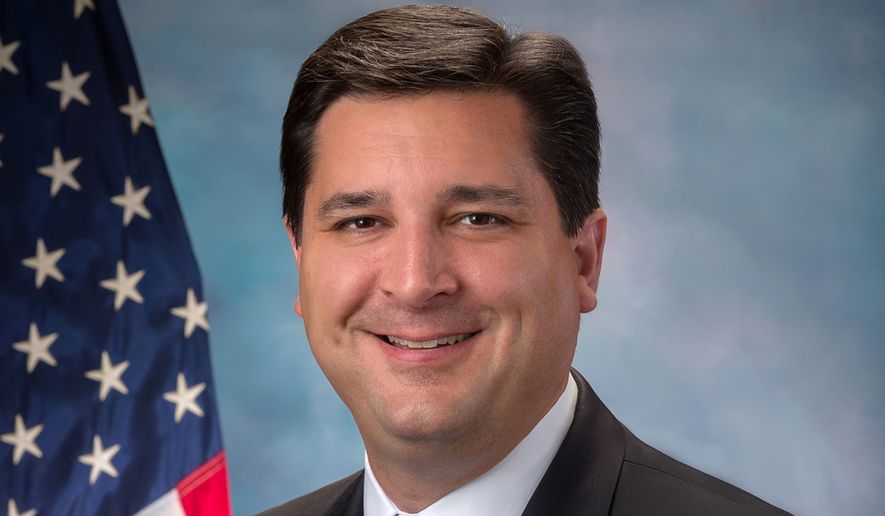
• U.S. Rep. David Rouzer, North Carolina Republican, represents the state’s Seventh Congressional District. He serves as chairman of the House Transportation and Infrastructure Subcommittee on Highways and Transit.

Please read our comment policy before commenting.