


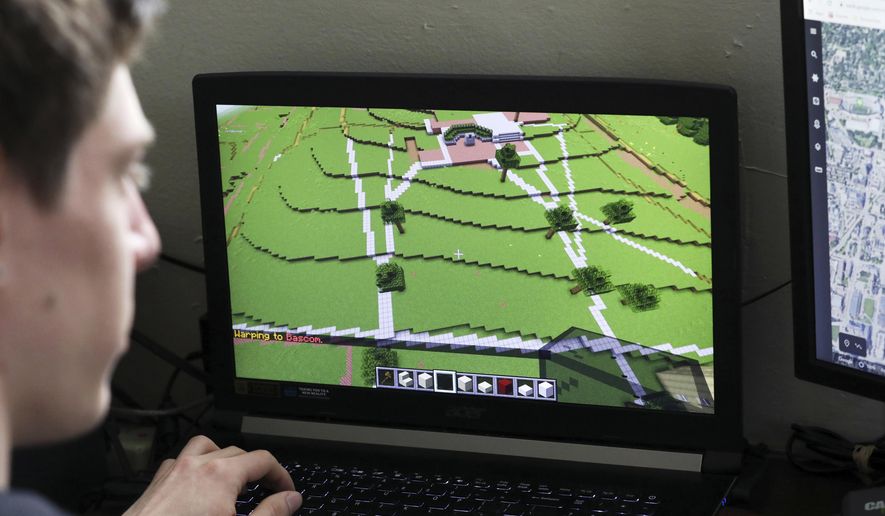

Reporters Without Borders unveiled a new room in the “Minecraft” video game’s Uncensored Library, created as a loophole for journalists to disseminate articles censored in their home countries.
The new U.S. wing of the Uncensored Library was opened on Wednesday to mark World Day Against Cyber Censorship, focusing on the “more subtle, less direct methods of attacking press freedom and freedom of information.”
Reporters Without Borders, also known by its French initials, RSF, is an organization defending media access and journalists’ rights. It created the library, dubbed a “digital haven for independent information,” in 2020 to function as an information loophole to circumvent media restrictions.
It now includes over 300 examples of censored or restricted work from writers across the globe.
Because it’s on “Minecraft,” the bestselling video game of all time, governments cannot ban access to its content without banning “Minecraft” altogether.
The new room is one of 10 dedicated to writing from countries that censor their citizens or prevent them from accessing certain information.
The library includes journalism from Egypt, Belarus, Brazil, Eritrea, Iran, Mexico, Russia, Saudi Arabia, Vietnam and, now, the U.S.
The new room features government websites that have been removed by officials and includes press freedom developments, including the Federal Communications Commission ramping up pressure on media companies and President Trump’s lawsuits against media outlets.
Although there is no outright state censorship in the U.S., the Trump administration has decried “fake news,” targeting unfavorable reporting since Mr. Trump regained control of the White House.
Visitors see Ann Telnaes’s rejected cartoon for The Washington Post, which features the outlet’s owner, Jeff Bezos, and Mark Zuckerberg kneeling before Mr. Trump, offering bags of cash.
The White House did not immediately respond to a request for comment.
Clayton Weimers, executive director of RSF USA, said the point of the library has always been to showcase stories “silenced by repressive states.”
“But often, suppressing stories takes a less overt form than direct censorship,” Mr. Weimers said in a statement. “RSF wants to call attention to the subtler attacks on media freedom underway in the United States to remind people that fully authoritarian regimes do not have a monopoly on press freedom violations. Democracies must be on guard against these tactics to prevent backsliding.”
RSF has said the U.S. is experiencing its first significant and prolonged decline in press freedom in modern history, exacerbated by Mr. Trump’s return to the presidency.
The nation’s 2025 Press Freedom Index has a score of 57 out of 180 countries, falling from 45 when the library was founded in 2002.
• Mary McCue Bell can be reached at mbell@washingtontimes.com.

Please read our comment policy before commenting.