



OPINION:
March Madness is just around the corner, but while basketball teams jockey for tournament position, the federal government is moving forward with madness of its own.
Bureaucrats are advancing through Round 3 of Biden-era drug price “negotiations,” and the tilted Washington refereeing is opening an inside lane for China to overtake the U.S. in medical innovation.
Democrats sanctioned this self-destructive government overreach as part of the Inflation Reduction Act passed in 2022. Under the scheme, the federal government applies price controls to certain medications accessed through Medicare — a list that is now once again expanding. If drugmakers refuse to play Uncle Sam’s stacked game, then they face a huge tax penalty.
Forcing private companies to surrender medicines at a fraction of the market rate may score short-term political points. Medicine prices are often frustrating, and the appearance of doing something — anything — about it can be electorally expedient. Still, the scheme will not deliver a winning season for the U.S. in the long run.
The process of researching potential new medicines involves testing formulations, returning to the drawing board and testing again, which can take years and cost more than $2 billion. If American manufacturers are unable to recoup investments because of government price fixing, then efforts to develop the next lifesaving treatment, therapy or vaccine will get benched. That leaves a hobbled domestic industry that makes fewer buzzer-beater cures in the future.
Three years after Uncle Sam began rigging the game, the chilling effect on medical innovation is on full display. According to Incubate’s Life Sciences Investment Tracker, more than 50 research projects have been canceled and dozens of drugs discontinued. How many lives might have been improved had these programs continued?
This is far from the first time that government manipulation in the free market has backfired.
In the early 1970s, the Nixon administration imposed price controls on gasoline, triggering fuel rationing and long lines at the pump. Fast-forward to today, and rent control in the Big Apple is similarly creating headaches. Landlords lack the incentives and the money to properly maintain units, while new construction is sidelined. A housing shortage has predictably ensued.
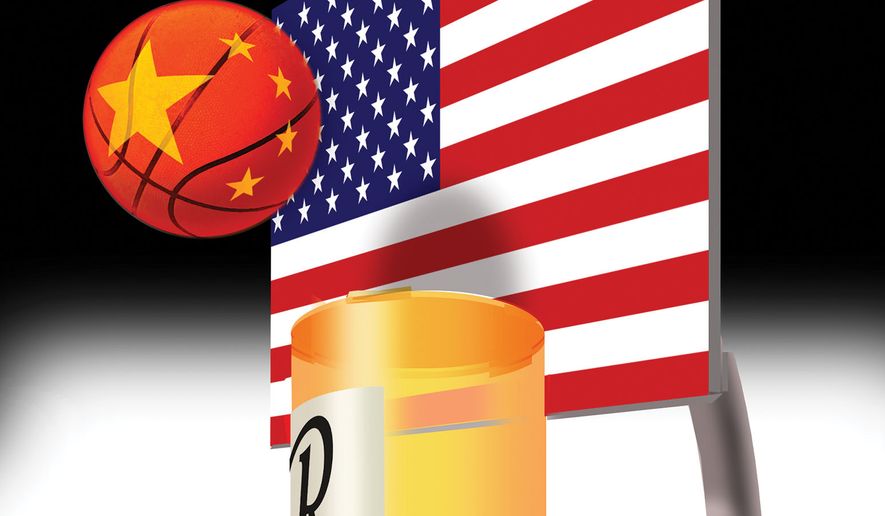
Now, as American drugmakers and patients face their own wave of shortsighted government officiating, China is preparing to run a full-court press. Xi Jinping senses an opening.
Under its “Healthy China 2030” blueprint, the communist country is prioritizing biotech dominance and hoping to unseat the U.S. as a world leader in health breakthroughs. The strategy has created a boom. As one recent article aptly put it, “China’s Drug Industry Moves from Follower to Leader,” with the number of clinical trials surpassing those being performed stateside.
The ball is in the Republicans’ court to help reverse this trend before the midterm elections shake-up Capitol Hill. Changing the policy playbook to roll back Biden-era laws that box out medical innovation should be at the top of the list. Equally important is rejecting similar game plans to tie U.S. prices to those dictated by socialized health care regimes overseas.
As March Madness gets underway, I’ll proudly be cheering on my Michigan Wolverines. Off the court, regardless of college allegiance, all Americans should be rooting for Washington referees to stop unnecessarily blowing the whistle on Team USA. Otherwise, Beijing could be the one cutting down the net.
• Dr. Tom Price served as the 23rd U.S. secretary of health and human services. He is a former member of Congress from Georgia.

Please read our comment policy before commenting.