



A version of this story appeared in the daily Threat Status newsletter from The Washington Times. Click here to receive Threat Status delivered directly to your inbox each weekday.
OPINION:
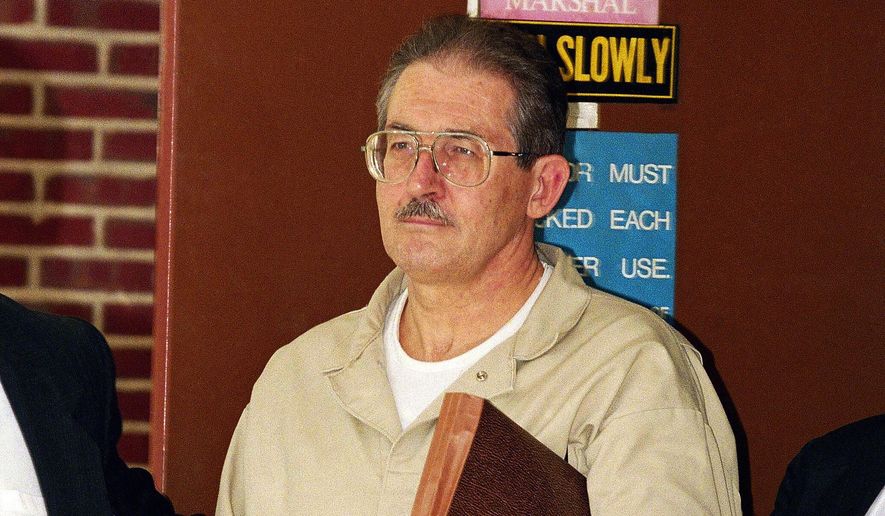
Earlier this month, around the time the U.S. military was rendering Venezuelan dictator Nicolas Maduro to justice, convicted spy Aldrich “Rick” Ames was taking his last breaths in a federal prison.
The former CIA officer volunteered to the KGB in 1985, the “Year of the Spy,” and continued spying on behalf of Russia’s foreign intelligence service after the Soviet Union collapsed.
By the time he was arrested in February 1994, Ames had delivered a treasure trove of classified intelligence to his Russian handlers, including the identities of the CIA’s Moscow network of sources, whom the Kremlin ruthlessly murdered.
I happened to be in Finland the day the FBI surrounded Ames outside his home and took him into custody.
It was shocking enough to me that Russia had been running such a high-level CIA penetration, but even more so because during my first year of government service, I worked an interim assignment in the CIA office where Ames was serving as a branch chief. He was aloof and full of hubris and had no time for us junior officers.
I’ll never forget having to sit through one irretrievably tedious meeting in Ames’ cramped office, while longing to escape his chain-smoking. Little did I know at the time that I was in the presence of one of the most notorious spies in our history, a man who would transform the CIA’s counterintelligence operations for the rest of my career.
CIA legend Paul Redmond led an extraordinarily talented and highly compartmentalized mole-hunting team that included several exceptional CIA officers who became leaders and mentors to my generation, including Diana Worthen, Jeanne Vertefeuille, Sandra Grimes and Dan Payne.
The details of how that dedicated team settled on Ames as the primary suspect in their spy hunt remain secret. They worked seamlessly with the FBI to uncover Ames’ treachery and, after his arrest, helped chart a new course for how the intelligence community would protect secrets going forward.
Their first step was to conduct a thorough damage assessment without whitewashing any of the systemic failures that allowed Ames to carry on spying for so long with access to such sensitive intelligence.
Spy flaps, as one of my all-time great CIA bosses, Jim Senner, would say, “are not like fine wine getting better with age.”
The CIA’s introspective analysis of the Ames case produced a well-documented series of highly valuable lessons, enabling the CIA to harden our defenses by more effectively protecting our sources and methods with the most sophisticated tradecraft. The CIA made a point of sharing good counterintelligence practices with the entire intelligence community, including our armed forces.
That’s because protecting secrets is critical to keeping our sensitive sources safe as they operate behind enemy lines and implement the president’s foreign policies.
Consider, for example, the lethal cross-border operation against Osama bin Laden, the kinetic strike against Iranian Maj. Gen. Qassem Soleimani, commander of Iran’s Quds Force and, most recently, the courageous U.S. military raid on Caracas.
None of these daring operations would have been possible without the element of tactical surprise.
The Kremlin surely would have warned its ally Nicolas Maduro if a human source in the U.S. government had tipped off Vladimir Putin’s spies with details about the timing, planning and rehearsals for the highly complicated and dangerous U.S. military mission, which went off without a hitch.
Venezuela’s military was clearly not prepared for the 150 U.S. aircraft that launched from 20 bases on land and sea, and a helicopter-enabled extraction force that flew 100 feet above the water.
U.S. forces came under fire only at the target area. By then, it was too late for Mr. Maduro. Mission accomplished with zero casualties, thanks to brilliant execution and what the U.S. military calls “OPSEC,” the art of denying our adversaries any information about our plans, intentions and capabilities.
That requires strictly limiting access to the most sensitive U.S. government information and sharing it only on a need-to-know basis.
Ames should always be remembered for his treasonous crimes, but his spy hunters bequeathed to us a more powerful and long-lasting legacy.
By tracking him down, collecting evidence of his spying and arresting him, the CIA and FBI turbo-boosted a powerful unity of mission and laid the groundwork for a robust counterintelligence strategy that continues to enable the most consequential military operations against our adversaries.
• Daniel N. Hoffman is a retired clandestine services officer and former chief of station with the Central Intelligence Agency. His combined 30 years of government service included high-level overseas and domestic positions at the CIA. He has been a Fox News contributor since May 2018. He can be reached at danielhoffman@yahoo.com.

Please read our comment policy before commenting.