



OPINION:
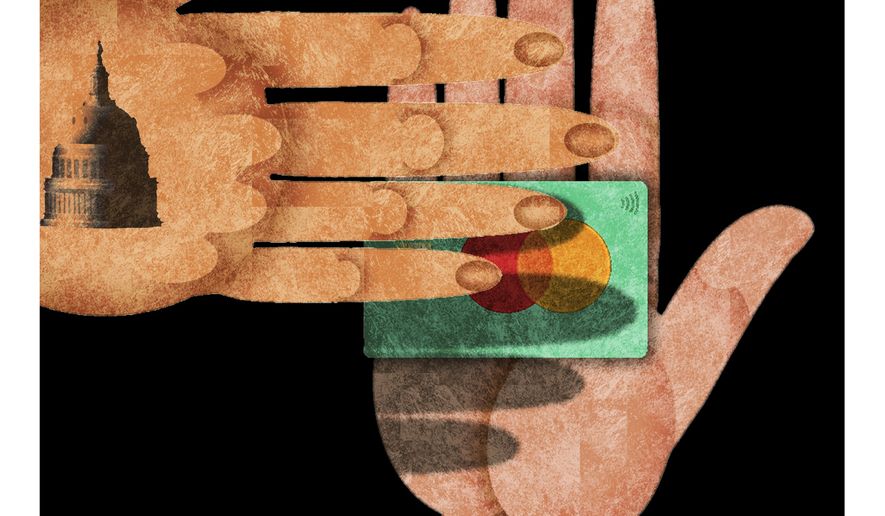
It’s no secret that affordability tops the list of concerns for families across the country, but credit card price controls will only make the situation worse and blunt much of the positive work President Trump has accomplished for the American people.
“We will no longer let the American Public be ‘ripped off’ by Credit Card Companies,” he wrote earlier this month on Truth Social. “I, as President of the United States, am calling for a one year cap on Credit Card Interest Rates of 10%.”
This is concerning news for those of us who proudly own a credit card. For years, our cards have been at risk from liberals such as Sen. Bernard Sanders, Vermont independent, who is pushing misguided price controls, regulations, mandates and even expensive lawsuits, arguing that consumers and small businesses are being squeezed. Unfortunately, Mr. Trump now appears to be pushing the same talking points as the far left.
Credit cards are undoubtedly popular for consumers across all income groups, with about 81% of American adults having at least one. Even an overwhelming percentage of families with annual incomes of less than $50,000 have a card. That’s why it’s important for the administration to tread carefully here and not take brash action that could upend the system Americans enjoy.
A 10% rate cap degree would certainly upend this system. Card issuers would tighten underwriting standards, so Americans with shaky or underdeveloped credit would be more likely to be rejected for new cards, annual fees would increase or be introduced, and popular rewards programs would likely be scaled back.
That’s bad news for everyone.
Government-imposed price controls do not work. History has shown that price controls on any commodity produce unintended but consistently detrimental effects and often worsen the very problems they are supposed to solve. Whether it’s gasoline, rental housing, interchange fees or prescription drugs, setting prices below market rates leads to shortages, squeezes the cost bubble into other parts of the economy, and imposes a deadweight cost on society.
The appeal of price controls is understandable because interest can often be another added cost that makes credit expensive, particularly for lower-income Americans. Yet interest rates are an incredibly important tool for lenders because they allow them to price in all their fixed and unforeseen costs. Factors such as the lender’s costs and risks, investments in network security, consumer demand for credit, and an individual’s credit history all affect how expensive or inexpensive credit will be, or whether credit is offered at all.
Price controls ultimately take pricing power out of the hands of the lenders and consumers who make up the free market and place credit decisions under the domain of the federal government.
Price controls on consumer loans will hurt, not help, people, no matter how many times proponents say it’s beneficial to consumers. Consumers will lose access to credit, have credit limits slashed and lose popular benefits associated with credit cards.
Such a cap will impose a chilling effect across the payments industry. Businesses will be less inclined to invest in faster or safer technology because these innovations are capital-intensive. Although these businesses will likely remain profitable despite a price cap, this policy will reduce the incentive to develop pro-consumer innovations.
It’s also important to remember that credit cards aren’t ripping off consumers. The interest rate a consumer pays is over the course of a year, so a person with a credit card that has a 20% interest rate is paying only about 1.6% monthly if and when they carry a balance. In fact, the majority of Americans pay off their credit card balances in full every month, according to the Federal Reserve. That means most Americans are paying zero interest.
It’s good that Congress and Mr. Trump are interested in addressing affordability. Unleashing the private sector from crushing government regulations and taxes is a proven solution to the problem, which is why gas and so many other staples are less expensive now than they were under the last administration.
The path forward should contain fewer regulations, rules and taxes for consumers and businesses. Importing bad ideas from Mr. Sanders and Sen. Elizabeth Warren will ultimately backfire spectacularly, with Mr. Trump taking the blame.
• Thomas Aiello is the senior director of government affairs for the National Taxpayers Union.

Please read our comment policy before commenting.