



OPINION:
With the midterm elections approaching, congressional Republicans face a challenge.
Historically speaking, the president’s party almost always loses ground in the midterms. There was the Republican “thumping” under George W. Bush in 2006, President Obama’s “shellacking” in 2010, Donald Trump’s “blue wave” in 2018 and Republican gains under President Biden in 2022, although the much-predicted “red wave” never materialized.
For Republicans to maintain control of Congress, the House of Representatives needs to hold on to its slim 218-seat majority, meaning it can lose no more than two districts. In the Senate, the Republicans need to defend 22 of the 35 seats up for election and lose no more than three seats to maintain a 50-50 tie, which can be broken by Republican Vice President J.D. Vance.
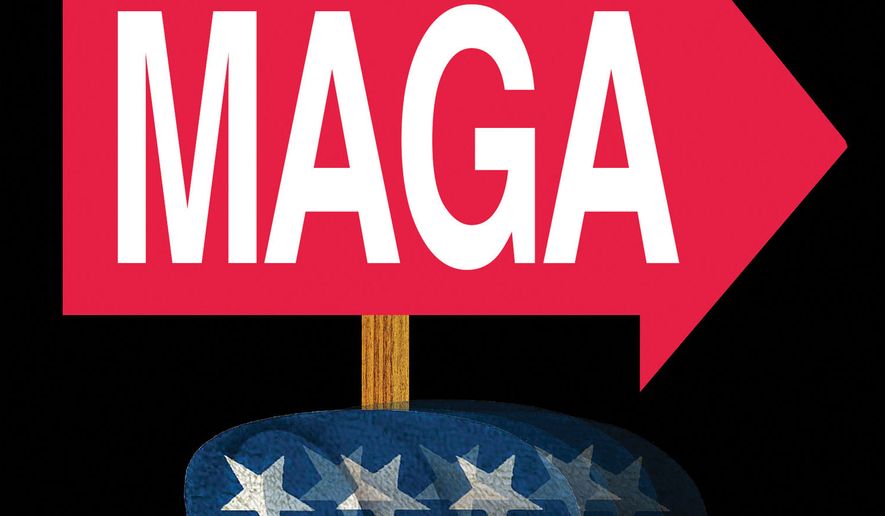
To achieve success, Republicans need to motivate President Trump’s diverse coalition of low-propensity voters, including Hispanics, men, married women and Generation Z, to get to the ballot box. The problem? Many of these voters don’t identify Mr. Trump as a Republican, so party affiliation alone won’t carry a Republican candidate through the finish line. Mr. Trump’s endorsement, although desirable, won’t do it either if voters don’t buy into the candidate’s authenticity to carry out the MAGA agenda.
So far in his second term, Mr. Trump has been governing by an 80-20 rule, essentially enacting policies favored by 80% of the American public and opposed by only 20%. The complication for establishment politicians is that it cuts across ideological and party lines.
Take, for example, Mr. Trump’s proposal to cap credit card interest rates at 10%. It’s widely popular. Google searches spiked 3,200% on its announcement, and CNN pollster Harry Enten acknowledged it was an “extremely popular policy … great, great, great politics.” Mr. Enten cited research indicating that 55% of Americans say credit card debt is a source of stress in their lives, regardless of party affiliation. Forty-nine percent of Democrats, 48% of independents and 51% of Republicans hold credit card debt.
Still, the policy is decidedly not conservative. Republican House Speaker Mike Johnson warned that a cap could have “negative secondary effects.” Republican Sen. Thom Tillis, a Senate Banking Committee member, said he is “totally against” it. Politico wrote this week that the biggest obstacle to Mr. Trump’s credit card proposal is “Capitol Hill Republicans.”
In his bid to lower housing costs, Mr. Trump has proposed banning institutional investors, such as Blackstone, from purchasing single-family homes. As Senate Minority Leader Charles E. Schumer correctly noted last year, Senate Democrats tried to do just that, and Republicans blocked it.
Conservatives argue that institutional investors own a relatively small percentage of residential homes, so a ban wouldn’t impact overall prices. They contend that the government shouldn’t dictate who can buy property and that housing supply, not investors, is the real problem. Still, 58% of registered voters support the proposal, while just 22% oppose it, resulting in a net of +36 points, according to a GrayHouse national survey.
The No. 1 issue going into the midterm elections is affordability and costs, and there is growing frustration that congressional Republicans are not doing enough to address them. While Mr. Trump is single-handedly trying to tackle the problems executively — through most-favored-nation status to lower prescription drug prices, levying tariffs to boost onshore manufacturing investment, and slashing burdensome federal regulations, to name just a few — congressional Republicans sit idly by.
No health care proposals have been advanced, none of Mr. Trump’s executive orders have been codified, and most, if not all, of his policy proposals have been dismissed, either quietly or loudly, as was his 10% credit card cap.
Only 48% of Republican voters say they believe congressional Republicans are actively working as strategic partners with Mr. Trump, according to Navigator Research. Although more than 70% of Republican voters identify as highly populist, about 71% of Republican members of Congress score low on populist measures, favoring traditional or moderate conservatism instead, according to a 2024 analysis from Baron Public Affairs.
This poses a problem for congressional Republicans and Mr. Trump heading into the midterms. Congressional Republicans need Mr. Trump’s MAGA base to turn out for them without the president at the top of the ticket, and MAGA, as things stand right now, isn’t inclined to show up for those who represent “moderate conservatism.”
Mr. Trump needs a successful Republican outcome in Congress, even if it’s stacked with “moderate conservatives,” if he wants to avoid another impeachment and pass any of his agenda, no matter how small, in the next three years.
So perhaps the best pitch for the midterms should come from the White House: Vote Republican, no matter how squishy, if you want to see any MAGA policies advanced and the president not impeached.
Even that may not be enough.
• Kelly Sadler is the commentary editor at the Washington Times.

Please read our comment policy before commenting.