



OPINION:
In 2015, the Supreme Court overlooked its prior decision and, by a 5-4 vote, declared that the 14th Amendment requires every state to grant same-sex marriages identical recognition to those of opposite-sex couples.
At the time, I asked whether, since the court believed two people of the same sex could marry each other, would the same amendment allow for any or all other relationships according to how people viewed themselves? Are there no limits, and if there are, according to what standard?
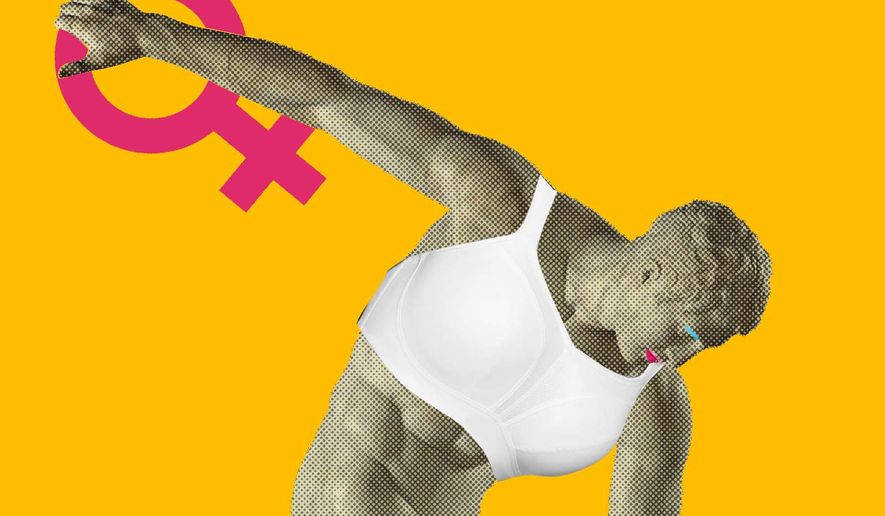
A relationship that has existed since biblical times (“A man shall leave his mother and father and hold fast to his wife” Genesis 2:24, and quoted in Ephesians 5:31) was challenged Tuesday before the Supreme Court in the matter of biological men competing in women’s sports. The court considered whether states can ban transgender athletes from taking part in girls’ and women’s school and college athletics.
This is such a violation of history, theology — God made us male and female — and common sense that the fact the argument has made it to the highest court is more proof that either standards no longer exist or they are shifting like a weather vane in high winds.
Should the court allow biological men in women’s sports, biological men will be able to shower with biological women (assuming the women will take showers under such circumstances), use women’s restrooms and violate other spaces meant to protect women and girls.
One justice who should have recused herself is Ketanji Brown Jackson. During her confirmation hearing, Justice Jackson refused to define “woman.”
In 2014, a White woman named Rachel Dolezal (who claimed to be trans-Black and unable to identify as White or what she called “White supremacy”) asserted what she said was her Black American heritage and became the head of the NAACP in Spokane, Washington. In fact, her parents were Caucasian and her ancestors came from Europe. She was subsequently forced to resign when confronted by reporters.
If the law allows people to be whatever they want to be and claim discrimination when a sport or anything else restricts their ability to participate based on classical gender differences, then anything goes. I used to play high school and college basketball. That I wasn’t good enough to play professionally was not a case of discrimination. What about males who aren’t good enough to make an all-male team but might be good enough to compete and, in fact, win for an all-female team?
It has taken decades for women to fight for equality in sports, with some success. As noted by many, scholarships and commercial endorsements have contributed to that struggle for equity with men. Caitlin Clark, a basketball player for the Indiana Fever, has greatly increased the popularity of women’s basketball. Many WNBA games are now televised nationally.
One of the attorneys arguing against allowing transgender males to play in women’s sports noted the harm done to hundreds of women who have lost medals, scholarships and other benefits.
As mentioned by former college swimmer Riley Gaines and other activist women, girls and women have a right to protect themselves from competition by biologically stronger men, and their privacy concerns should be protected in locker rooms and restrooms. One of the tiniest percentages of people — transgender — is asking the Supreme Court to overturn the rights of more than 99% of others.
Then there’s the issue of detransitioning. Although the percentage of those who regret their attempts to change their biological sex characteristics is small, that some have regretted their decision and changed back indicates it is possible to do so through counseling, medications and a religious conversion. That possibility is what distinguishes this issue from race. No one can actually or logically become formerly Black.
Listening to the arguments before the court, I was again reminded of how language matters. Changing words to make behavior and identity seem more acceptable can change some minds, but it doesn’t change reality. Men do not belong in women’s sports. The court should make that case.
• Readers may email Cal Thomas at tcaeditors@tribpub.com. Look for Cal Thomas’ latest book, “A Watchman in the Night: What I’ve Seen Over 50 Years Reporting on America” (Humanix Books).

Please read our comment policy before commenting.