



OPINION:
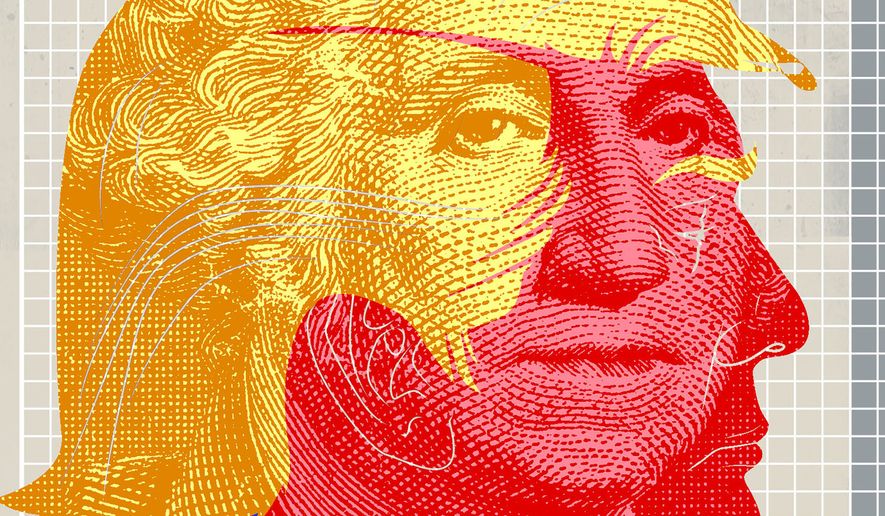
President Trump and Chinese ruler Xi Jinping have set into motion a fundamental reordering of international commerce.
Gone is any pretense of an inexorable movement toward market-driven globalization, as envisioned by the post-World War II and post-Cold War architects of the now-marginalized World Trade Organization.
With his tariffs, Mr. Trump has reasserted American economic power and protectionist impulses by forcing asymmetrical trade deals on allies in Europe, Japan and South Korea, as well as emerging powerhouses in South Asia such as Vietnam and Malaysia.
Forging a new industrial policy, he seeks to shore up legacy manufacturing sectors such as steel and autos and legacy technology, including chipmaking, address strategic vulnerabilities, such as in rare earth minerals, and promote artificial intelligence development, deployment and exports.
He has wrestled for the federal government a “golden share” of U.S. Steel, a 10% stake in Intel and a $50 billion equity position in MP Materials, as well as 15% ownership of Vulcan elements in the rare earths mining and magnet industries.
This is a bow to China.
The standoff with the Middle Kingdom over tariffs and export embargoes of U.S. technology and rare earth minerals demonstrates that China can’t be forced to change its state-directed approach to economic development. Mr. Xi’s subsidies, opaque import barriers and high-tech vision remain in place. America is fighting back with its own statecraft, as seen in Mr. Trump’s tariffs and strategic investments.
AI is driving economic growth.
Last year, Google, Meta, Microsoft and Amazon devoted about $380 billion to capital expenditures, mostly in AI development and data centers. Plans for 2026 could push that to $500 billion.
Add in firms building AI agents to boost businesses’ productivity, such as Salesforce and Adobe, and venture capital’s investments in startups, and AI provides enough steam to overcome weak investment in other sectors.
Along with the president’s tax cuts, those should help motor the economy in 2026.
Still, plenty of disruptions will help define the labor market and midterm elections.
AI is rattling the white-collar jobs outlook. Growing firms such as Amazon, Microsoft and Salesforce, as well as those facing challenges, including General Motors, Molson Coors and Booz Allen, are cutting white-collar staff.
This phenomenon is best summarized by what is happening at McKinsey consulting. A few years ago, a project team might have consisted of a leader plus 14 consultants, but now the consultants can fall to two or three supervising the research and drafting work of AI agents.
AI should boost productivity anywhere from 0.8% to 1.5% annually. The squeeze on entry- and middle-level workers is profound and significantly explains the job search frustrations of new college graduates.
American workers might expect some relief from the president’s tariffs and push for American leadership in AI. The labor market suffers from a mismatch between the skills of unemployed workers and recent graduates, and the skills needs of industries protected by tariffs and high-tech.
Mr. Trump’s limits on immigration create labor shortages and constrain growth in industries where Americans don’t like to work — notably, agriculture, construction and manufacturing.
Those discourage immigration among workers with sorely needed skills. Newcomers fill about one-fifth of STEM positions and more than two-fifths of doctoral-level science and engineering roles.
With a revised immigration policy seeking sufficient newcomers for low-skilled work in agriculture, technicians to build and run factories and scientists and engineers to develop AI, faster growth would create additional opportunities across the wider economy.
More inclusive growth would boost consumer products, health care, business services, and leisure and recreational activities to absorb more white-collar workers displaced by AI.
Not enough jobs and not enough workers is a paradox, but that’s what you get with a radical mismatch of skills and severe constraints on immigration by those with eager hands and needed abilities. Hence, we get long, frustrating job searches for displaced white-collar workers.
American society continues to motor, but with two ever-separating tiers: those with and without needed skills, and significant equity positions in publicly traded companies and growing privately held businesses.
That plays out in politics.
New York Mayor Zohran Mamdani’s early ascent owes much to the support of frustrated college graduates. Most are employed, but not in charmed activities such as finance, high-tech, legal and other professional services that enable them.
Republicans will see this and won’t oppose Mr. Trump’s pressure on the Federal Reserve to prioritize growth over taming inflation.
Over the first three quarters of 2025, the economy survived Mr. Trump’s tariffs and delivered strong growth. The economy took a gut punch from the government shutdown in the fourth quarter but should recover any lost growth this year.
In 2026, the economy should grow by about 2.5%.
Inflation continuing at 3% is harsher than we endured between the 2008 Global Financial Crisis and COVID shutdowns, but we can survive it.
Over the prior four decades, inflation averaged 4%, while real economic growth was a healthy 2.9%, and stocks delivered 10.5% annual gains.
• Peter Morici is an economist and emeritus business professor at the University of Maryland, and a national columnist.

Please read our comment policy before commenting.