



OPINION:
Last week, California Gov. Gavin Newsom delivered his final State of the State address, declaring the Golden State a beacon of democracy, an economic engine for America that combines “conscience and capital” and an innovator of policies that other states should replicate.
“We don’t run from change; we drive it,” Mr. Newsom said. “We are proving that inclusive democracy works. We are proving that expanding human rights works. We are proving that legal immigration works. And we’re proving that a progressive tax structure works.”
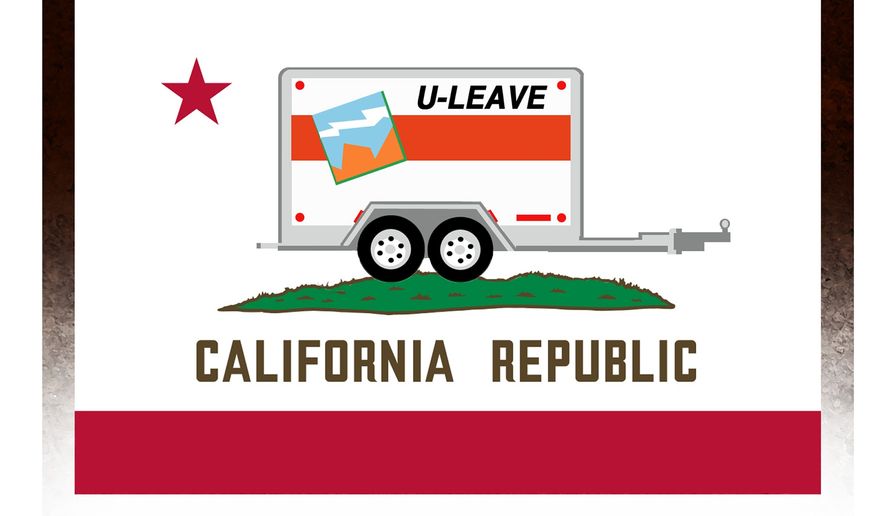
Yet many Californians are running from Mr. Newsom’s liberal governance — literally.
As the state weighs a ballot initiative that would impose a one-time 5% tax on the wealth of residents with a net worth of $1 billion or more, Silicon Valley leaders are fleeing the state.
Google co-founders Sergey Brin and Larry Page reportedly appear to be reducing their footprint, according to The New York Times. Peter Thiel, the co-founder of PayPal, has opened an office in Miami for his investment firm. Billionaire venture capitalist David Sacks relocated from San Francisco to Austin, Texas, late last year.
Tech investor Chamath Palihapitiya estimates that the total wealth that has left California in the past month is $1 trillion.
“We had $2T of billionaire wealth just a few weeks ago. Now, 50% of that wealth has left — taking their income tax revenue, sales tax revenue, real estate tax revenue and all their staffs (and their salaries and income taxes) with them,” Mr. Palihapitiya wrote on X on Sunday. “In other words, by starting this ill-conceived attempt at an asset tax, the California budget deficit will explode.”
California is estimating budget shortfalls this year of $3 billion to $18 billion. Mr. Palihapitiya noted that California billionaires paid 13.3% of their income to the state every year, and with them gone, “the middle class will have to foot the bill.”
Seemingly understanding this, California’s middle class is also fleeing.
Last year marked the sixth consecutive year that California ranked first among the nation’s states in terms of outbound migration, with more one-way U-Haul customers leaving than arriving. Texas was ranked the No. 1 growth state of 2025, with Florida netting second place, according to the U-Haul Growth Index released last week. Both are notably red states.
While a proposed billionaire tax will increase the middle-class burden, the cost of doing business is already too high in the liberal stronghold of California.
As the rest of the nation benefits from lower gas prices, Californians continue to pay the highest prices for a gallon of gas in the country.
Each time Californians fill their gas tanks, they pay $1.26 per gallon in state taxes, fees and costs associated with environmental programs, essentially 27% of the total cost per gallon. Moreover, California’s climate change agenda, which has been implemented through additional regulations and infrastructure challenges, is leading to refinery closures. Two plants will be going offline soon, reducing the state’s in-state refining capacity by nearly 20%, which will make it more dependent on more expensive imports.
Californians are paying $4.22 per gallon at the pump, compared with the nation’s average of $2.80.
Homeownership is also more expensive there.
California home prices are about double the national average, with low-tier homes significantly more expensive than mid-tier homes. More than half of California renters and homeowners spend more than 50% of their gross monthly income on housing, compared with the 30% average in other states. For many, owning a home in the Golden State requires a six-figure income for average accommodations.
The state suffers from a housing shortage, and lengthy permitting processes, complex building codes and high development fees drive up costs.
Rebuilding after natural disasters has also been a significant challenge for many.
After the Palisades and Eaton fires erupted one year ago, destroying more than 13,000 homes, fewer than a dozen residences have been rebuilt in Los Angeles County. This, as Mr. Newsom crowed, was the fastest cleanup in major wildfire history.
Fewer than 14% of homes scorched in the Palisades fire have received permits to rebuild, according to a Los Angeles Times analysis from December. Some homes that were spared from the fires remain unlivable because of smoke, ash and asbestos contamination. Insurance companies have been delaying payments, with little to no assistance from Sacramento to expedite the process.
With Mr. Newsom’s eyes on the 2028 presidential campaign and with the nation’s focus on affordability going into the midterm elections, voters nationwide should be wary of Mr. Newsom’s track record governing his own state.
California residents have been voting with their feet and are fleeing Mr. Newsom’s liberal policies.
• Kelly Sadler is the commentary editor at The Washington Times.

Please read our comment policy before commenting.