


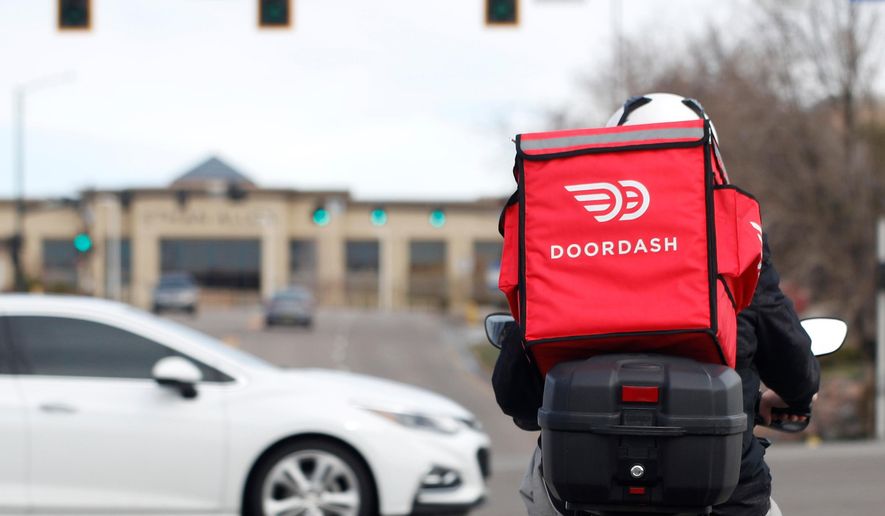

Ordering in, once an occasional indulgence, has become a nationwide habit, particularly among young adults who are addicted to food delivery apps.
It’s also leading some of them into financial ruin.
The online food delivery business, led by DoorDash and Uber Eats, was projected to generate a record $36.32 billion in revenue in 2025, up from $31.91 billion in 2024. Revenue is expected to explode in the next decade as more people tap into the convenience of dinner delivered to their door.
DoorDash and fellow online food delivery services Grubhub, Instacart and Uber Eats paid millions of dollars to air Super Bowl ads featuring megastars George Clooney, Ben Stiller, 50 Cent, Matthew McConaughey, Bradley Cooper and Parker Posey.
For young people, who are the primary users of online food delivery services, the daily drop-offs are harming their finances.
One young woman, posting on social media, confessed to ordering DoorDash at least once a day. The habit was costing her $9,000 annually.
“I deleted the DoorDash app the other day as a way to at least try to keep it in check. I’m not gonna lie, I’m treating this as a real addiction or at least something close to it. Cause it’s addictive and impulsive spending that is harming me and my finances in a serious way,” the woman wrote.
A young pharmacist who identified as a member of Generation Z (ages 14-29) said in a Reddit post that he spent 10% of his annual salary on daily Uber Eats orders.
“I don’t buy groceries and my fridge is empty,” he explained.
A mother of two young children said she spends $1,500 or more monthly on DoorDash orders.
“If I try to maximize on cooking dinner and eating only at home, I won’t have time to spend with my kids and I’m exhausted by the end of the day too. I also think trying to maximize and penny-pinching can be distracting from work,” she posted on Reddit.
Gen Z and younger millennials, specifically people ages 29-44, are driving the online food ordering craze. Nearly 40% of people in this age group use a food delivery app at least once a week, according to a recent YouGov poll.
Among adult users of DoorDash, the nation’s most popular food app, 85% are 44 or younger.
“That makes roughly two-thirds of its audience young diners, consumers who grew up expecting immediacy, personalization, and mobile-first experiences — precisely what DoorDash aims to deliver,” the independent commerce media network Kard wrote in an October analysis.
The habit is sending some Americans, particularly younger people, into debt, or piling on debt they have already accumulated through student loans, car payments and living on credit cards to pay for an increasingly costly American lifestyle.
Those who order on DoorDash, Uber Eats and other delivery services typically pay, in addition to the price of their food, a service fee of 10% to 15% of their subtotal, plus a delivery fee based on distance and demand, a tip for the driver and other potential fees for small orders or long distances.
In addition to those costs, restaurants frequently mark up food delivery orders by 30% or more to offset the fees they pay to the food delivery apps.
A chicken sandwich with a side order of red beans and rice ordered through DoorDash from Popeyes Louisiana Kitchen would cost nearly $22, or double the price of purchase in person at the store.
In March, DoorDash announced a partnership with Klarna that lets users finance their food delivery and pay for it later, but not too much later.
The deal with Klarna lets DoorDash users split orders costing more than $35 into four interest-free installments.
Critics quickly warned young consumers to steer clear of the option to finance their food. They said it would put them even further into debt.
According to the credit rating service Experian, the average American debt topped $104,000 in June. Millennials reported an average debt of $132,000. Generation Z had an average debt of more than $34,000. More than 95% of Americans carry credit card debt.
Each missed payment to Klarna incurs a fee of up to $7, and total fees can reach up to 25% of the order value.
In other words, consumers could end up paying $44 for a $35 food order.
“Trust me, there’s nothing like the feeling of actually keeping your whole paycheck instead of sending it to payments for last week’s french fries,” finance guru Dave Ramsey said.
In May, Klarna reported that more of its customers are having difficulty repaying their “buy now, pay later” loans for food and other purchases.
Klarna offers similar “flexible payment options” for concert tickets, clothing, electronics and travel.
It is one of more than half a dozen firms offering flexible payment plans, which are used predominantly by young people.
LendingTree reported in January that 41% of “buy now, pay later” users paid late in the past year, up from 34% in 2024.
Among those most likely to pay late were men, young people and parents of young children, the analysis said.
Nearly a quarter of those who used the plans said they had three or more active “buy now, pay later” loans for food deliveries and other purchases. Those ages 18-44 were twice as likely as baby boomers to take out the loans.
Younger baby boomers, or those born between 1955 and 1964, began expanding their use of DoorDash, driving the app’s significant growth in 2025, the company reported.
Boomers, however, make up just 10% of DoorDash and other food delivery app users. Among those ages 46-61, who belong to Generation X, only 12% said they use a food delivery app weekly, according to a YouGov poll.
Gen Xers complained of soggy, cold food deliveries that waste money on fees and price hikes.
One 57-year-old man posted on Reddit, “It is beyond me why someone would pay twice as much for food that is half as good.”
• Susan Ferrechio can be reached at sferrechio@washingtontimes.com.

Please read our comment policy before commenting.