


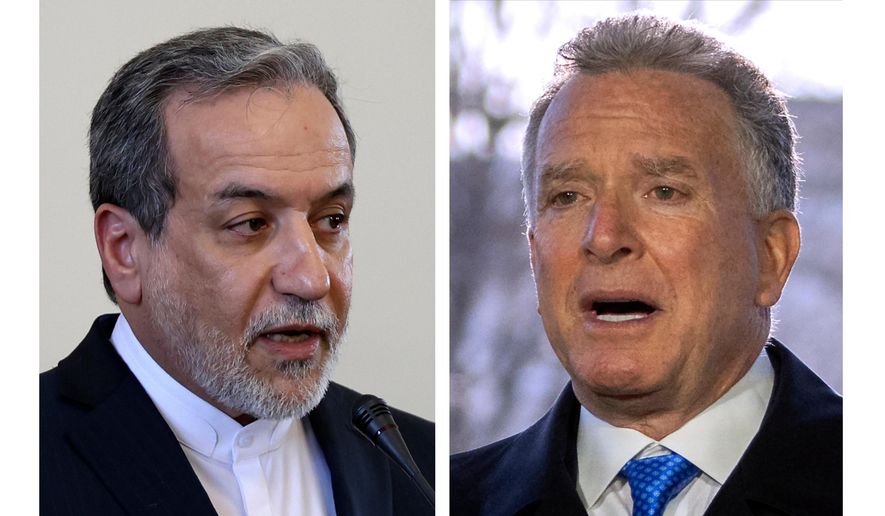

U.S. and Iranian diplomats arrived in Oman on Friday for negotiations aimed at preventing armed conflict, marking the first time the two nations have officially met for talks since May.
The talks come after weeks of rising tension between the U.S. and Iran, sparked initially by Tehran’s brutal crackdown on protesters in January. President Trump then demanded that Iran stop killing its citizens, or it would face U.S. military action.
Mr. Trump has shifted away from a focus on the treatment of protesters in recent weeks. He has instead demanded that Iran dismantle its nuclear program, limit its ballistic missile range and stockpile and cut its support for regional proxies.
It’s unclear what exactly is up for negotiation during the latest round of talks. Iranian Foreign Minister Abbas Araghchi, who is leading Tehran’s negotiating team, told Omani Foreign Minister Badr al-Busaidi on Friday that he was prepared to “secure Iran’s national interests” and defend his “country’s sovereignty” against “excesses and adventurism.”
Iran has long resisted calls from Western powers for limits on its nuclear program, and restrictions on its ballistic missiles and proxies could prove to be a similar third rail during negotiations.
Mr. al-Busaidi also met with the U.S. delegation on Friday, led by U.S. Special Envoy Steve Witkoff and Mr. Trump’s son-in-law Jared Kushner. U.S. Central Command leader Brad Cooper is also expected to take part in the negotiations.
SEE ALSO: Can U.S.-Iran talks prevent a regional war — or just buy time?
Friday talks are the fruit of several weeks of haggling between U.S., Arab and Iranian officials. After Mr. Trump threatened military action late last month, several diplomatic officials from U.S. partner states, including Israel, Turkey, Egypt, Saudi Arabia and Oman, urged the president to pause any military actions.
Indeed, Middle Eastern leaders are reportedly terrified of how Iran would respond to a devastating U.S. military action, especially if Tehran feels backed into a corner. Iran has said that if it is attacked, it would respond in-kind, and that U.S. military assets in the region would all be legitimate targets.
The U.S. military maintains at least 19 bases across the Middle East, housing more than 40,000 personnel. Bases in Egypt, Qatar, Saudi Arabia, Iraq and the United Arab Emirates could all be hit by Iranian missiles following a hypothetical U.S. military strike.
The urging of Middle Eastern officials may have staved off a U.S. military strike, at least momentarily. But last week, Mr. Trump announced the arrival of a U.S. “armada” near Iran that was prepared to attack if Iran failed to deliver on Washington’s demands.
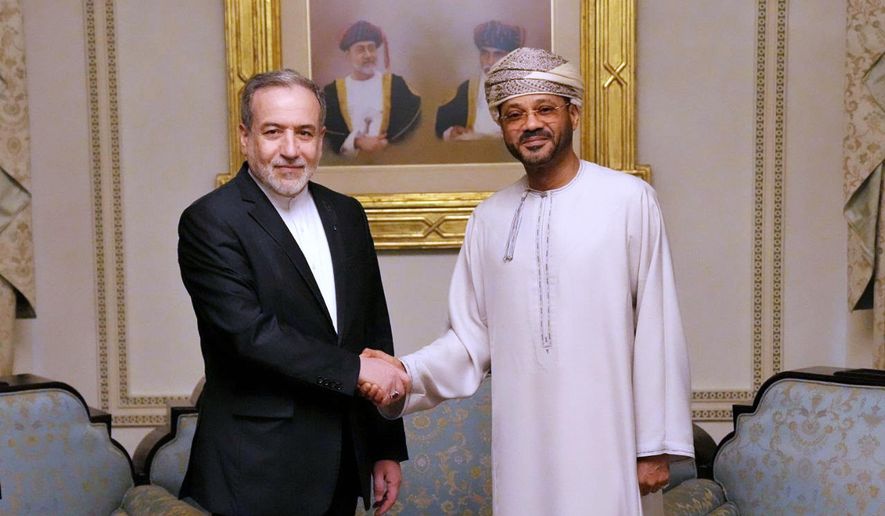
Amid U.S. military pressure and intense domestic turmoil, Iran may be inclined to accept concessions that it has previously rejected. Analysts have predicted that Iran may be more open than ever before to severe limits, if not the elimination, of its nuclear enrichment program.
“I think that that’s probably the most realistic of the three, the most achievable, at least for the time. I think that’s probably the biggest area of compromise and where there have been previous negotiations and maybe a successful kind of headway,” Bamo Nouri, who holds a doctorate, is Honorary Research Fellow at City St George’s, University of London and is a senior lecturer in International Relations at the University of West London, told The Washington Times.
• Vaughn Cockayne can be reached at vcockayne@washingtontimes.com.

Please read our comment policy before commenting.