



OPINION:
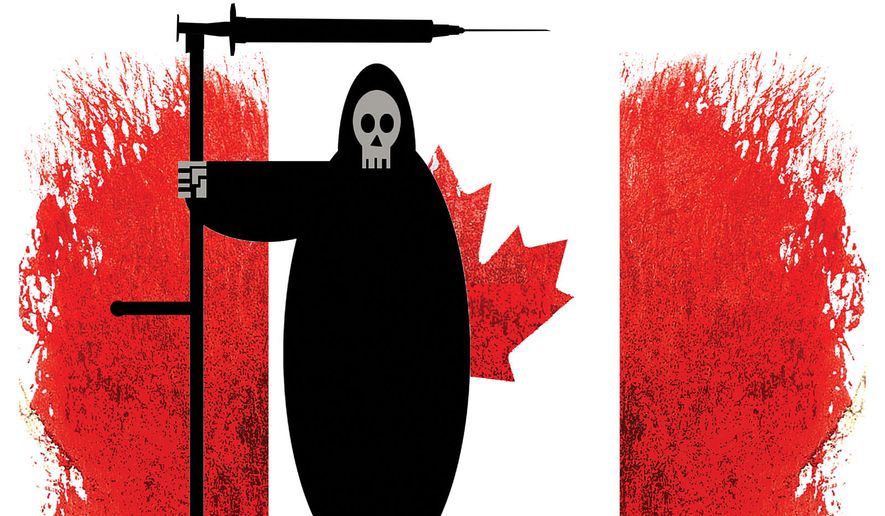
With its prevalence and acceptance growing, doctor-assisted suicide has become a flashpoint of controversy. Both sides of the divide continue to dig in their heels, spouting definitive and thought-provoking claims about the issue’s moral, cultural, and spiritual implications.
As time progresses, though, it seems the ethical pitfalls and downsides are becoming painfully clearer. For eons, opponents of euthanasia have astutely warned that efforts to allow terminally ill patients to procure life-ending drugs from doctors will be a slippery slope — a moral entrapment that leads to all sorts of abuses and bizarre scenarios.
Already, we’ve seen nations around the world rapidly expand from allowing doctor-assisted suicide solely for the terminally ill to more sweepingly permitting it for people struggling with mental afflictions. This has given rise to some truly disturbing stories.
For instance, take Zoraya ter Beek, a 29-year-old, who, in 2024, ended her life via doctor-assisted suicide in the Netherlands. According to The Guardian, she did so on the “grounds of unbearable mental suffering.”
Such deaths are permitted if a patient has “unbearable suffering with no prospect of improvement.” Another such individual is Aurelia Brouwers, a young woman who died in a starkly similar way.
“I’m 29 years old and I’ve chosen to be voluntarily euthanized,” Brouwers said before her death. “I’ve chosen this because I have a lot of mental health issues. I suffer unbearably and hopelessly. Every breath I take is torture.”
These cases are heartbreaking and prove that the slippery-slope alarms sounding for far too long should have been heeded, but, tragically, they have been ignored. And, unfortunately, the chaos doesn’t come from only these mental health loopholes.
A recent review of a woman’s case in Ontario, Canada, should similarly send shockwaves through hearts and minds, forcing us to ponder what we’re permitting as a culture. A woman in her 80s, identified only as Mrs. B, was reportedly put to death despite telling medical personnel she wanted to go into hospice.
This woman, according to the Ontario Chief Coroner’s Medical Assistance in Dying Death Review Committee, had undergone coronary artery bypass surgery. Initially, she wanted to die, but changed course and requested hospice care, citing her religious beliefs.
“She reportedly told the [Medical Assistance in Dying (MAiD)] assessor that she wanted to withdraw her request, citing personal and religious values and beliefs,” a report from the committee reads. “She communicated that pursuing in-patient palliative care/hospice care and palliative sedation was more in keeping with her end-of-life goals.”
Unfortunately, her case took a tragic turn when her husband, who the report said was “noted to be experiencing caregiver burnout,” requested a review of her decision. In fact, he sought an “urgent assessment,” which, considering the burnout claim, should have raised a plethora of red flags.
Here’s where the story takes a wildly dark turn. The initial practitioner who reviewed Mrs. B’s decision to change her mind about euthanasia expressed serious concerns about the husband’s request, but was not permitted to engage with Mrs. B to ensure it was legitimate.
“This MAiD practitioner expressed concerns regarding the necessity for ‘urgency’ and shared belief for the need for more comprehensive evaluation, the seemingly drastic change in perspective of end-of-life goals, and the possibility of coercion or undue influence (i.e., due to caregiver burnout),” the report reads. “The initial MAiD practitioner requested an opportunity to visit with Mrs. B the following day to reassess; however, this opportunity was declined by the MAiD provider due to their clinical opinion that the clinical circumstances necessitated an urgent provision.”
Mrs. B, at the behest of a third MAiD administrator, was then put to death after being found eligible. Some of the details here are unclear, but what seems indisputable is that a woman, who was unsure she wanted doctor-assisted suicide and had, in fact, pushed back on it, was killed, even as at least one staff member questioned the circumstances surrounding her.
This has sparked claims that Mrs. B’s life was potentially taken against her will. Of course, the broader issue surrounds more generally whether any of us should be playing God by selecting — and encouraging — people to be killed.
Pain and suffering are tragic, yet I’d argue this well-intentioned practice of doctor-assisted suicide is breeding a slew of horrors. From convincing us we should have the power to end our lives on our own terms to empowering potential abuses — including the killing of mentally ill people – this is all horrific, evil, and patently vile.
There’s much to be learned in suffering, which is a proclamation for another column. But, regardless of one’s views on euthanasia, it’s clear the practice is unfettered, out-of-control and deeply problematic. These cases should wake us up to realize we’ve gone way too far and need a massive shift before additional lives are tragically lost.
• Billy Hallowell is a digital TV host and interviewer for Faithwire and CBN News and the co-host of CBN’s “Quick Start Podcast.” Mr. Hallowell also is the author of four books.

Please read our comment policy before commenting.