


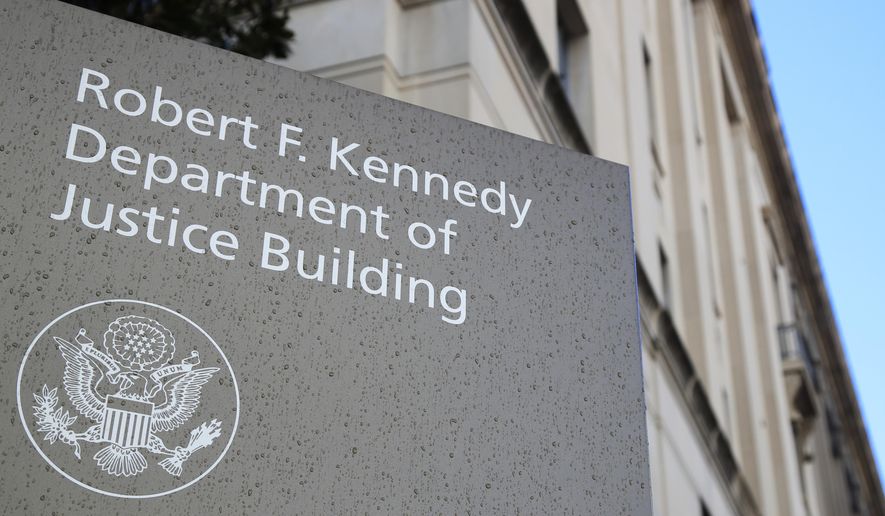

The Justice Department has ramped up efforts to revoke the citizenship of convicted criminals and people who have committed war crimes in their native countries, part of the Trump administration’s broader focus this year to initiate hundreds of denaturalizations per month.
The department moved in the past week to denaturalize residents in Florida, California and New York who had violent histories, and it celebrated the loss of citizenship of a child sex offender in Texas.
Officials said those targeted by the denaturalization push carried out their crimes before becoming citizens and omitted their offenses on their citizenship applications and in subsequent screening interviews.
“This Department of Justice will continue to strip citizenship from those who commit heinous crimes and conceal them during the naturalization process,” Attorney General Pam Bondi said in a statement. “American citizenship is a great and sacred privilege that must be earned honestly.”
Updated guidance from the department in December directed U.S. Citizenship and Immigration Services to present 100 to 200 denaturalization cases per month in fiscal 2026, which started Oct. 1. The New York Times was the first to obtain the orders.
For perspective on the increased pace, the U.S. filed 305 denaturalization cases from 1990 to 2017, an average of 11 annually, and sought to revoke the citizenship of nearly 170 naturalized Americans during President Trump’s first four-year term.
Revoking citizenship was traditionally reserved for terrorist-related cases and those who assisted despotic regimes. The legal process requires USCIS to refer a case to the Justice Department when it has sufficient evidence showing that the prospective citizen withheld personal information that would have disqualified them, such as a crime or human rights abuse.
People born in the U.S. cannot have their citizenship revoked.
The Justice Department widened the pool of denaturalization candidates this summer in hopes of fulfilling the ambitious agenda. Now, federal prosecutors are pursuing violent criminals, gun offenders, human traffickers and fraudsters of all kinds.
They include Gurmeet Singh, who was convicted of rape in New York shortly after he became an American citizen in 2011.
Prosecutors on Monday said Singh, an Indian national, was a taxi driver in New York who woke a sleeping passenger in his back seat by putting a knife to the woman’s throat, bound and gagged her, and then raped her.
Officials said Singh concealed his active criminal case while undergoing the naturalization process. He is serving a 20-year sentence in a New York state prison.
The Justice Department also filed Monday to revoke the citizenship of Erwin Galindo, a California resident who did not disclose during his naturalization proceedings that he had sexually abused an 11-year-old girl and raped his 14-year-old daughter.
Court documents said Galindo threatened to have his daughter deported back to Guatemala if she discussed the attack with anyone.
Galindo pleaded guilty in 2016 and was sentenced to eight years, prosecutors said. He was released after serving five years in prison.
Last week, federal prosecutors in Florida filed to denaturalize Luis Miguel Fernandez Gaviola for hiding his war crimes while in the Peruvian military.
The civil court documents said Mr. Fernandez Gaviola commanded an infantry unit in 1989 that killed eight residents in the District of Pucara because of their suspected ties to a rival political group.
Mr. Fernandez Gaviola came to the U.S. in 1992. When he applied for citizenship in 2003, he did not disclose his military experience or his role in the political slayings, prosecutors said.
“No one who commits atrocities like these is entitled to the precious gift of U.S. citizenship,” Assistant Attorney General Brett A. Shumate of the Justice Department’s Civil Division said in a statement. “We owe it to the American people to protect them from human rights violators who abuse positions of power, wherever they engaged in their offensive acts.”
The department has had some success in revoking citizenship.
A federal judge in Texas ordered that Carlos Noe Gallegos’ naturalized status be negated after prosecutors said he never revealed his sexual assault of a child.
Court documents said Gallegos came to the U.S. from Mexico in 1998 and later married an American citizen.
Prosecutors said he sexually assaulted a child younger than 14 in 2007 but did not list the crime when applying for his naturalization two years later.
Gallegos was charged with sexual assault in 2016. He pleaded guilty to the offense and was sentenced to six years of community service, according to court documents.
The case highlights how time-consuming denaturalizations can be. Legal efforts to revoke Gallegos’ citizenship started during Mr. Trump’s first term and were largely prosecuted under President Biden.
The first year of Mr. Trump’s second term has shown an ability to expedite those cases. The Justice Department won eight of the 13 denaturalization cases it brought in 2025.
“After one year, this Department of Justice has filed and won nearly the same number of denaturalization cases that the Biden administration did in four years,” a Justice Department spokesperson said. “Those who gained citizenship through unlawful means and endanger our national security will not maintain the benefits of being an American citizen.”
• Matt Delaney can be reached at mdelaney@washingtontimes.com.

Please read our comment policy before commenting.