



OPINION:
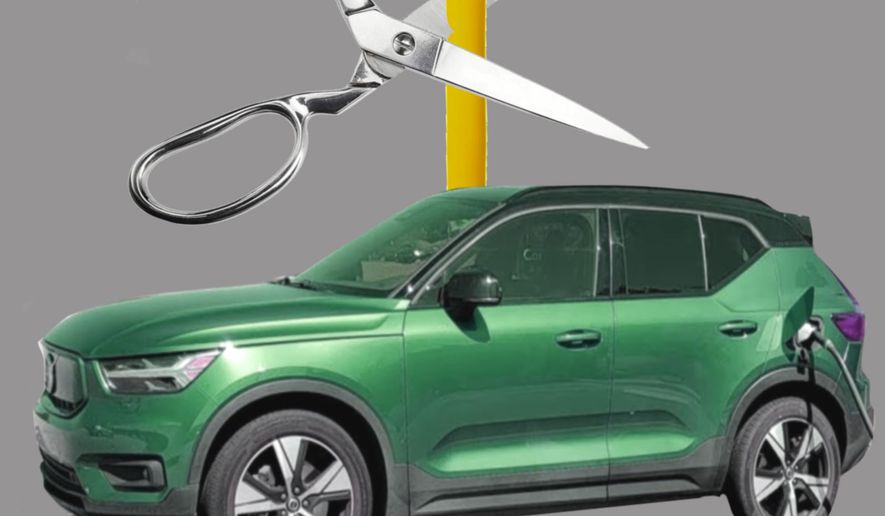
Here’s a depressing but all-too-predictable headline from The Wall Street Journal last week: “Detroit’s EV Pullback Is Costing $50 Billion.”
Yikes. That’s a lot of money for the American auto industry to lose. Once again, we have confirmation of an iron law of economics: If you want to kill an industry, then subsidize it.
The best recent example of this rule is the green energy industry (solar and wind power), which has been heavily boosted with taxpayer dollars for almost 50 years now and is still an inconsequential form of overall energy supply. Dozens of promising firms, such as Solyndra, collected billions of taxpayer dollars and were supposed to be the energy companies of the future. Now they lie in rest in the business-bust cemetery.
Perhaps an even bigger waste of money has been the tens of billions of taxpayer dollars that Presidents Obama and Biden threw at the electric vehicle industry.
I have nothing against electric vehicles. I own a hybrid, which our family likes a lot. Teslas are great cars.
The Biden administration was so obsessed with ending fossil fuel consumption overnight that it didn’t even support hybrids. With the Biden team and the climate change fanatics, it was a total and immediate transition to electric cars — or bust.
Well, it’s been mostly bust. My group, Unleash Prosperity, warned repeatedly during the Biden years that the auto industry was sowing the seeds of its own destruction by getting hooked on the fool’s profits of taxpayer handouts for electric vehicles.
These included a $7,500 tax credit to entice people to buy an EV, billions of dollars in manufacturing subsidies, free charging stations, choice parking spaces and other special treatments.
The Big Three auto firms got suckered into just what we counseled against: building cars for the politicians, not the car buyers. The problem has been that the know-it-alls in Washington ignored one key feature of the car-buying public: We Americans have a love affair with our cars. We were never going to allow the politicians to tell us what kind of car to buy and drive.
EVs also became knotted up in partisan politics. They became known as “Biden cars.” In this polarized nation, half of Americans hated Mr. Biden and his policies. Republican voters weren’t going to obey his car-buying commandment.
EV sales were also stalled by countless horror stories of drivers being stranded in the mountains with no juice left in the battery or cars not starting on frigid winter mornings. This made car buyers wary.
Also, there have been legitimate concerns about putting the entire transportation system on a strained electric grid.
Despite all the federal and state handouts to the industry, EV sales fell by nearly half in 2025 after the tax credit expired last year. Over the past six months, Ford, GM and Stellantis have all lost money thanks to overinvestment in EVs. The unsold cars are piling up on the dealer lots. (Now might not be a bad time to buy an EV. The deals are out there.)
Elon Musk may well be right that electric cars will be the vehicles of choice in the future as battery technology continues to improve. Their costs will fall, the batteries will allow motorists to drive farther without recharging, and the reliability will undoubtedly rise.
For that future to unfold, keep the government as far away from the auto industry as possible. To slightly alter a phrase from the late Justice Thurgood Marshall: The power to tax and the power to subsidize is the power to destroy.
• Stephen Moore is a co-founder of Unleash Prosperity and a former senior economic adviser to President Trump.

Please read our comment policy before commenting.