


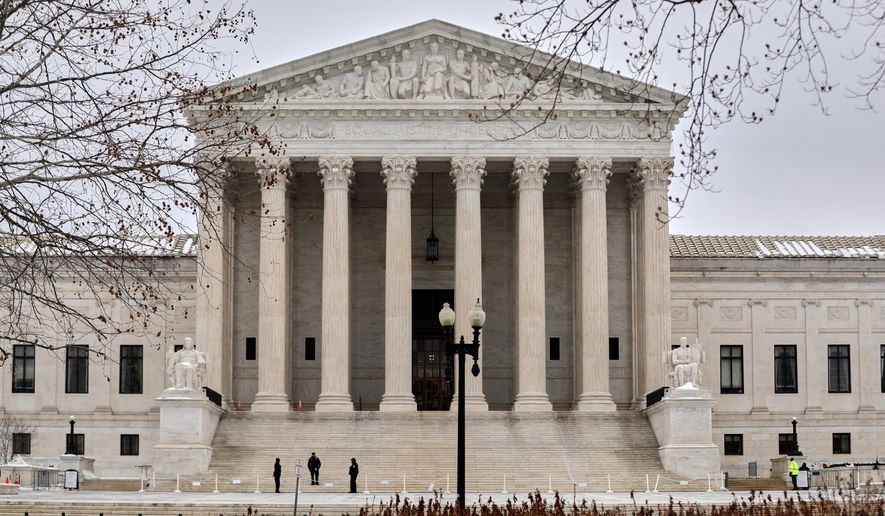

The Supreme Court announced Monday it will hear a dispute brought by Colorado communities against oil companies over actions the localities say have caused extreme summer heat waves and temperatures.
The lawsuit was brought by Boulder, Colorado, and the surrounding county. It accuses oil companies of violating state law in global activities that have produced extreme summer heat, precipitation changes, damaging wildfires, higher ground-level ozone, disease, forest die-off and drought.
Lower courts have rejected the fossil fuel companies’ attempts to dismiss the case, with the Colorado Supreme Court reasoning that the Clean Air Act allows states to regulate interstate emissions and pollution.
The companies — with the Trump Department of Justice’s backing — say it would be disastrous to allow states to exert control over energy activities far beyond their borders. They asked the justices to review the lawsuit.
Colorado localities had urged the justices not to hear the case, arguing that state courts are the proper venue.
The case is Suncor Energy v. County Commissioners of Boulder County. It took at least four justices to vote in favor of hearing the appeal.
A date for oral arguments has not yet been scheduled.
Dozens of lawsuits have been filed since 2017 by mostly Democrat-led cities and states challenging Big Oil over alleged climate change activity. The litigation usually seeks compensation to rebuild infrastructure.
The justices in January heard a case out of Louisiana in which the state and several parishes sued oil companies arguing that their crude oil production during World War II caused climate damage to the coastline that now demands recompense.
The oil companies were sued in state court, but they argued that they acted as federal contractors during the war so the legal battle should play out in federal court.
The oil companies lost in lower court whose judges reasoned that they can’t prove their oil production was sufficiently related to the federal contracts.
That case is Chevron v. Plaquemines Parish. A decision is expected by the end of June.
• Alex Swoyer can be reached at aswoyer@washingtontimes.com.

Please read our comment policy before commenting.