



Diets rich in fish and vegetables could help adults stave off memory loss as they age, according to new research published Monday in JAMA Neurology.
Supported by grants from the National Institutes of Health and the nonprofit Alzheimer’s Association, researchers analyzed 159,347 adults participating in three nationwide studies between 1986 and 2017.
They found that adults following six heart-friendly diets reported fewer cognitive problems, especially among those aged 45 to 54 and those practicing the blood pressure-lowering DASH diet.
DASH, or Dietary Approaches to Stop Hypertension, leans into vegetables, nuts, and whole grains. It limits salt, sweets, fatty meats and full-fat dairy.
“Our study found that dietary patterns emphasizing vegetables, fish, and whole grains were associated with better outcomes,” Dr. Kjetil Bjornevik, the study’s lead author, said in an email. “These findings are consistent with a large body of nutritional research.”
Dr. Bjornevik, an epidemiologist who directs the neuroepidemiology program at the Harvard T.H. Chan School of Public Health, called for “further research into the biological mechanisms linking diet to brain health.”
According to the study, adults following the six brain-food diets reported fewer problems in a seven-question subjective memory survey.
To a lesser extent, they also performed better in a phone interview measuring their objective neurological reflexes.
Those who followed the DASH diet the most closely experienced a 41% lower risk of cognitive decline on the survey compared to those with the least fidelity to it.
A plant-based diet and a low-insulin diet reduced the same risk by 24%. The Alternative Healthy Eating diet reduced it by 16%, while a lower-inflammation diet did so by 11%.
The findings come after the Trump administration published a new food pyramid last month to reshape federal nutrition policy.
Like the new study, the revised pyramid discourages consumption of sugar and processed foods. It calls for less whole grain and more animal fat and full-fat dairy than older guidelines.
The Washington Times has contacted the Department of Health and Human Services for comment.
Some health experts not connected to the study said it does not necessarily contradict the recent guidelines from Health and Human Services Secretary Robert F. Kennedy, Jr.
“The overwhelming message is ’eat real food,’ which does not conflict with the research in JAMA,” said Jennifer Galardi, a fitness and nutrition expert at the conservative Heritage Foundation.
Gerard Anderson, a health policy and management professor at Johns Hopkins University, stressed that the study confirms only an indirect link between diet and brain functions.
“While I find observational trials interesting, they suggest the need for a clinical trial to actually demonstrate the causation,” Mr. Anderson said.
According to the study, the findings build on emerging data linking higher intakes of red and processed meats to greater risks of dementia as people age.
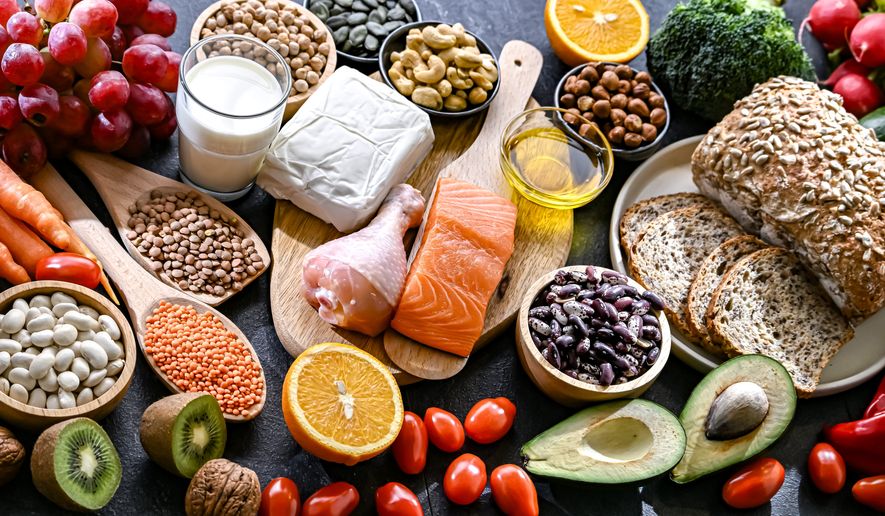
Fish and green-leafy, yellow and other vegetables scored the best for brain health across all six diets. Eggs, fried potatoes and red and processed meats performed the worst.
Fruits were a mixed bag. Three study groups linked them to a “lower risk” of subjective cognitive decline, but one cohort linked them to “lower verbal memory” scores.
According to the study, the biggest surprise was that people who ate more nuts and seeds reported worse outcomes on the survey.
“Wine, tea, and salad dressings were associated with better cognition, whereas sweetened beverages and sweets were associated with worse cognition,” the researchers wrote.
• Sean Salai can be reached at ssalai@washingtontimes.com.

Please read our comment policy before commenting.