


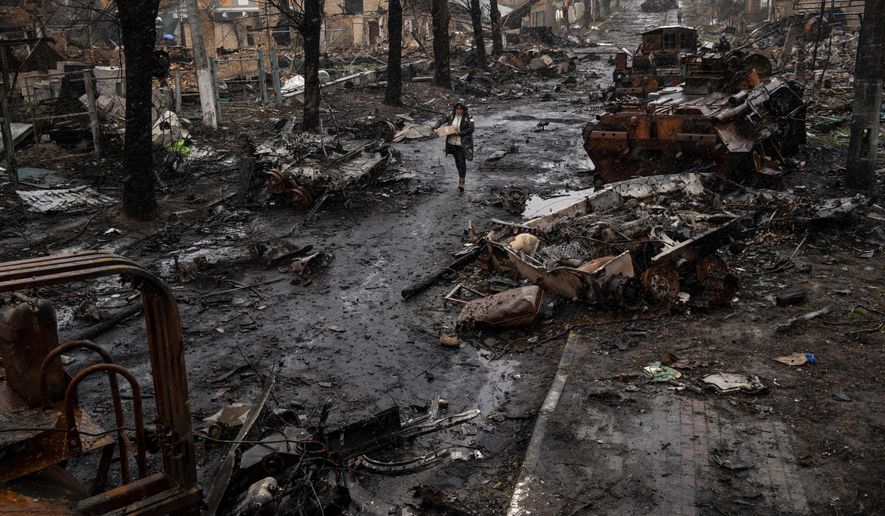

The Russia-Ukraine war will grind into a fifth year Tuesday, and no one, from Kyiv to The Hague to Washington, seems to have the answers to end the bullets, the bombs and the killings of soldiers and civilians alike.
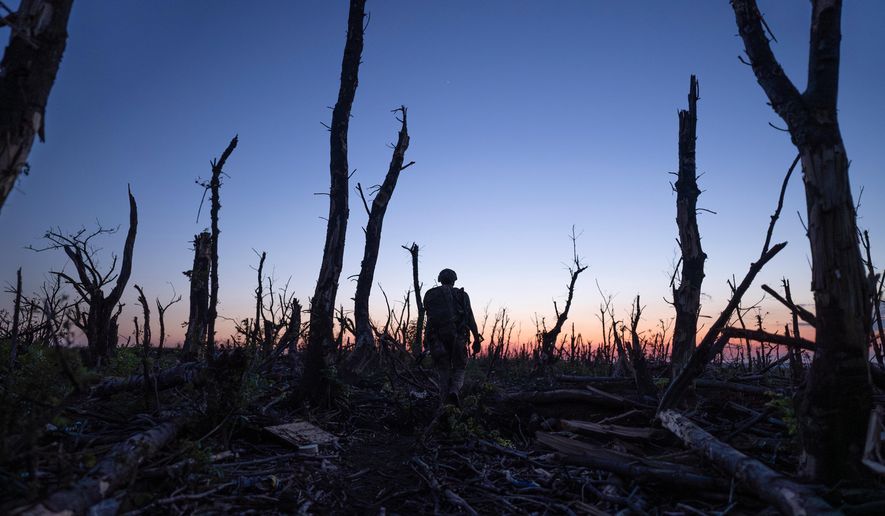
Four years after Russia launched a full-scale invasion of neighboring Ukraine on Feb. 24, 2022, the fighting has become a grueling war of attrition with mounting casualties on both sides. The stalemate on the battlefield is matched by a failure to find a diplomatic end to the conflict.
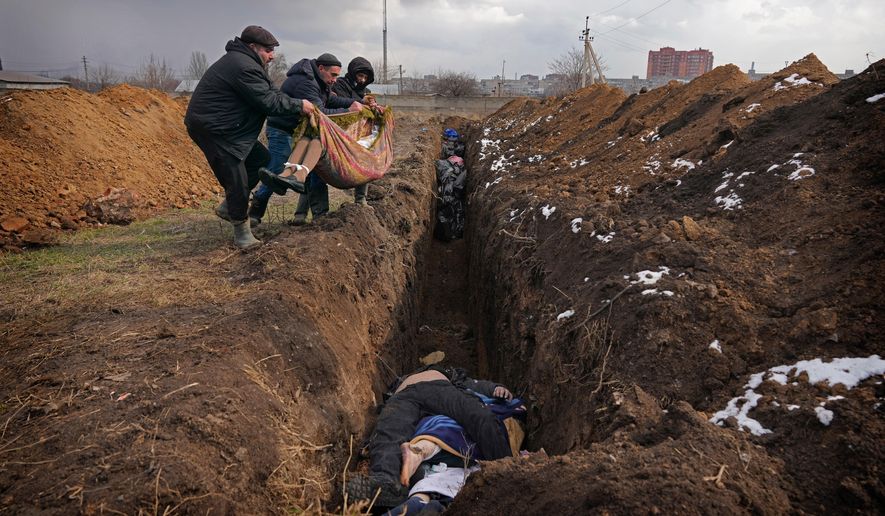
The United Nations estimates that at least 15,000 civilians have been killed since the invasion. Ukrainian officials say the death toll is almost certainly much higher because of the lack of access to Russian-occupied areas, where mass casualties were reported early in the war.
Russian President Vladimir Putin ordered tanks across the border in 2022 in what he thought would be a three-day war to install a pro-Russian government in Kyiv, Ukraine’s capital. That hasn’t been the case.
Hanna Notte, an analyst with the Center for Strategic and International Studies in Washington, said that in the days after the war began, she was surprised, like many of her colleagues — like much of the world — by the tenacity of the Ukrainian resistance.
“If Russia is going to invade, this is probably going to be a short war, and Russia is going to force some sort of fait accompli that Ukraine and Ukraine’s Western backers will have to accept,” Ms. Notte said Monday in a discussion hosted by the CSIS think tank. “But this is not the war that Putin hoped for. I think he banked on a short war and a quick victory, and also a reality in which Russia’s ties with the West would not be fully severed.”
Outnumbered and outgunned, Ukraine has ceded territory only grudgingly after managing to slow Russian advances from the start of the war. Kyiv’s dramatic counterattacks have forced Moscow to shift its objective from conquering the entire country to controlling the Luhansk and Donetsk administrative regions.
The Institute for the Study of War in Washington estimates that Russia now occupies 20% of Ukraine. In 2025, it seized only 0.8% of Ukrainian territory. While neither side seems capable of launching a decisive, sweeping breakthrough, the fighting remains relentless.
President Trump has shifted U.S. policy in Ukraine toward a “peace through mediation” strategy since returning to the White House in January 2025. His administration has placed significant diplomatic pressure on Kyiv and Moscow to fulfill his campaign promise to end the war quickly.
“We’ve put both sides together, and that’s had a real positive effect in some respects,” Steve Witkoff, Mr. Trump’s special envoy, said Saturday on Fox News’ “My View” program. “They don’t seem like they really want to fight with one another, and I don’t think they do.”
He said the U.S. negotiating team has put proposals on the table and plans to bring both sides together soon for a summit with Mr. Putin and Ukrainian President Volodymyr Zelenskyy.
“So hopefully, you’ll be hearing some good news in the coming weeks,” Mr. Witkoff said.
Retired Navy Rear Adm. Mark Montgomery, a senior fellow at the Foundation for Defense of Democracies think tank in Washington, acknowledged that Ukraine is in the midst of a tough fight against Russia. Still, he said Kyiv isn’t losing much ground against its much larger and more powerful adversary.
“They’re gaining tenths of a percentage of Ukrainian territory a year at tremendous costs to Russia’s future,” he said Saturday in a briefing. “The Russians are sacrificing a lot, but they’re gaining nothing.”
Russian casualties in Ukraine have reached levels that are unprecedented for any conflict since World War II. The most recent data from the Ukrainian General Staff and reports from Western intelligence indicate that Moscow has sustained more than 1.2 million casualties, killed and wounded, since the start of the war.
Analysts say the numbers show no sign of letting up.
“They’re raising 407,000 conscripts a year and putting them right into battle after minimal training,” Mr. Montgomery said.
Kaja Kallas, the European Union’s foreign policy chief, said diplomacy is preferable to war but lamented that a year of negotiations has yet to yield even a ceasefire.
“It is not Ukraine that is the obstacle to peace, Russia is,” she said Monday on X. “We must flip the script: from pressure on Ukraine to surrender territory to what Russia must do to meet the basic conditions for a just and lasting peace.”
On Monday, the European Union failed to reach an agreement on its latest sanctions package against Russia after objections from Hungary and Slovakia.
“This is a setback and message we didn’t want to send today, but the work continues,” Ms. Kallas said.
She said the EU is pushing for the withdrawal of Russian troops from occupied territories in Ukraine, as well as Moscow’s agreement to honor existing international agreements.
“We must be clear about what we expect from Russia: respectful borders, an end to sabotage, the paying of war damages, and the return of Ukrainian children,” Ms. Kallas said. “Before we talk to Moscow, we ought to be clear what we want to talk to them about. Russia’s maximalist demands cannot be met with a minimalist response.”
Mr. Zelenskyy said turning back the Russian forces in Ukraine is the key to preventing the fighting from expanding into a worldwide conflict.
“The question is: How much territory can he seize and how to stop him? Not to prevent Russia from winning, but because Russia wants to impose its own worldview and change people’s lives,” he said Monday in a BBC interview. “Putin has already started this war, and we are preventing him from turning this into a broader, full-scale World War III. Today, we are the outpost stopping Putin.”
• Mike Glenn can be reached at mglenn@washingtontimes.com.

Please read our comment policy before commenting.