



Congressional Republicans are clashing over an airline safety bill more than a year after the deadly midair crash near Ronald Reagan Washington National Airport.
The legislation would require airplanes to be equipped with advanced anti-collision technology. It is a response to the Jan. 29, 2025, collision of an Army Black Hawk helicopter and an American Airlines passenger jet that killed 67 people.
The Rotorcraft Operations Transparency and Oversight Reform Act, or ROTOR Act, passed the Senate unanimously in December and is scheduled for a House vote as soon as Monday.
It would require aircraft flying into busy airspace to have cockpits equipped with ADS-B In technology by the end of 2031.
Families of the victims issued a statement in support of the bill.
House Speaker Mike Johnson, Louisiana Republican, planned to move the legislation to the House floor for a Monday vote, even though the measure, sponsored by Sen. Ted Cruz, Texas Republican, has divided Republican lawmakers.
Top House Republicans are trying to delay the vote in favor of a competing bill authored by the Republican-led House Transportation and Infrastructure Committee and House Armed Services Committee.
The Airspace Location and Enhanced Risk Transparency Act, or ALERT Act, would go beyond the ROTOR Act and implement a much broader set of airline and Federal Aviation Administration changes, including a review of Reagan National’s notoriously congested arrival schedule for commercial jets.
Minutes before the collision last year, the air traffic controller managing flights reported to a supervisor that he was “overwhelmed” as he juggled oversight of seven jets and five helicopters.
The House’s ALERT Act, like the Senate’s ROTOR Act, has bipartisan support. House lawmakers announced the measure days after the National Transportation Safety Board released its final report on the cause of the midair collision.
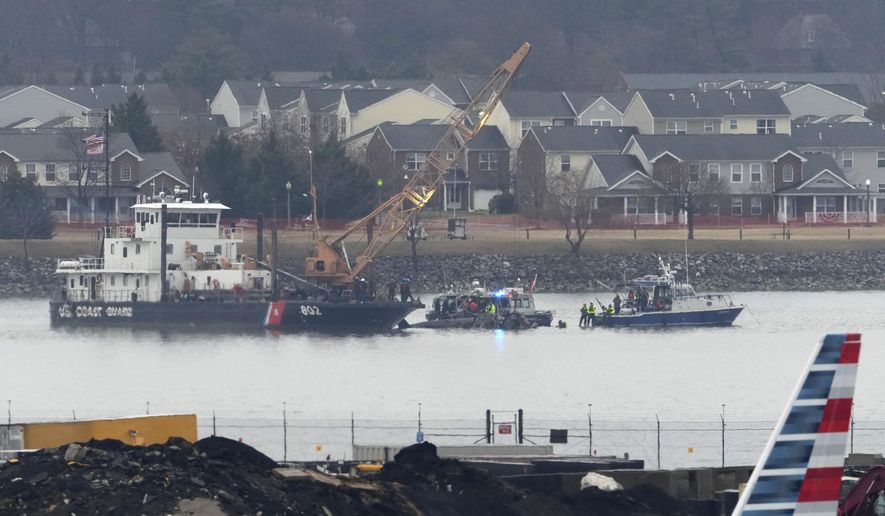
The crash killed all 64 passengers and crew aboard American Airlines Flight 5342 and all three crew members of the U.S. Army Sikorsky UH-60L Black Hawk.
The NTSB report listed dozens of contributing factors to the crash and provided a long list of safety recommendations. All the recommendations are included in the ALERT Act.
“The best way to serve and honor the victims and their families is by thoughtfully addressing the broad range of safety issues raised by the now-complete accident investigation, and that’s just what the ALERT Act does,” said Transportation and Infrastructure Committee Chairman Sam Graves, Missouri Republican. “This comprehensive bill will make our aviation system safer by directly addressing various factors that contributed to this accident.”
NTSB Chair Jennifer Homendy endorsed the ROTOR Act.
An NTSB official said privately that many within the agency support the ALERT Act because it includes all the agency’s recommendations.
“Both bills would address outstanding recommendations from NTSB’s final report. Only one bill attempts to address all of them. The NTSB will continue to advocate for the implementation of all 50 recommendations from the report to ensure a holistic response to this tragedy, rather than focusing solely on any one issue or recommendation,” the official said.
The House legislation, like the ROTOR Act, calls for pilots to use ADS-B In technology in congested airspace but provides carve-outs for some noncommercial aircraft and leaves it to the FAA to establish rules for implementing the technology rather than mandating it under federal law.
Installing ADS-B In equipment in cockpits would give pilots an awareness of nearby aircraft, which proponents say will help them avoid midair collisions and would have prevented the crash last year. It would complement a 2010 FAA rule that mandated all airplanes have ADS-B Out equipment, which broadcasts information about a plane’s GPS location, altitude, ground speed and other data to ground stations and other aircraft at a rate of once per second.
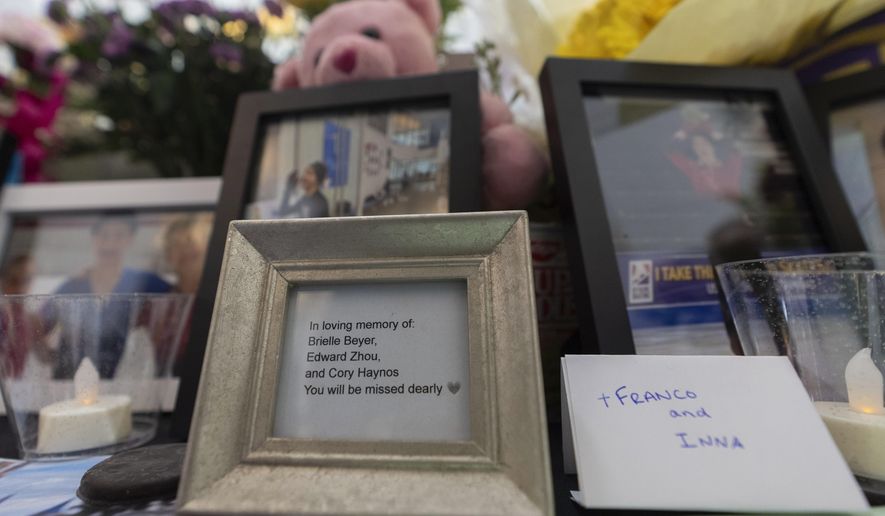
The Black Hawk barreled into the side of the passenger jet that was making its final approach into Reagan National. The helicopter was flying 78 feet above its 200-foot altitude limit.
The airliner’s pilots did not see the helicopter until it was too late to avoid the impact. Neither aircraft was equipped with ADS-B In technology that could have alerted all pilots involved of the looming collision.
Some general aviation pilots say the Senate-passed legislation goes too far and places a heavy burden on private pilots who had nothing to do with the collision.
Although newer private planes and jets already have the equipment installed, many older private aircraft do not.
Installing the equipment on a small private aircraft could cost up to $50,000 unless alternative portable devices can be substituted, FAA Administrator Bryan Bedford said at a House hearing.
Portable devices are significantly more affordable, ranging in cost from a few hundred dollars to more than $1,000. The legislation allows certain light aircraft, including many Cessnas, Pipers and Beechcrafts, to use portable devices.
A House legislative aide said the ALERT Act is “an all of the above approach” that will address the many causes behind the deadly collision near Reagan National.
A spokeswoman for Mr. Cruz said the ROTOR Act is a narrower bill than the ALERT Act and can more quickly clear Congress and be signed into law, leading to faster safety improvements in airspace around busy airports.
“We feel the ROTOR Act addresses the No. 1 cause of the crash,” the spokeswoman said. “We expect to get a big, bipartisan vote in the House on Monday, and we look forward to working with the transportation committee to address further issues.”
In a statement Friday, Amy Hunter, a representative of Families of Flight 5342, called for the House to pass the ROTOR Act and take up other NTSB recommendations in future legislation.
Ms. Hunter lost her cousin Peter Livingston and his family in the crash.
“The ROTOR Act does not claim to solve every problem in the national airspace system. Neither do we. We fully expect Congress to swiftly codify all of the NTSB’s final recommendations, not just those addressed by this bill. We are committed to working with the House on additional legislation to close the remaining safety gaps,” she said.
• Susan Ferrechio can be reached at sferrechio@washingtontimes.com.

Please read our comment policy before commenting.