



OPINION:
CIA Director John Ratcliffe has no shortage of wickedly complex threats to U.S. national security — including weapons proliferation, transnational terrorism, Russia, China and North Korea — on which to train his sights these days.
Iran remains a collection target of the highest priority, especially while the Trump administration is engaged in nuclear negotiations.
Earlier this month, the administration initiated indirect nuclear-only talks with Tehran in Oman. Refusing, for now, to negotiate on its ballistic missile program, material support to proxy terrorists and nuclear enrichment for civilian use, Iran predictably staked out a hard line.
Seeking to keep all options open and increase leverage at the negotiating table, President Trump has moved a significant number of military assets, including the USS Abraham Lincoln carrier strike group, into the region.
In response, Maj. Gen. Abdolrahim Mousavi, chief of staff of the Iranian armed forces, threatened that the entire Middle East would be at war if Iran is attacked.
Iran still has the capability to strike Israel and U.S. bases in the region, as well as disrupt maritime traffic in the Strait of Hormuz. Iran projects power through asymmetric kinetic operations. The regime tried unsuccessfully to assassinate Mr. Trump, former Secretary of State Mike Pompeo and National Security Adviser John R. Bolton.
The Islamic republic is arguably weaker now than it has ever been, going back to its bloody war with Iraq in the 1980s.
While Iran faces a severe water shortage, its economy and currency are in free fall. Iran lost its client state Syria after the fall of Bashar Assad, and Israel and the U.S. have taken the fight to Iran’s weakened terrorist proxies, Hamas, the Houthis and Hezbollah. Iran’s erstwhile allies Russia and China could do nothing in June to prevent U.S. strikes on Iran’s nuclear facilities and Israel’s destruction of Iranian air defenses and military sites.
The inner workings of the Iranian state are highly opaque. Intelligence collection, particularly against the Islamic Revolutionary Guard Corps, which ruthlessly represses the Iranian population and conducts terrorist operations overseas, is critically important.
The CIA’s Directorate of Operations, where I served for decades, produces human intelligence, the foundation for the agency’s all-source analysis on which effective negotiations with an adversary such as Iran rely.
On the hook to negotiate the best deal possible to defend U.S. national security, Special Envoy Steve Witkoff, Mr. Trump’s son-in-law Jared Kushner and commander of U.S. Central Command Adm. Brad Cooper will depend on the U.S. intelligence community, especially Mr. Ratcliffe’s well-placed human sources, which will inform their strategy along at least three lines of operation.
First, during his first term, Mr. Trump rightly criticized the Joint Comprehensive Plan of Action, which the Obama administration negotiated, for allowing sunset clauses to the nuclear agreements while not addressing Iran’s ballistic missile inventory and support to proxy terrorists.
Whether through diplomacy or through kinetic strikes, the U.S. will need to deal with the full scope of Iran’s multifarious threats to the region and beyond.
CIA human intelligence will be critical to understanding Iran’s negotiating strategy, including where Iran might be amenable to compromise. If any agreements are signed, there will be a necessary mistrust and verify component for the U.S. intelligence community.
Second, the intelligence community is responsible for a comprehensive battle damage assessment of the U.S. kinetic strikes on Iran’s nuclear facilities in June. The assessment must produce clear evidence of what, if any, nuclear infrastructure might have survived intact, including centrifuges that have not yet been installed, as well as the disposition of Iran’s stockpile of roughly 900 pounds of enriched uranium. Human intelligence will be critical to uncloaking Iran’s lies and obfuscation about reconstituting its nuclear program.
Third, the intelligence community will need to assess the real strength of Iran’s domestic opposition. Iran has faced multiple significant protest movements, especially over the past two decades, but the current level of unrest is arguably the most powerful yet.
Iran will demand a reduction or elimination of sanctions in return for any negotiated deal, which would enable the regime to ride out this most recent round of protests, remain in power and constitute an enduring threat to the U.S. and our allies.
There is no indication that the protests have the potential to galvanize internal opposition from the military or security services to the point where Iran’s regime security is truly threatened.
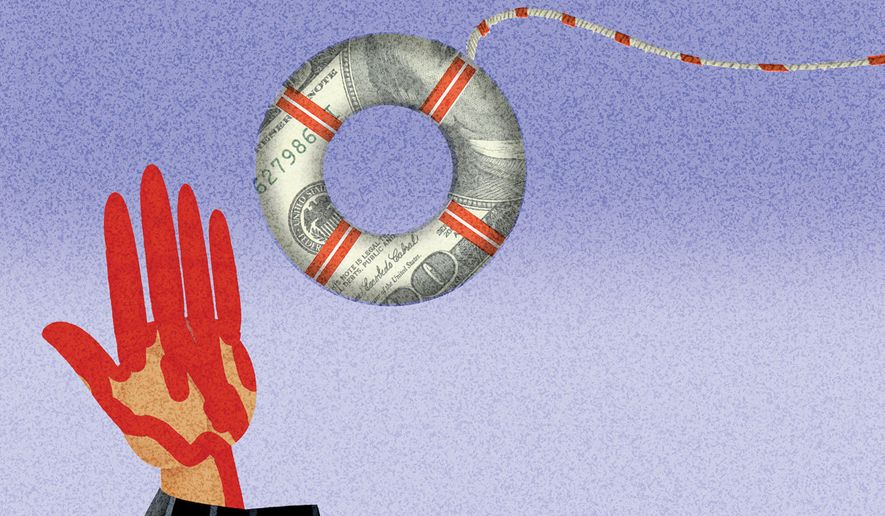
Therein lies the challenge for the Trump administration as it weighs the risks and benefits of continuing to squeeze Iran’s economy or throwing Iran a financial lifeline in return for a nuclear or perhaps even more comprehensive deal.
• Daniel N. Hoffman is a retired clandestine services officer and former chief of station with the Central Intelligence Agency. His combined 30 years of government service included high-level overseas and domestic positions at the CIA. He has been a Fox News contributor since May 2018. He can be reached at danielhoffman@yahoo.com.

Please read our comment policy before commenting.