



OPINION:
In recent weeks, Republican Sens. Rand Paul of Kentucky and James Lankford of Oklahoma and Republican Rep. Nancy Mace of South Carolina have separately criticized Anthony Fauci’s legacy of cruel and wasteful experimentation on dogs and other animals funded by the National Institutes of Health.
As a physician, I agree: It’s time to turn the page on this dark chapter in public health history.
Thirty-five years ago, I began my surgery rotation in medical school fully aware that it included participation in a “dog lab.” The hapless dogs came from the city shelter, which means that the victims were possibly pets given up by families who loved them but could no longer care for them.
My fellow medical students took these trusting creatures, cut open their chests to expose their hearts, administered medications to observe changes in the circulatory system, and killed the dogs when they were done brutalizing them. I refused to participate and was excused.
Looking back now, I can see that this once-common practice of medical school dog labs served solely to indoctrinate students into accepting the idea that animal experimentation was an important part of medicine. What better way to do it than to have us cut open our beloved childhood companions?
The fact that the dog lab was an optional assignment shows it was not necessary for becoming a physician, which is why it’s no longer part of medical student training.
Dog use also isn’t necessary for biomedical research, but the barbaric and archaic practice is alive and well across the country, and the NIH is still paying for it with our tax dollars, even though Dr. Fauci is gone.
Last week, Mr. Lankford released his “Federal Fumbles” report, which included a recent NIH contract for drug testing on 300 “cute” beagles a week in a Chinese lab, a project uncovered by the nonprofit animal testing watchdog White Coat Waste. Mr. Paul’s recent “Festivus” waste report criticized ongoing Fauci-era experiments that infest puppies with ticks and inject dogs with cocaine.
Similarly, documents recently obtained by White Coat Waste through state and federal open-records laws shed light on what is being done to dogs in taxpayer-funded research laboratories in my home state of Utah.
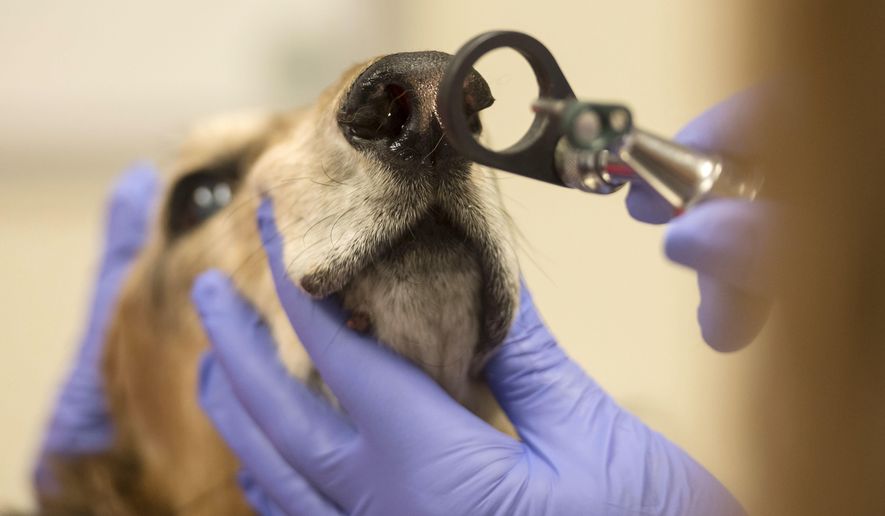
Government databases and internal records detail that the University of Utah has at least five active NIH grants for invasive, terminal heart experiments on dogs. The university’s NIH-funded dog experiments entail inducing heart attacks and other cardiac disorders in dogs as young as 1.
The university’s documents show that many of the dogs will die during the experiments. Others will be killed by having their chests cut open and their hearts removed while they are still alive. One project application states plainly, “Euthanasia will occur via direct harvest of the heart.”
Veterinary records show that 1-year-old hounds with names such as Caboose, Connie, Diesel, Patsey, Shyla and Thomas have been victims of this brutal research.
In all, more than 180 dogs are slated to die in these projects, which have received nearly $12 million to date and, in some cases, are scheduled to continue using dogs and to receive additional federal funding through 2028.
This needs to stop. It’s cruel, and cardiac physiology isn’t the same for canines as it is for humans.
Food and Drug Administration Commissioner Marty Makary said last year, “Why are we testing every single drug on … dogs, usually beagles? Because they’re obedient. … It’s sad and it’s unnecessary.” He’s right.
In her recent letter to Health and Human Services Secretary Robert F. Kennedy Jr., Ms. Mace lays out evidence that NIH has continued to fund cruel canine experiments, and she demands that they stop.
Mr. Kennedy, who supported White Coat Waste’s campaign to end Dr. Fauci’s beagle testing, should put NIH’s dog and cat experiments on the chopping block with haste. His agency must join the others that have ended this barbaric practice.
Painful and deadly dog experiments are a waste of animals’ lives, our time and taxpayer dollars.
• Dr. Sujatha Ramakrishna is a pediatric psychiatrist in Kanab, Utah, and a volunteer adviser for the nonprofit White Coat Waste.

Please read our comment policy before commenting.