



OPINION:
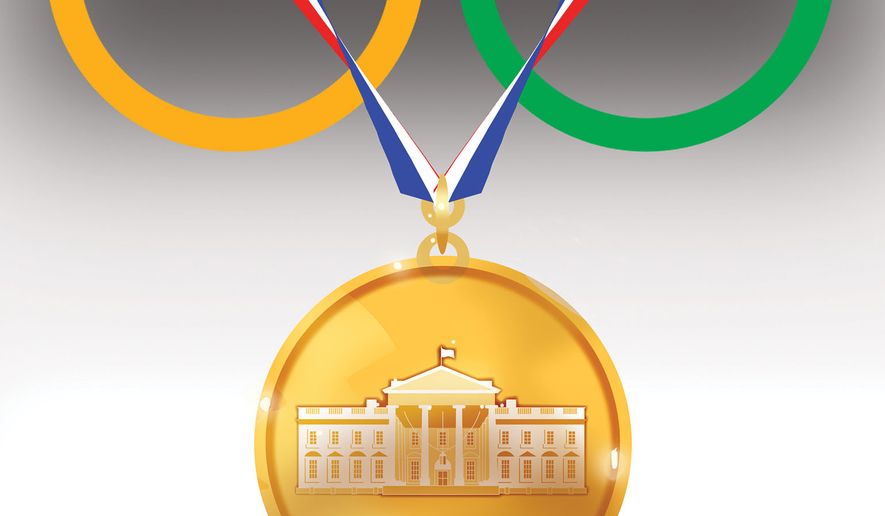
The White House has many roles. It is a home for the president and his family, an office, a stage for social diplomacy and a symbol of the spirit of the American people.
Olympic and Paralympic athletes have long captured this spirit, bringing home medals and stories that have inspired the nation. These athletes are welcome at the White House not only to be congratulated but also to share their achievements. These visits have taken the form of formal receptions, celebrations and performances that have created many iconic White House moments.
From the early 20th century onward, presidents have used the White House to recognize Olympic achievement as a reflection of national pride. Athletes arrived not simply as champions but also as representatives of the nation, offering generations of Americans moments of unity and optimism.
In 1968, President Johnson invited figure skating champion Peggy Fleming to the White House after she won gold at the Grenoble Winter Games in France. She was the only American athlete to win gold at those Olympic Games and revived the American figure skating program after a tragedy involving the entire national team in 1961.
In 1980, more than a decade later, Ms. Fleming returned to the White House and performed a skating exhibition on the White House grounds during a holiday celebration, transforming the South Lawn into an Olympic ice sheet. The moment blurred the line between sports and state, reminding guests that Olympic achievement could be shared not just through speeches but also through movement, beauty and performance.
That same year marked another defining chapter in Olympic White House history with the legendary hockey game now remembered as the “Miracle on Ice.” After defeating the heavily favored Soviet Union at the 1980 Winter Games in Lake Placid, New York, the U.S. men’s Olympic hockey team became an enduring symbol of perseverance against all odds. Their victory resonated far beyond sports, capturing the nation’s imagination during the height of the Cold War.
President Carter called coach Herb Brooks to offer his congratulations after the game and extended an invitation for the team to visit the White House. The team accepted and was flown from Lake Placid to Washington aboard Air Force One, demonstrating the national significance of their achievement.
Their arrival was a statement of how Olympic moments could transcend arenas and medals, forever memorialized in White House history. Over the decades, the team’s legacy has been revisited at the White House through countless reunions and honors.
Beyond these iconic stories, the White House has welcomed countless Olympians and Paralympians across generations. Gymnasts, swimmers, track and field stars and entire delegations have passed through its doors. Some have been honored in ceremonies on the grounds, others during state dinners or informal receptions. Each visit has added a unique touch to the evolving relationship between the Olympics and the White House.
American athletes are once again competing on the world stage at the 2026 Milan Cortina Winter Olympic Games in Italy. In 2028, Los Angeles will host the Olympic Games, bringing the event home for the first time since 2002.
Los Angeles last hosted the 1984 Summer Olympic Games, widely regarded as one of the best in recent history. Many of the city’s iconic venues, such as Dodger Stadium and the Los Angeles Memorial Coliseum, which were used during the 1932 Summer Olympics in Los Angeles, will once again welcome spectators for the 2028 Games.
New sites, upgrades to existing infrastructure, and improvements in transportation and public safety will make the 2028 Summer Olympic Games unforgettable, creating a new chapter in the American Olympic story.
President Reagan and first lady Nancy Reagan watched the opening ceremony of the 1984 Summer Olympic Games from the press box of the Los Angeles Memorial Coliseum on July 28, 1984. This was the first time a sitting American president opened an Olympic Games.
The story of the Olympics at the White House is not about any single athlete or team. It is a story of the intersection of sports with our nation’s identity and how moments of excellence are etched into the history books.
As the world watches Milan 2026 and looks ahead to Los Angeles 2028, this tradition continues to remind us that Olympic greatness does not end in the arena. Sometimes, it continues all the way to 1600 Pennsylvania Ave.
• Stewart McLaurin is president of the White House Historical Association.

Please read our comment policy before commenting.