



NEW YORK — For years, it was a daily McDonald’s trip for a cup of coffee with 10 sugars and five creams. Later, it was Starbucks caramel macchiatos with almond milk and two pumps of syrup.
Coffee has been a morning ritual for Chandra Donelson since she was old enough to drink it. But, dismayed by rising prices, the 35-year-old from Washington, D.C., did the unthinkable: She gave it up.
“I did that daily for years. I loved it. That was just my routine,” she says. “And now it’s not.”
Years of steadily climbing coffee prices have some in this country of coffee lovers upending their habits by nixing café visits, switching to cheaper brews or foregoing it altogether.
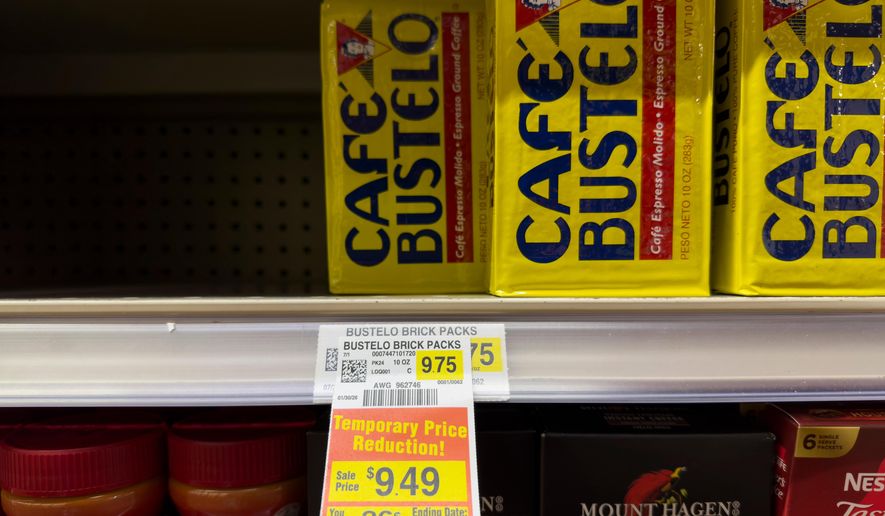
Coffee prices in the U.S. were up 18.3% in January from a year ago, according to the latest Consumer Price Index released on Friday. Over five years, the government reported, coffee prices rose 47%.
That extraordinary rise has brought some to take extraordinary measures.
“Before, I thought, ‘There’s no way I could make it through my day without coffee,’” says Liz Sweeney, 50, of Boise, Idaho, a former “coffee addict” who has cut her consumption. “Now my car’s not on automatic pilot.”
Sweeney used to have three cups of coffee at home each day and stop at a café whenever she left the house. As prices climbed last year, though, she nixed coffee shop visits and cut her intake to a cup a day at home. To make up for the caffeine, she pops open a can of Diet Coke at home or rolls through McDonald’s for one.
Dan DeBaun, 34, of Minnetonka, Minnesota, has likewise trimmed back on coffee shop visits, conscious of the increasing expense as he and his wife save up for a house.
“What used to be a $2 coffee, it’s now $5, $6,” says DeBaun, who now buys ground coffee at Trader Joe’s and fills up a travel mug to bring to the office.
Data from Toast, a payment platform used by more than 150,000 restaurants, found the median price of a regular hot coffee in the U.S. had climbed to $3.61 in December, with wide variation by location. The median price of cold brews was $5.55.
Virtually all coffee consumed in the U.S. is imported. Though tariffs affected some imports of coffee in 2025, they ultimately were removed. Climate issues - drought in Vietnam, heavy rain in Indonesia, and hot, dry weather in Brazil - are blamed for reducing yields of coffee crops and driving up global prices.
Two-thirds of Americans drink coffee daily, according to the National Coffee Association. For many, it is such an indispensable part of their routine, the soaring price has led to nothing more than grumbling.
The coffee association says its surveys show coffee consumption is broadly holding steady despite price hikes. But, squeezed by the cost of everything from rent to beef, others are shaking up their habit.
Sharon Cooksey, 55, of Greensboro, North Carolina, was visiting her local Starbucks most weekday mornings for a caramel latte until scaling back last year. First, she switched to brewing Starbucks at home. Then, she discovered Lavazza coffee was about 40% cheaper and switched to it.
“I can buy a bag of coffee for $6?” she said to herself. “It was like I had just discovered another world. The multiverse opened up to me in the coffee aisle of Publix.”
She has noticed her home-brewed costs tick upward, too, but it’s nothing compared to her café habit. A bag of beans that lasts weeks costs her about the same as one latte.
Cooksey misses the social aspect of visiting the café, where baristas greeted her by name. But she’s been surprised to find she actually prefers the way her homemade coffees taste.
“I’ll be damned if it didn’t taste so good,” she says.
Growing up, Donelson watched enviously as her mother made a daily coffee jaunt (also to McDonald’s, also 10 sugars and five creams), and she duplicated the habit. She went from college to the Air Force to a government job as a data and artificial intelligence strategist, but through it all, coffee was there.
She noticed the growing expense of her routine, but kept it up until a government shutdown halted her paychecks last fall and she needed to trim her spending. Looking for a morning substitute, she landed on a Republic of Tea blend with a healthy squeeze of honey.
“Twenty cents a cup compared to $7 or $8 a cup,” she says. “The math just makes sense.”

Please read our comment policy before commenting.