


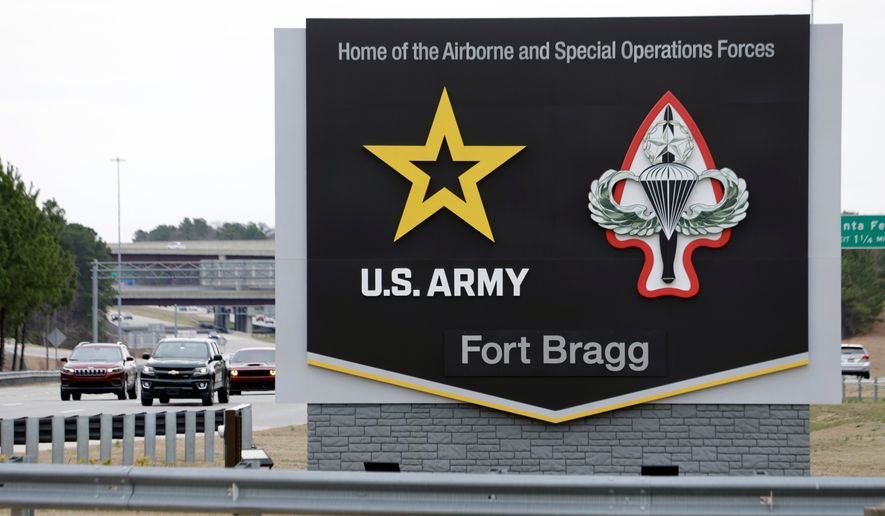

An ex-worker at Fort Bragg has been indicted for sharing classified information with a journalist about the elite Delta Force unit for a book about sexual harassment and other misconduct in the military.
Courtney Williams, 40, appeared in federal court Wednesday, having been accused of violating a provision of the Espionage Act and breaking a signed Classified Nondisclosure Agreement by sharing details of her work with a “special military unit” in Fort Bragg, North Carolina.
While the reporter and unit are not named in court filings, the details line up with a book by author Seth Harp about the Army’s Delta Force, called “The Fort Bragg Cartel,” which alleges sexual harassment, discrimination and a pattern of coverups and collusion. An adaptation of the book was published by Politico last year.
In the book and article, attributions are made to Ms. Williams, and prosecutors allege that some of these statements contained classified national defense information. She is also accused of making unauthorized disclosures of national defense information on social media.
Around the time the book was published, Ms. Williams sent the journalist a message: “After quickly reading through everything I will just say I wish you had sent me a copy of what was to be published prior to publishing. Other than a few factual errors, I would definitely have been concerned with the amount of classified information being disclosed.”
She also said that because of her attributions, this opens up the chance “to legally persecute me.”
“I just feel like the mark was missed,” she added.
Ms. Williams worked for the special military unit from 2010 to 2016 and had a top secret security clearance. Ms. Williams’ access to classified information was suspended “based on an internal investigation,” Special Agent Jocelyn Fox wrote in the affidavit, adding that she was debriefed in 2015 before signing the nondisclosure agreement.
Prosecutors allege that between 2022 and 2025, Ms. Williams repeatedly communicated with the unnamed journalist, including more than 10 hours of phone calls and over 180 messages.
On the day the article and book were published, Ms. Williams messaged the reporter that she was “concerned about the amount of classified information being disclosed.” In a separate message to a third party, she added that, “I might actually get arrested … for disclosing classified information,” citing a provision of the Espionage Act. She told a different third party that she was “probably going to jail for life.”
Following her indictment, Mr. Harp said that Ms. Williams “committed no crime,” labeling her a “brave whistleblower and truth-teller.”
“Trump’s unhinged DOJ will not even say what ’classified information’ she allegedly leaked. Her arrest and imprisonment is an outrage,” Mr. Harp said on social media. “Is it classified that many Delta Force operators and officers sexually harass and discriminate against women in the workplace?”
The preliminary charge against Ms. Williams carries a maximum possible penalty of 10 years in prison.
Roman Rozhavsky, assistant director of the FBI’s Counterintelligence and Espionage Division, said in a statement that Ms. Williams “allegedly betrayed” her oath to safeguard the nation’s secrets by sharing classified information and “putting our nation, our warfighters, and our allies at risk.”
“This indictment should serve as a stark warning to all current and former clearance holders thinking of violating their positions of trust,” he said. “If you jeopardize our national security by disclosing classified information without authorization, the FBI will hold you accountable for your crimes.”
• Mary McCue Bell can be reached at mbell@washingtontimes.com.

Please read our comment policy before commenting.