



SEOUL, South Korea — Despite soaring Middle Eastern risk, factors including the tyranny of distance make U.S. and Venezuelan oil unattractive buys for the Asian industrial economies that supply the bulk of the world’s manufactured products.
That reality has implications for all economies.
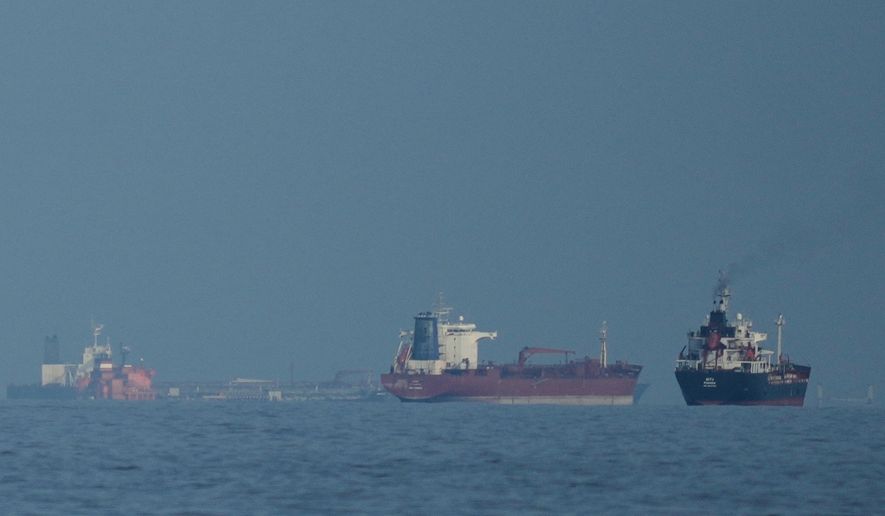
As the Iran-U.S. conflict hurtles toward its eighth week, Washington has followed Tehran’s pivot from shooting war to economic war. Counter-blockade is following blockade, and the global economy is taking hits as the vast bulk of Middle Eastern energy supplies remain trapped inside the contested Strait of Hormuz.
Oil prices, while volatile, have surged approximately 60% since combat commenced on Feb. 28. The International Energy Agency, in its April report, wrote that “ongoing restrictions to tanker movements through the Strait of Hormuz” are creating “the largest [oil supply] disruption in history.”
In some “America First” circles, however, the mood is upbeat. With Middle Eastern energy supply strangled, online memes are celebrating as tankers change course and head for the world’s largest oil supplier: the United States.
While some of his supporters consider this boon for U.S. oil exporters to be a “4D chess” play by President Trump, one expert advised Americans not to crack the champagne.
“We need to diversify our sources of supply, but practically, that is almost impossible, especially in the case of crude oil,” said Lee Duck-hwan, a South Korean industry expert and professor emeritus at Sogang University. “If we pivoted to American crude, it would be inflationary.”
The historical high prices of American oil compared to Middle Eastern oil are currently reversed as the latter trades at a premium — hence the increased attraction of U.S. terminals on the Gulf of Mexico. But other factors impede a major shift.
One is a required change to industrial architecture and processes if refiners switch from “heavy” Middle Eastern oil to “light” American varieties.
More critical is logistics. The vast additional distances Asian tankers would have to travel to plug into U.S. terminals would elevate costs for Asian companies that churn out the world’s goods, from cars to phones, from chips to ships.
“The producer passes costs down to the consumer” is a basic economic principle. Higher energy prices trickle down the supply chain from refiners to manufacturers to shippers to consumers — Americans included.
“Higher commodity prices are a textbook negative supply shock, raising costs for energy‑intensive goods and services, disrupting supply chains, lifting headline inflation, and eroding purchasing power,” the International Monetary Fund warned in its April 14 report.
The problems of going American
Per the U.N. Industrial Development Organization in 2024, East Asia and Oceania were responsible for 57.2% of global manufacturing value added.
Among East Asia’s powerhouse economies, China is dependent on the Middle East for just 36% of its oil, per research by the Atlantic Council in March of this year.
But the Council found that the region’s democratic economies are far more dependent on Strait of Hormuz tanker transits: Japan at 78%, South Korea at 63% and Taiwan at 62%.
Currently, Dubai Crude, the Middle Eastern benchmark, is selling at a premium compared to West Texas Intermediate, the U.S. benchmark: $105 per barrel versus $97 per barrel, respectively.
Historically, however, U.S. oil has been more expensive, as it must be extracted and transported from the U.S. interior. That made Middle Eastern oil the preferred buy.
More critically: While European tankers can traverse the Atlantic to take American oil on board, that is not so for East Asia.
The distance between East Asia and the Middle East is far shorter than between East Asia and the U.S. (or Venezuela). Oil terminals are predominantly on Atlantic, not Pacific seaboards — and the narrow Panama Canal cannot accommodate supertankers.
Take the distance from Seoul, in the heart of northeast Asia, to Dubai, in the heart of the Persian Gulf: 6,900 nautical miles.
From Seoul to the coast of Texas, travelling via the Malacca Strait, across the Indian Ocean and then across the Atlantic via Africa’s Cape of Good Hope is around 14,000 nautical miles. Traveling across the Pacific and around the American continent is around 16,000 nautical miles.
The current crisis may make these expanded voyages necessary, but in normal times, “It is almost impossible because of the distance,” Mr. Lee said.
Another issue is supplier-buyer relations and processes. “It is very new for the U.S. to export crude oil,” he said.
On the back of the shale boom, the U.S. became a net exporter only in 2019. Korean refineries began operation in the 1970s, largely partnering with Middle Eastern suppliers.
Those long relations have impacted refining architecture.
U.S. oil is “light” — optimal for gasoline production, well suited to car-centric America. Middle Eastern oil is “heavy,” better suited to diesel, and to East Asia’s need for industrial and logistical fuels and chemicals.
A pivot to U.S. suppliers would demand adjustments to processes and engineering: South Korean refineries, for example, work with a mix of 60-70% heavy crude and 20-30% light crude, Mr. Lee noted.
“Korean refiners are designed for heavy, viscous, high-sulfur crude from the Middle East,” wrote Seoul’s Joongang Daily newspaper in an explanatory article. “By contrast, U.S. oil is light and sweet, which underperforms in Korea’s configuration. Processing isn’t impossible, but it reshapes the product slate, such as reducing jet fuel output, and erodes profitability within a system optimized for heavier grades.”
This spectrum of issues — Middle Eastern supply, seller-buyer relation, sea routes, preferred mixes, industrial engineering, related pricings — underwrites the local refining industry, Mr. Lee said.
Korea and other economies were forced to diversify toward U.S. suppliers due to sanctions on Russian energy as a result of the Ukraine War. Even so, U.S. crude made up just 17% of South Korea’s oil mix in 2025.
While Mr. Lee admitted that reducing dependencies on the Middle East is essential, Seoul says no imminent shift is likely.
“We are considering support measures [for the industry] to help build naphtha-cracking and other upgrading facilities capable of processing lighter crude in the future,” Industry Minister Kim Jung-kwan told the National Assembly early this month.
But he prefaced his comments, saying, “Immediate action is difficult.”
So far, South Korean consumers have been shielded by government price caps. The policy has encouraged buyers to fill their tanks, while adding an additional burden to the refining sector.
“The government is dealing with this in the worst possible way, this is populism ahead of the June local elections,” Mr. Lee said, “Frankly, I am concerned: It will be a disaster for us if [the Middle East crisis] continues for another month or two.”
The first South Korean tanker to exit the strait since the conflict started, loaded with Saudi crude, was announced Friday by President Lee Jae-myung.
• Andrew Salmon can be reached at asalmon@washingtontimes.com.

Please read our comment policy before commenting.