



OPINION:
Right before he left the White House after resigning, President Richard Nixon gave an intellectually deep and emotionally dense set of impromptu remarks to 100 or so administration officials gathered in the East Room. Toward the end of that remarkable effort, he encouraged his soon-to-be former staff not to give in to hate, despite the fact that the legacy elites had waged almost constant war on him and his crew for 20 years.
Reflecting on that unhappy conflict, Nixon encouraged his team to “always give your best, never get discouraged, never be petty; always remember, others may hate you, but those who hate you don’t win unless you hate them, and then you destroy yourself.”
It was sage advice and a bit of wisdom about the world that comes only from getting knocked down and making one’s way back to their feet, and it came from the most unlikely of sources: a president who was a famously good political brawler.
Less than 11 years earlier, another famously good political brawler, also caught in a touchy moment in America, offered these words: “We meet in grief, but let us also meet in renewed dedication and renewed vigor. Let us meet in action, in tolerance and in mutual understanding. … America must move forward. The time has come for Americans of all races and creeds and political beliefs to understand and to respect one another. So let us put an end to the teaching and the preaching of hate and evil and violence. Let us turn away from the fanatics of the far left and the far right, from the apostles of bitterness and bigotry, from those defiant of law, and those who pour venom into our nation’s bloodstream.”
Those words belonged, of course, to President Lyndon B. Johnson, who offered them to a joint session of Congress five short days after the assassination of President Kennedy.
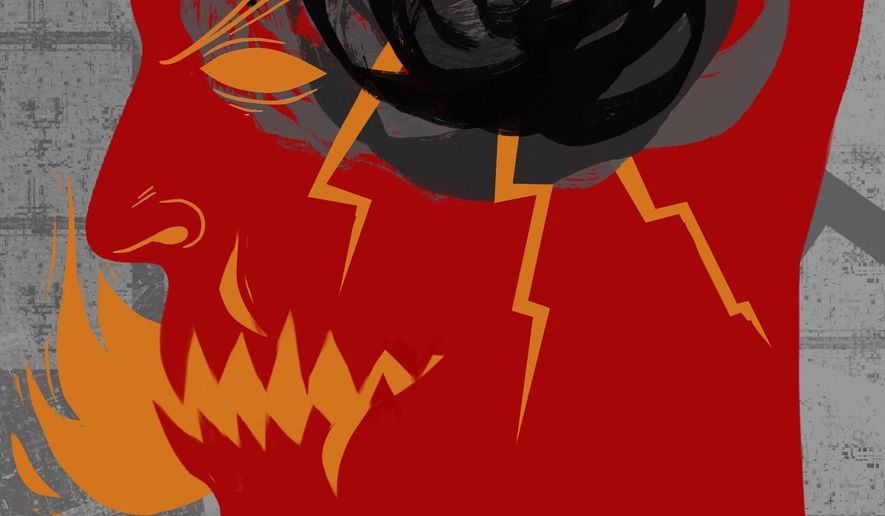
Either set of remarks could have been offered at any time in the past two weeks and been on point. Unfortunately, they were not. Announcing one’s hate for the other side, whoever they might be, is not conducive to civil discourse. Failing to restrain our baser emotions is, rather, a recipe for more violence. So is marinating in recriminations.
In a recent speech, former President Barack Obama, rather than focusing on the future and our role in making that future what we wish it to be, decided to air his grievances. That’s understandable. Everyone has grievances, and the consequences of original sin include our ability to focus on wrongs done to us with more precision and intensity than wrongs we have done.
Recriminations, no matter who offers them and how legitimate they might be, are all about the past rather than the future. If this national moment becomes about the past and who has done what to whom, we are almost certainly headed for a cycle of increasing violence. If you can’t forgive those who have trespassed against you, and they can’t forgive you, then all sides are eventually heading toward violence. There is no other possible answer.
If your leitmotif is vengeance — an eye for an eye and a tooth for a tooth — it is fair to expect a world in which we are all blind and toothless.
There is a different way. On Dec. 13, 1862, Richard Rowland Kirkland, a South Carolinian, was in the middle of the Battle of Fredericksburg. By the end of the day, 8,000 dead or wounded Union soldiers lay in front of his position. Those who remained alive cried out for water. Kirkland, then a sergeant, asked for and was given permission to risk his life to give his “enemies” water.
When the Union troops realized what was happening, they held fire and retrieved their wounded. Ten months later, Kirkland, by then a lieutenant, was killed at Chickamauga.
Like many in the Civil War, he didn’t hate his adversary, and I’m sure he would have rather the nation’s “leaders” figured out a way to proceed that didn’t involve the killings of 600,000 young men. When you think about those you might hate and why, you should take a moment and consider where that hate may be leading you, because it is probably a pretty dark path that leads to even darker places.
• Michael McKenna is a contributing editor at The Washington Times.

Please read our comment policy before commenting.