



Virginia Gov. Glenn Youngkin has vetoed more than 350 bills approved by the Democratic-led General Assembly, exercising conservative restraint over the commonwealth’s legislative activity.
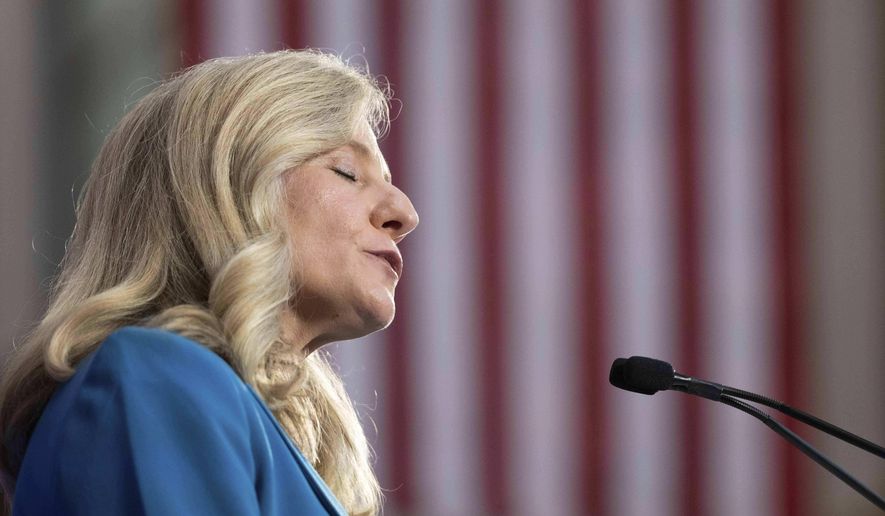
Less than two weeks before Election Day, however, Republicans are sounding the alarm: If Democrat Abigail Spanberger wins the governorship and Democrats maintain control of the House of Delegates, Richmond could undergo a transformation that turns Virginia into what they call “California East.”
House Minority Leader Terry Kilgore told The Washington Times that complete Democratic control of the chamber would herald liberal policies that stifle business growth.
He cited Democratic proposals to raise the minimum wage, mandate paid sick leave, impose clean energy regulations, and undermine Virginia’s status as the northernmost right-to-work state on the East Coast.
“We’re looking to create jobs, and our competition is Tennessee, North Carolina, Georgia, South Carolina and Florida,” said Mr. Kilgore, a Republican representing a Southwest Virginia district. “If we lose right-to-work, we’re not even on the same playing field. We’d be nowhere close to them anymore.”
Once a conservative stronghold, Virginia has shifted steadily leftward, becoming a battleground where Democratic gains have chipped away at the state’s Republican roots.
Democrats hold 21 of the 40 state Senate seats, which are not up for election this year, but their 51-49 majority in the House of Delegates is on the line. The outcome could shift the balance of power in Richmond.
A handful of pivotal suburban races could determine the next House majority.
Democratic delegates have raised nearly $45 million, compared with roughly $21 million for Republicans, according to the latest breakdown from the Virginia Public Access Project.
Democrats have emphasized broad, kitchen-table issues and pledged to tackle escalating energy, housing and health care costs. They portray Republicans as cultural hard-liners aligned with President Trump and his polarizing agenda.
Republicans say a Democratic takeover of Richmond would lead to higher taxes, extreme abortion protections, soft-on-crime policies, leniency on illegal migrants, strict gun laws and support for transgender initiatives. They argue that these positions are at odds with much of the public.
The stakes intensified last week as Virginia Democrats signaled they plan to pursue a constitutional amendment to redraw the state’s congressional maps. The move would allow them to bypass a governor’s veto, reshape future elections and likely pull state lawmakers off the campaign trail days before the election.
Mr. Kilgore said he has crisscrossed the commonwealth to rally activists and donors with a straightforward message: “All that stuff would be dead” if Republicans flip the House.
“It would be the backstop,” he said. “The House is the way we save the commonwealth right now — by bottling all this bad legislation up.”
Virginia Democrats’ redistricting plan is a response to Mr. Trump’s push to keep the Republican majority in the U.S. House after next year’s midterm elections by redrawing congressional district maps in Republican strongholds. Legal questions abound.
Democrats in the Virginia General Assembly are using the same strategy to protect abortion rights. This year, both chambers approved similar proposals for a constitutional amendment that would enshrine abortion protections into the state constitution.
If approved again next year, the amendment would go to voters via referendum.
Virginia is the only Southern state that has not enacted new abortion restrictions since the U.S. Supreme Court in 2022 overturned Roe v. Wade, the landmark 1973 ruling that established a national right to abortion.
Kelsey Pritchard, a spokesperson for Women Speak Out Virginia – 2025 and SBA Pro-Life America, said the groups have made abortion a central issue in key House races, reaching 150,000 voters.
“The stakes of Virginia’s legislative elections are high. Virginia already allows abortion in the sixth month of pregnancy, but that isn’t enough for Democrats, who will pass an all-trimester abortion amendment ending parental consent if they win majorities in the General Assembly,” Ms. Pritchard said.
Republicans were in a much stronger position in 2021 after Mr. Youngkin led a Republican ticket — with Lt. Gov. Winsome Earle-Sears and Attorney General Jason Miyares — that swept the statewide races and flipped control of the House.
Two years later, Democrats regained control of the House.
Still, Mr. Youngkin retained his veto power. After vetoing 33 bills during his first year in office and eight the next, the governor racked up 201 vetoes last year and 157 this year, according to the Virginia Public Access Project.
That power may soon be gone. Ms. Spanberger has consistently led the governor’s race against Ms. Earle-Sears.
Buoyed by polls, Republicans are more optimistic about Mr. Miyares’ chances for reelection against embattled Democrat Jay Jones, and John Reid’s bid for lieutenant governor against Democratic state Sen. Ghazala Hashmi.
Although the lieutenant governor casts tiebreaking votes in the Senate, the role is mainly ceremonial.
As a result, more and more attention has shifted to the House of Delegates.
“Gov. Youngkin vetoed almost 60 gun control bills over the last two years,” said Philip Van Cleave, head of the pro-gun rights Virginia Citizens Defense League. “Abigail Spanberger has made it clear that she supports all the major gun control bills that were vetoed: gun bans, magazine restrictions, registration scheme for homemade guns, firearm purchase permits, more restrictions where law-abiding citizens can carry for self-defense, expansion of the red flag law to allow anyone to file and more.”
He added that any gun rights legislation would be dead on arrival.
“Control of the House and governorship by the Democrats would be a disaster for gun owners and would turn us into California East,” Mr. Van Cleave said.
• Seth McLaughlin can be reached at smclaughlin@washingtontimes.com.

Please read our comment policy before commenting.