



OPINION:
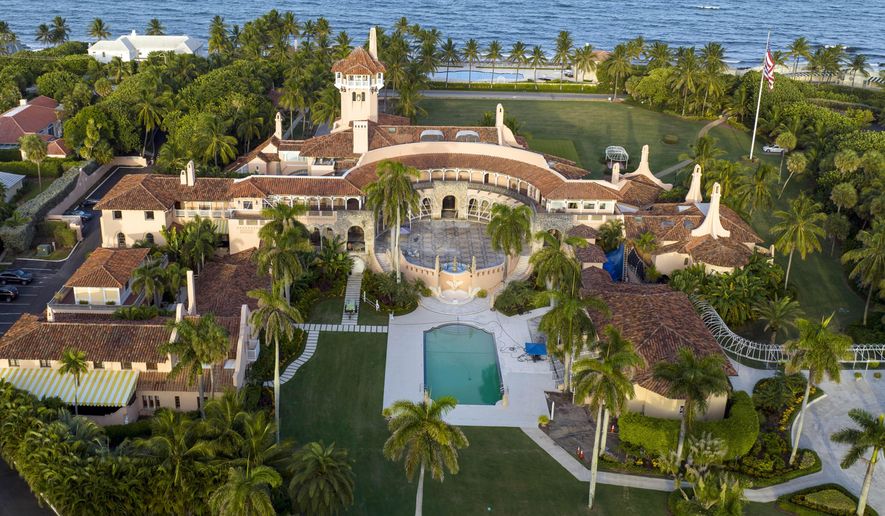
If you want to know the key to President Trump’s success, look at how he overcame opposition to his Palm Beach club Mar-a-Lago.
Mr. Trump represented everything the snobbish Florida town hated. He was not only nouveau riche but was also aggressive and flamboyant. Instead of the conventional Rolls-Royce costing up to $600,000, Mr. Trump drove a red Lamborghini, which can zoom up to 180 miles per hour. Instead of wearing the approved blue blazer with no tie, Mr. Trump wore tailored suits with white shirts and ties. In contrast with the town’s Old Guard stalwarts, Mr. Trump was not shy about having money. Nor was he afraid to poke fun at the town’s traditions and unique culture.
On top of that, back in 1985, Mr. Trump planned to admit Black and Jewish people to his club. Palm Beachers were horrified. Until just recently, two of Palm Beach’s exclusive clubs had refused to admit either.
As part of the research for my book, “The Season: Inside Palm Beach and America’s Richest Society,” my wife, Pamela Kessler, a former Washington Post reporter, and I flew down to Palm Beach with Mr. Trump on his plane and spent the weekend with him at Mar-a-Lago. On the way down, Mr. Trump imitated the nasal, constricted tones of members of Palm Beach’s blue blood Old Guard who condemned his club because it admitted Blacks and Jews.
If the council members had their way, there would be no Mar-a-Lago Club. Mr. Trump believed that the prejudice by Palm Beach Town Council members, some of whom belonged to those clubs, was in part behind their opposition to his plan to turn Marjorie Merriweather Post’s 1927 estate into a private club that would not discriminate.
Providing insight into how Mr. Trump operates as president, to overcome the town’s opposition and get his club approved, he used the carrot and the stick. His Florida attorney, Paul Rampell, who had come up with the club idea and over a period of a month persuaded Mr. Trump to accept it, sent DVDs of “Gentleman’s Agreement,” a movie about antisemitism in the 1940s, and “Guess Who’s Coming to Dinner,” about anti-Black prejudice, to the mayor and each of the town council members when they tried to impose crushing restrictions on the club.
Their limits on membership, traffic, party attendance and even photography would have made it virtually impossible for Mar-a-Lago to operate as a club. None of those restrictions had been applied to those clubs in town that discriminated.
The message behind sending the movies was clear: Mr. Trump was accusing the town council members of bigotry. On top of that, presaging the provocative way he labels opponents today, Mr. Trump publicly referred to the trust fund babies who opposed his plans for Mar-a-Lago as the “lucky sperm club.” For good measure, he sued the town for $50 million.
At the same time, Mr. Trump unleashed a charm offensive. Guided by Mr. Rampell, who is Jewish and a lifelong resident of the town, Mr. Trump invited members of the town council to play golf or tennis with him. He invited them to glittering events at Mar-a-Lago, promising the men that gorgeous young women would be in attendance.
For town council members, sending the movies depicting prejudice was the last straw.
“It’s like saying the emperor has no clothes,” Mr. Rampell told me. “Discrimination by clubs was an unmentionable. They expected Trump to bow to them. Donald was the extreme in the other direction.”
Mr. Trump spent millions of dollars renovating Mar-a-Lago. He employed Richard Haynes, whose father originally gilded Mar-a-Lago, to replicate and restore the estate’s artistic touches. Using gold leaf thinner than tissue paper, Mr. Haynes regilded 40 rams’ heads that jut from the roof line. Mr. Trump spent $100,000 on four gold-plated bathroom sinks near the ballroom.
Mirroring his plans at the White House, Mr. Trump designed a ballroom to replace the tent used for shows and social events. The problem was how to present the plan to the town of Palm Beach. Because Mar-a-Lago is designated a historic site, the town has to approve every detail of any construction.
At a meeting Pam and I attended with his architects and attorneys as part of my research for the Palm Beach book, Mr. Trump objected to calling the ballroom a ballroom. “The word ‘ballroom’ is a hard word to get approved,” he said to his attorneys. “Pavilion’ is a softer word. Use pavilion.”
Mr. Trump looked at the architectural drawings. He asked for a black felt-tipped pen. “Here’s what I would do,” he said to an architect, drawing on the plans. “I would add this: another bay,” he said, meaning an alcove. He asked how large the new ballroom would be. He wanted it to be even bigger than originally planned. “It will be the best in Palm Beach,” he said. “Do it.”
When Mr. Trump bought Mar-a-Lago for a mere $5 million in 1985, no one wanted it. Marjorie Merriweather Post, who had built the magnificent, 140-room estate, saw it as a summer White House and willed it to the government. President Carter, who famously turned down the heat at the White House to 68 degrees Fahrenheit, thought the acquisition frivolous.
Today it costs $1 million to join Mar-a-Lago.
• Ronald Kessler, a former Washington Post and Wall Street Journal investigative reporter, is the author of “The Season: Inside Palm Beach and America’s Richest Society” and “The Trump White House: Changing the Rules of the Game.”

Please read our comment policy before commenting.