



OPINION:
Gallup recently reported that only 54% of Americans now view capitalism positively, the lowest level since the question was first asked in 2010. Support among Democrats has slipped below half for the first time, and independents are not far behind. Republican support remains higher but no less uneasy.
This is more than a partisan mood swing; it reflects a widespread sense that the economy is tilted against ordinary people.
Skeptics of capitalism point to stagnant wages, widening wealth gaps and the high cost of housing as evidence that markets are rigged. Their concerns are not imagined. U.S. median real wages barely moved from 1979 to 2019, even as productivity climbed, and home prices have risen faster than incomes for decades.
When the fruits of growth appear captured by a privileged few, doubt is natural and the frustration is understandable, but much of it is misdirected. What many citizens encounter is not genuine free market capitalism at all. It is cronyism: a web of subsidies, bailouts and regulatory favors that shield politically connected firms from competition. When big banks are rescued after reckless bets or when tax codes reward insiders who can afford armies of lobbyists, people understandably conclude that “capitalism” means the powerful win and everyone else pays. In reality, that is capitalism’s counterfeit: markets without the discipline of risk and reward.
True capitalism, grounded in voluntary exchange and the rule of law, remains the most powerful engine of broad prosperity ever devised. The increased engagement of developing countries in trade, driven by market-oriented policies, has helped lift billions out of extreme poverty since 1990, according to the World Bank and the World Trade Organization. History shows that when property rights are secure and competition is fair, innovation and rising living standards follow.
Successful markets are not self-executing. They depend on regulatory bodies, systems and individuals (us) operating with honesty, trust and accountability. When those virtues erode, capitalism’s promise falters. Questionable banking practices that fueled the 2008 crisis and lobbyists who bend rules to protect monopolies are not “the market at work.” They are violations of it. Economist Ludwig von Mises warned that economic liberty survives only where citizens practice responsibility and respect the rule of law.
The answer is not heavier state control via socialism, as some may perceive. History, from the Soviet Union to present-day Venezuela, shows that centralized planning entrenches elites and smothers opportunity. The better remedy is a moral and civic reset. A free system relies on more than contracts and competition; it relies on character. Markets function best when participants practice prudence, honesty, temperance, self-control, personal responsibility and charity.
Even though capitalism does not guarantee such virtues, their absence is no warrant for coercion. The government must still confine itself to its proper role of protecting basic rights to life, liberty and private property. These are principles that have long underpinned prosperous societies.
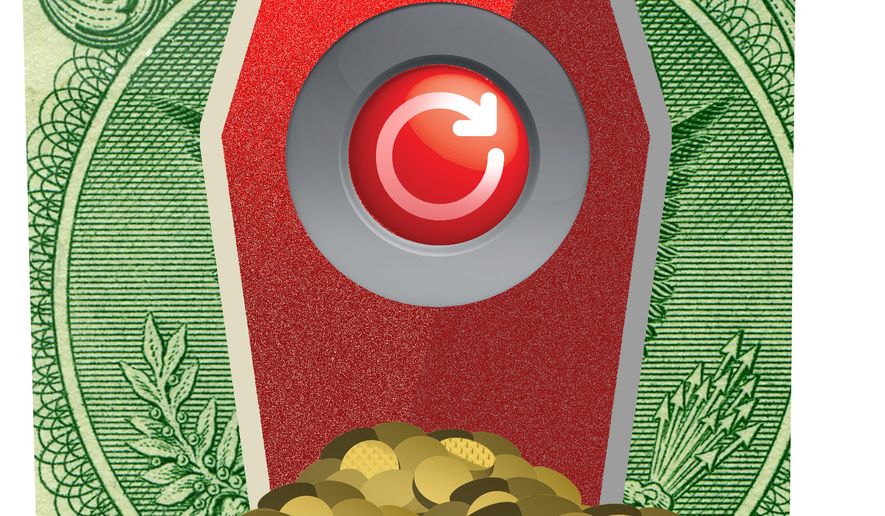
Therefore, Gallup’s findings are not a death notice for capitalism but rather a warning. If Americans mistake cronyism for free enterprise, they will continue to blame the wrong system and demand cures that make matters worse. The task is ours: to distinguish true markets from political privilege and reclaim capitalism from its impostors by insisting on integrity, rejecting favoritism and practicing the virtues that make liberty sustainable.
Capitalism does not need a eulogy or a government takeover.
Economic freedom, combined with moral discipline, remains our most effective means of channeling creativity toward the common good.
• Isaac Chilima is an associate professor of economics and business at Colorado Christian University and a faculty fellow with the Centennial Institute, where his research and teaching explore economic systems and biblical principles.

Please read our comment policy before commenting.