



A version of this story appeared in the daily Threat Status newsletter from The Washington Times. Click here to receive Threat Status delivered directly to your inbox each weekday.
OPINION:
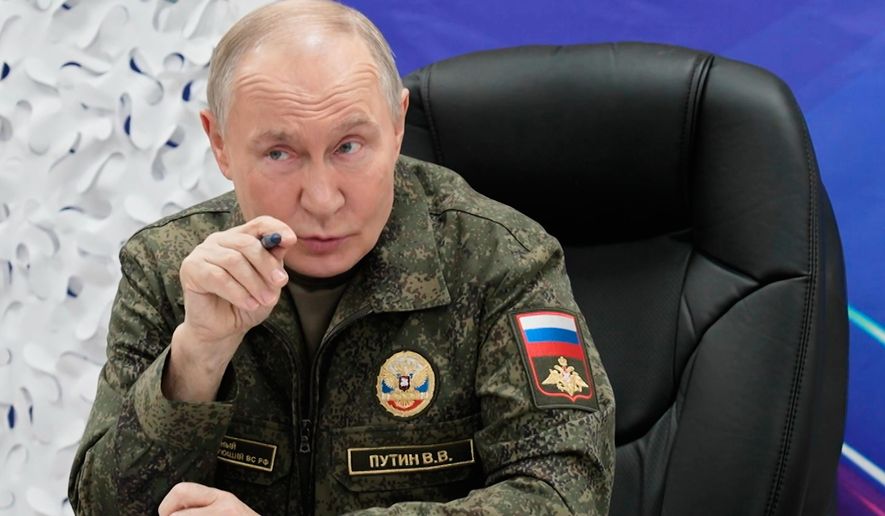
President Trump’s 28-point peace plan is a humanitarian attempt to halt the killing and destruction in Ukraine, although Russia’s Vladimir Putin may view the peace plan as an appeasement attempt. Since Russia’s invasion of Georgia in August 2008, the U.S. and its NATO allies have not been able to deter an aggressive Russian Federation.
When Russia invaded Georgia in 2008, this was a clear signal, especially to NATO, that Russia was prepared to use force in the “near abroad” when its interests weren’t respected. The response from the U.S. and NATO was weak: no military support to Georgia or strong punitive actions against Russia.
In 2014, Russia seized Crimea with minimal consequences. The muted response in 2008 to Russia’s invasion of Georgia no doubt convinced the Kremlin that the U.S. and NATO would not risk a military confrontation with Russia. Although Russia was suspended from the Group of Eight and the United Nations General Assembly adopted a resolution condemning Russia’s annexation of Crimea, NATO’s military response — suspending all cooperation with Russia — was weak.
The U.S. withdrawal from Afghanistan in August 2021 reinforced the Russian view that U.S. and NATO “red lines” were either not clear or not credible. Indeed, Russia viewed the withdrawal as a weakening of U.S. deterrence credibility.
On Feb. 4, 2022, just weeks before Russia invaded Ukraine, Mr. Putin met with Chinese President Xi Jinping at the Beijing Winter Olympics. The joint statement from their discussion was clear in stating a “no limits” partnership and “no forbidden areas of cooperation” between Russia and China.
Before Russia’s February 2022 invasion of Ukraine, the U.S. publicly stated that it had credible intelligence of Russia’s plan to invade Ukraine. Unfortunately, however, even with this insight, the U.S. could not convince Mr. Putin that an invasion of Ukraine would cross a red line and result in sanctions and other consequences for Russia. We failed to deter Russia from this bloody four-year war, with more than 400,000 Ukrainian casualties and more than 1 million Russian casualties.
The 28-point peace plan is being reviewed by the leadership in Ukraine and NATO, and it’s possible the peace plan will be amended to secure greater support from Ukraine and NATO.
What’s clear from Russia’s actions in Georgia, Crimea and Ukraine is that U.S. and NATO deterrence failed. A credible deterrence strategy would have made clear to Russia that continued aggressive military behavior would result in significant consequences, including biting sanctions, pariah status and a likely military response.
China, North Korea and Iran, allies of Russia, are watching closely to see how the war in Ukraine ends. Indeed, their interest in the peace plan includes interest in the consequences meted out to Russia, given that Russia invaded Ukraine after it, the U.S. and the United Kingdom signed the 1994 Budapest Memorandum on Security Assurances, pledging to respect Ukraine’s independence, sovereignty and existing borders.
Hopefully, none of Russia’s allies will view the Ukraine peace plan as a license to foment trouble in its region. Clearly, China understands U.S. policy: a peaceful resolution of issues between China and Taiwan, in accordance with the Taiwan Relations Act of 1979. North Korea knows the U.S. has extended deterrence commitments to our ally in South Korea.
Deterrence credibility is important. It’s why the U.S. approved providing Taiwan with about $387 million in defensive arms sales last December. It’s also why we have a Washington Declaration with South Korea, enhancing the nuclear deterrence alliance. Iran saw clearly, with the bombing of its Fordow nuclear site in June, how close our allied relationship is with Israel.
These allies of Russia would be making a grievous error if they tried to exploit any peace agreement with Russia to end the war in Ukraine. Mr. Putin would be advised to comply with any peace accord to end the Ukraine war and to refrain from any further attempt to violate the sovereignty of any of the 32 NATO members.
• Joseph R. DeTrani is a former associate director of national intelligence. All statements of fact, opinion or analysis expressed are those of the author and do not reflect the official positions or views of the U.S. government. Nothing in the contents should be construed as asserting or implying U.S. government authentication of information or endorsement of the author’s views.

Please read our comment policy before commenting.