



OPINION:
I can still see and hear it in my mind’s eye: cruise missiles skimming low over Baghdad during the Gulf War, the air vibrating, my voice raised above the roar and the crack of anti-aircraft fire. Back then, we were reporters, not presenters. We didn’t measure risk in ratings or clicks or choose our words from lists approved by diversity, equity and inclusion committees. We told it as it was: raw, immediate and real.
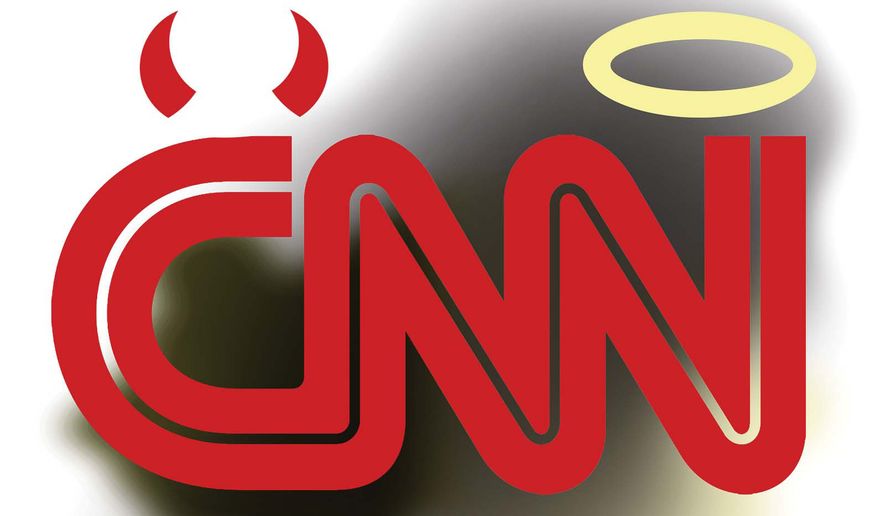
Today, CNN faces yet another “strategic reset” under David Zaslav’s Warner Bros. Discovery. The network confronts a reckoning far more profound than shrinking ratings or revenue. It must decide whether it stands for good, independent journalism.
To my generation, good journalism matters. We bear witness. We write and broadcast the first draft of history from the front, not the studio floor or some convenient live-shot location well behind the lines.
From the beginning, with Ted Turner’s fingerprints everywhere, CNN taught the world how to watch the news as it happened. His maverick approach to news let reporters make their own decisions on the ground. Attorneys didn’t hover over scripts; managers didn’t second-guess our instincts. It was chaotic, loud, gloriously alive and, most important, authentic.
That spirit began to die when the accountants moved in. The network’s absorption by media conglomerates led to a slow suffocation by corporate interests. Budgets shrank. Bureaus closed. Overseas assignments became a trickle. By the time I left in 2008, CNN’s pulse had slowed to a bureaucratic rhythm — safe, polished, soulless.
In the two decades since, technology and social media have shattered the old gatekeepers. News no longer waits for you; it hunts you down. Reporters in the new media and old battle for attention regardless of accuracy.
Jeff Zucker’s arrival in 2013 as president of CNN Worldwide briefly revived the network’s swagger. He understood television: tension, theater, pace. As the former producer who helped turn “The Apprentice” and Donald Trump into a TV phenomenon, Mr. Zucker knew how to build a spectacle — but it all came at a cost. Mr. Zucker mistook performance for purpose. Under his leadership, CNN became part of the Trump opposition, addicted to outrage.
Every insult, every rally, every tweet went live. Ratings and revenue soared; in 2017, the network earned $1.6 billion. That success rested on a corrosive bargain: President Trump’s chaos for CNN’s coverage. It was mutual dependency disguised as accountability. It’s a marketplace where anger equals engagement.
Mr. Zucker’s 2022 fall wasn’t just a personal scandal; it marked the final implosion of a network already consuming itself. At home, CNN’s relevance waned. Abroad, the international affiliates eroded the value of a storied brand name.
A decade ago, I helped build N1 Television, a CNN-affiliated 24-hour news channel created to cut through a media landscape already gripped by state capture and confusion in Serbia. We set out to prove that independent journalism could still breathe in a region where propaganda has long been the native tongue.
On paper, the license guaranteed independence. In practice, CNN exercised no editorial oversight and accepted no accountability. When viewers complained, the mothership pointed the finger at the local owners. It was a perfect shield and was regarded by many as a lucrative illusion.
CNN’s licensing arm has more than 1,000 affiliates worldwide. In Turkey, CNN Turk bent under President Recep Tayyip Erdogan’s pressure. Critics urged CNN to revoke the license. It didn’t. The revenues were too good to lose, and the arrangement scraped through.
That’s the paradox: CNN built its empire on trust and then outsourced its name to partners who were not trustworthy. Each compromise chipped away at the credibility that once made those three red letters a global shorthand for good, solid reporting.
CNN maintains that accountability exists and that editorial standards are in place. On paper, that’s true: Editors still confer, guided by instinct and experience straddling the line between risk and responsibility. Yet accountability to oneself is the most fragile kind and one that CNN routinely rejects as an acceptable metric in any other situation.
At Warner Bros. Discovery, the so-called strategic review is widely viewed as a precursor to potentially carving up the company. The once-unassailable brand that defined global journalism now finds itself treated like any other underperforming asset: priced, trimmed and ready for sale. If David Ellison’s Skydance empire really does merge Warner Bros. Discovery and CNN with it into the same corporate tent as CBS, regulators may call it “consolidation.” It’s really compression: the slow, silent replacement of editorial judgment with financial prerogatives.
If a CBS-CNN hybrid ever takes shape, I can only hope it remembers that journalism isn’t a scalable asset. It’s a covenant between those who report and write and those who rely on them. Break that, and you don’t just lose a network; you lose its heartbeat, the very pulse that once made it matter.
• Former CNN Senior International Correspondent Brent Sadler has reported from many of the world’s major conflict zones. An award-winning correspondent, he also served as CNN’s Beirut bureau chief before co-founding the network’s Balkan affiliate N1 TV.

Please read our comment policy before commenting.