



A version of this story appeared in the daily Threat Status newsletter from The Washington Times. Click here to receive Threat Status delivered directly to your inbox each weekday.
OPINION:
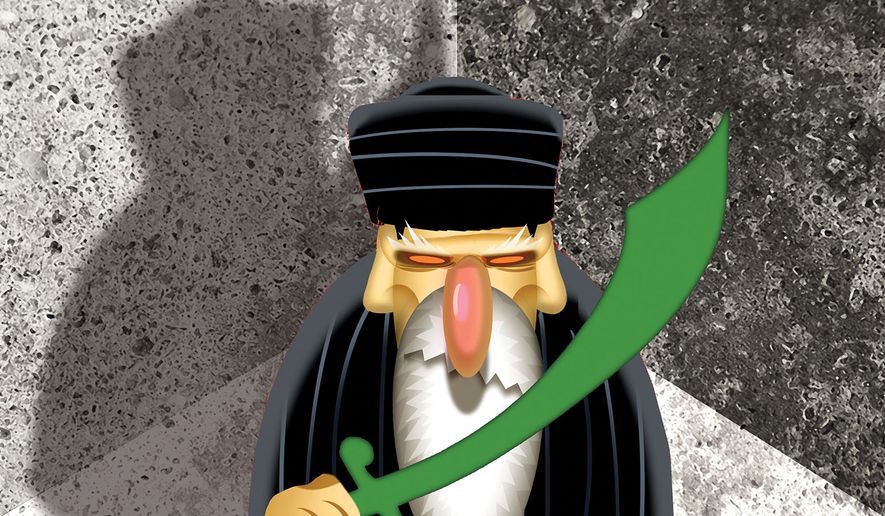
Iran’s supreme leader, Ayatollah Ali Khamenei, recently posted on X that the U.S. bombing campaign in June did not obliterate Iran’s nuclear facilities, as President Trump has repeatedly claimed. “In your dreams!” the 86-year-old wrote. The exact nature of the damage, which experts continue to debate and most say is significant, is not the most critical element at play. Most important is that the Iranian leader continues to portray the war as a victory and refuses to return to the negotiating table.
Mr. Khamenei’s quest to look powerful despite the facts on the ground shows that Iran is cornered. That doesn’t mean it ceases to pose a threat. In fact, the recent events that have weakened Iran — including Israel’s 12-day war against the Islamic republic, which the U.S. joined to drop its bunker-busting bombs onto underground nuclear facilities, and international sanctions that triggered a free fall in an Iranian economy already suffering from 40% inflation — are fueling a heated debate inside the Islamic regime that may trigger Iran to take military or other aggressive actions against the West in coming months.
Meanwhile, Iran is rearming with the assistance of China. This means the West, now preoccupied with implementing the ceasefire in the Gaza Strip, cannot push Iran to the back burner.
Mr. Khamenei risks facing the wrath of the population as it grows closer to losing patience with the deteriorating economic conditions. He continues to ignore the pragmatists in the regime who offer a possible solution: Get the sanctions lifted by opening negotiations over enriching uranium and allowing the International Atomic Energy Agency full access to all nuclear facilities. This could ease the severe economic sanctions and isolation if Mr. Khamenei wanted to compromise.
Instead, Iran has left the 2015 Joint Comprehensive Plan of Action, refuses negotiations with the West and says it will never stop practicing its “legal right” to enrich uranium as a matter of “national pride.” It has threatened to leave the international Nuclear Non-Proliferation Treaty and has carried out ballistic missile tests, a sign of its willingness to take military action.
The regime is resisting the path of compromise because it doesn’t want to appear weak, either to the world or its own people. Hard-liners could instead move the regime toward increased aggression as a way out of its paralysis.
Iran continues to build and maintain a significant cache of missiles, and recent evidence shows it is importing more from China. It could use those missiles against Israel or attempt to close the Strait of Hormuz, a key global shipping route, which would wreak havoc on the global economy. Both actions would likely be met by strong military power, at the very least from Israel and the United States.
Time is running out for the ayatollah to decide which path to pursue, and that means things could come to a head in mere months. The U.S. needs to continue with aggressive sanctions, not just against Iran itself but also against companies anywhere doing business with and in Iran. This is especially crucial as China continues to help Iran rearm, and Russia has informed the United Nations that it won’t abide by sanctions against Iran.
In addition to opposing Iran’s military nuclear project, U.S. and European leaders must insist that any potential agreement prohibits Iran from enriching uranium to any level for any reason. The West must also insist that Iran does not maintain a ballistic missile program.
Israel’s military must remain on alert, as do the militaries of the Jewish state’s allies. Shooting down Iranian missiles or preventing their launch through targeted bombing or covert intelligence operations is key to preventing Iran from using strikes on Israel to raise public morale or exert power. Iran’s desperation could push it to use its local proxies — including Hamas and Islamic Jihad in Gaza, Hezbollah in Lebanon and the Houthis in Yemen — to carry out attacks. Although these proxies are relatively contained, they are among the few tools Iran has.
Of course, the best option for everyone is for Iran to finally stand down on its nuclear ambitions. To help it move in this direction, the U.S. and other nations could work with Iran to develop a dignified off-ramp. However, the regime’s long-standing track record of disregarding reality and logic to appear strong and promote its goal of regional and global hegemony remains its greatest weakness. The question is whether Mr. Khamenei can finally acknowledge as much and change course.
• Yossi Kuperwasser, a retired Israeli brigadier general, is head of the Jerusalem Institute for Strategy and Security and former head of the Israel Defense Forces’ Military Intelligence Research Division.

Please read our comment policy before commenting.