



OPINION:
Living in rural America comes with great benefits – a simpler way of life in picturesque countrysides where neighbors can be miles away physically but deeply close personally.
It also means more miles between conveniences.
Growing up on my family farm in rural Kansas where my mom still lives today, we were just a few miles outside our town of 2,500, but we were 40 miles from the big city of Topeka, which back then had a population just shy of 80,000.
Going to town for necessities was relatively quick, but going out to the city was a bigger deal, and it’s where we did our major shopping as a family.
It was also the hub of health care in our part of the state, and the home of the hospital where I was born.
For the Americans who choose to live a rural lifestyle, there’s a tradeoff: The benefits of living in the country or small-town America versus the challenge of being further away from major medical services.
But when seconds matter, air transportation has helped bridge the gap between the homestead and the hospital.
Air ambulances have been providing lifesaving services for decades. I’ve visited with the pilots and EMTs; they are dedicated professionals who fly into sometimes dangerous situations to give emergency treatment and transport our friends and neighbors to doctors and nurses tens or hundreds of miles away.
And it’s not just for folks living in rural parts of the country, but those traveling through those regions as well. One pilot shared with me a story involving a bad accident in rural Kansas. It was dark, and the air ambulance had to land near power lines. The pilot and flight medics took a risk to save the life of someone badly injured driving through our state, and those selfless men and women are ready to do it again today.
Ensuring that this critical service is available to all Americans is why I reintroduced bipartisan, bicameral legislation the Protecting Air Ambulance Services for Americans Act.
While the medical tools and aircraft have all advanced over the years, the Medicare reimbursement rate has not changed since the fee schedule was established in 2002, leaving some air ambulances running in the red. And with nearly 40% of all air medical transports being Medicare patients, it’s easy to see why the reimbursement must reflect today’s realities. Sadly, this and other factors have forced closures across the country.
Fewer air ambulance bases spread farther apart means that, even with the advantage of flight, some Americans are at greater risk of missing out on lifesaving care.
The Protecting Air Ambulance Services for Americans Act will instruct Health and Human Services to update Medicare reimbursement rates for emergency air services by using data collected under the No Surprises Act, which was passed in 2020.
It’s a pretty straightforward piece of legislation: Update the Medicare reimbursement rate with data we already have and ensure that more Americans have access to the care they need, regardless of where they live.
It’s not surprising that the legislation has received praise from others in the industry.
Jana Williams, President and CEO of the Association of Air Medical Services, has said, “Air medical programs are increasingly essential mobile extensions of our national emergency care infrastructure. This bill takes a pragmatic step forward to ensure these high-acuity services remain available when and where they’re needed most.”
Urban dwellers should note that this isn’t just impacting their friends in the country. Patients are transported between hospitals and specialists each day throughout the country.
Air ambulances save lives, but outdated reimbursement rates are strangling this industry. Congress should use the tools and data we have to promote and support access to this critical medical transportation tool, and to support the pilots and medical professionals who fly into rural America to bring lifesaving care to anyone in need.
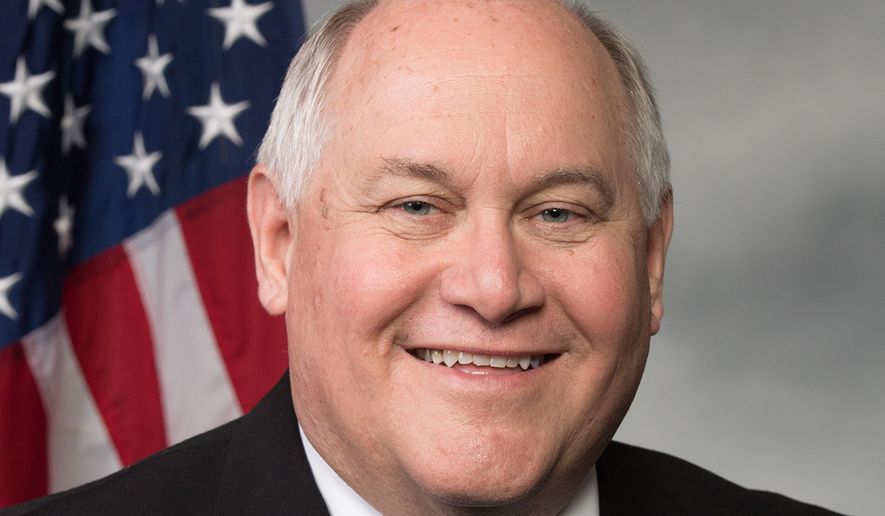
• Ron Estes, one of only a handful of engineers in Congress, worked to improve systems and operations in the aerospace, energy and manufacturing sectors before representing Kansas’ 4th Congressional District beginning in 2017. He is a fifth-generation Kansan, former state treasurer, and serves on the House Committee on Ways and Means, Budget Committee and Joint Economic Committee. He is the chair of the Social Security Subcommittee and co-chair of the House Aerospace Caucus.

Please read our comment policy before commenting.